
The Story of All Stories
The Catholic story Bible you’ve been waiting for! Enter into the most important tale of all: the true story of God’s love for you. Experience the wonder and excitement of salvation history through Emily Stimpson Chapman’s compelling storytelling and Diana Renzina’s beautiful illustrations. Each chapter is accompanied by the voices of the Church—saints, popes, and Church Fathers—which highlight how every Bible story is a thread in the great tapestry of God’s redemption.
Kids & Family
Stories for Kids
Subscribe
Choose your podcast app
Subscribe
Choose your podcast appIf the button doesn't work on your device, follow by RSS:
- iPhone/iPad: Open Apple Podcasts → Library → tap More (···) → Follow a Show by URL → paste the RSS URL below → Follow.
- Mac: Open Apple Podcasts → File → Follow Show by URL → paste the RSS URL → Follow.
RSS feed
Use this URL to subscribe in any podcast app that supports RSS.
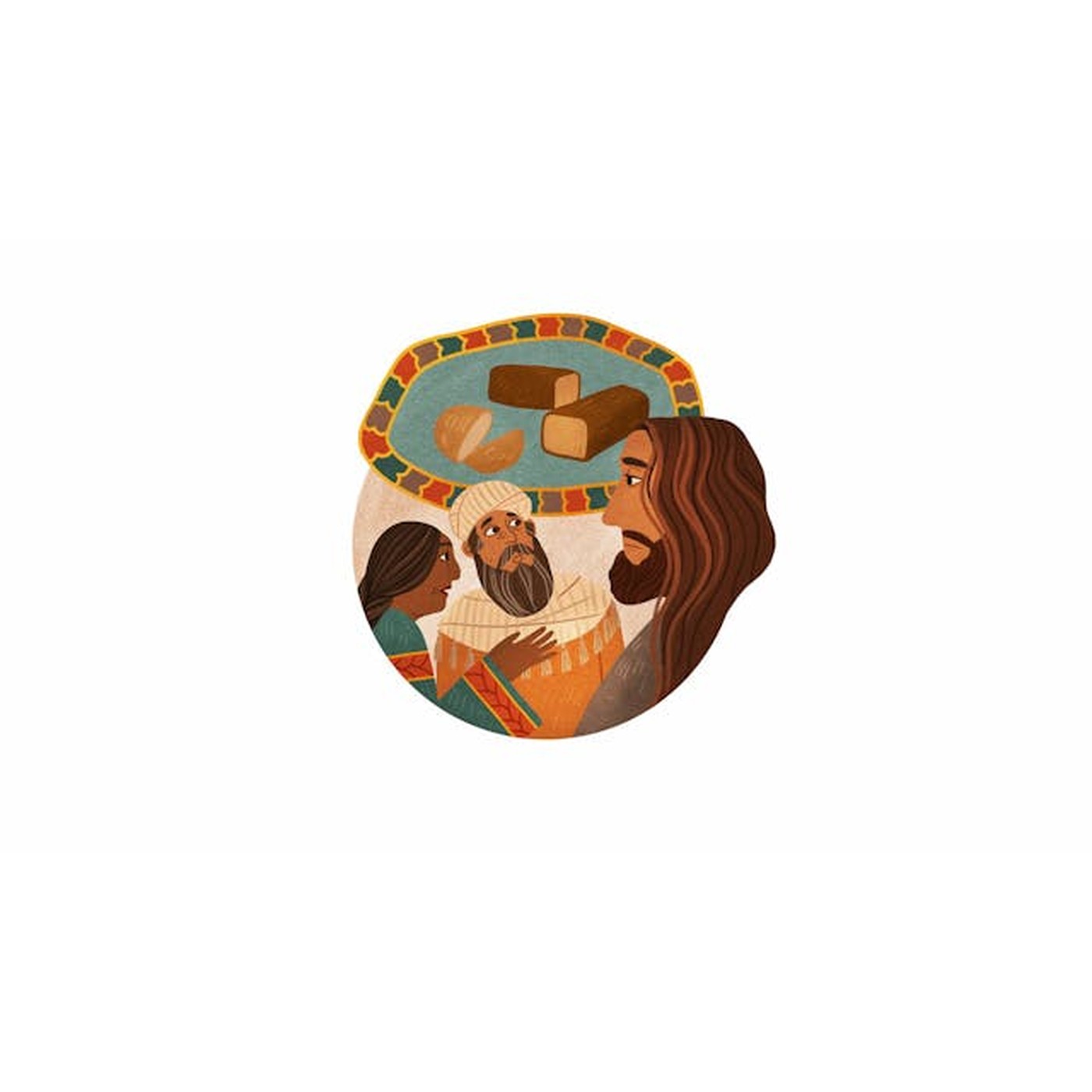
51. The Bread of Life
2025-10-13
This reflection retells the Gospel scene where the crowds, having been fed with loaves on the mountain, chase after Jesus looking for more bread. Jesus gently confronts their shallow desire: they are seeking food that perishes instead of the “bread that endures to eternal life.” When they ask for a sign like the manna in the desert, he reveals something far greater: the true bread from heaven is not a thing, but a Person. “I am the bread of life,” he says. He promises that whoever comes to him will never hunger or thirst, because the Father’s will is eternal life for all who believe.
As Jesus goes further—speaking of giving his flesh as bread for the life of the world, and insisting that his flesh is real food and his blood real drink—many are scandalized and walk away. Only the Twelve remain, not because they fully understand, but because they trust him. When Jesus asks if they too will leave, Simon Peter answers, “Where else would we go, Lord?” This passage invites us to move beyond seeking Jesus only for what he can give us in this life, and to entrust ourselves to him as the Bread of Life—especially in the Eucharist—believing that in him alone our deepest hunger is satisfied and our eternal life is secured.
Bible References:
- John 6:1-71
Transcript:
The bread of life.
The people wanted more bread.
On the mountain, after Jesus preached,
5,000 of them had eaten their fill of food.
Now they wanted more.
So they went looking for Jesus.
When he wasn't on the mountain where they had seen him last,
some people piled into boats and sailed across the lake.
There they found him.
Not knowing how Jesus had come to be there,
never even imagining that he could have walked across the water,
they asked for an explanation.
How did you get here, teacher?
Jesus, however, would give them no explanation,
for he knew why they had come.
You're here because you want more bread, he said.
But you're missing the point.
You're looking for food that perishes.
You should be looking for the bread that will endure forever.
Bread that endured forever.
The people liked the sound of that.
That meant they would never be hungry again.
Can you give us this bread? They asked.
How can we know you can do this?
Show us a sign so that we can believe in you.
Make bread appear from heaven, like Moses did in the desert.
Jesus could have pointed out that he had just made bread appear,
feeding 5,000 people with a few loaves.
Instead, he said,
Moses did not give you bread from heaven.
Only my Father gives this bread.
And it gives life to the world.
Yes, yes, the people responded.
It sounds wonderful.
Now give us this bread so we can have our fill always.
Jesus' answer surprised them all.
I am the bread of life, he responded.
Anyone who comes to me will never be hungry.
And anyone who believes in me will never be thirsty.
I have come down from heaven to do the will of the Father.
And what the Father wills, what the Father wants,
is eternal life for everyone who believes in me.
His audience was now more confused than excited.
Did he say he is the bread from heaven?
People asked one another.
How can he say he came down from heaven
when we know perfectly well that he came from Nazareth?
We know his Father, his mother, and his whole family.
Who does he think he's fooling?
As the people whispered among themselves,
Jesus spoke again.
You can stop your murmuring.
No one can believe in me unless the Father grants them that gift.
But anyone who the Father draws to me,
I will raise up on the last day.
Your ancestors ate manna in the wilderness,
but they still died.
Those who believe in me will never die.
I am the bread of life.
I am the bread who came down from heaven.
If anyone eats of this bread, they will live forever.
And the bread I give is my flesh.
This didn't stop the murmuring.
Did he just say we have to eat his flesh?
They asked, horrified at the thought.
How is that possible?
Let me make it more specific, Jesus answered.
Unless you eat my flesh and drink my blood,
you have no life in you.
If you eat my flesh and drink my blood,
I will raise you up at the last day.
For my flesh is real food, and my blood is real drink.
Whoever eats my flesh and drinks my blood lives in me,
and I in him.
Disgusted by his words, the crowd left.
Many of those who had followed Jesus from the beginning left too.
The twelve, however, remained.
Will you go too?
Jesus asked.
All were quiet.
Then Simon spoke.
Where else would we go, Lord?
So they continued on with him.
The others did not return.
E51
Full
0:04:53
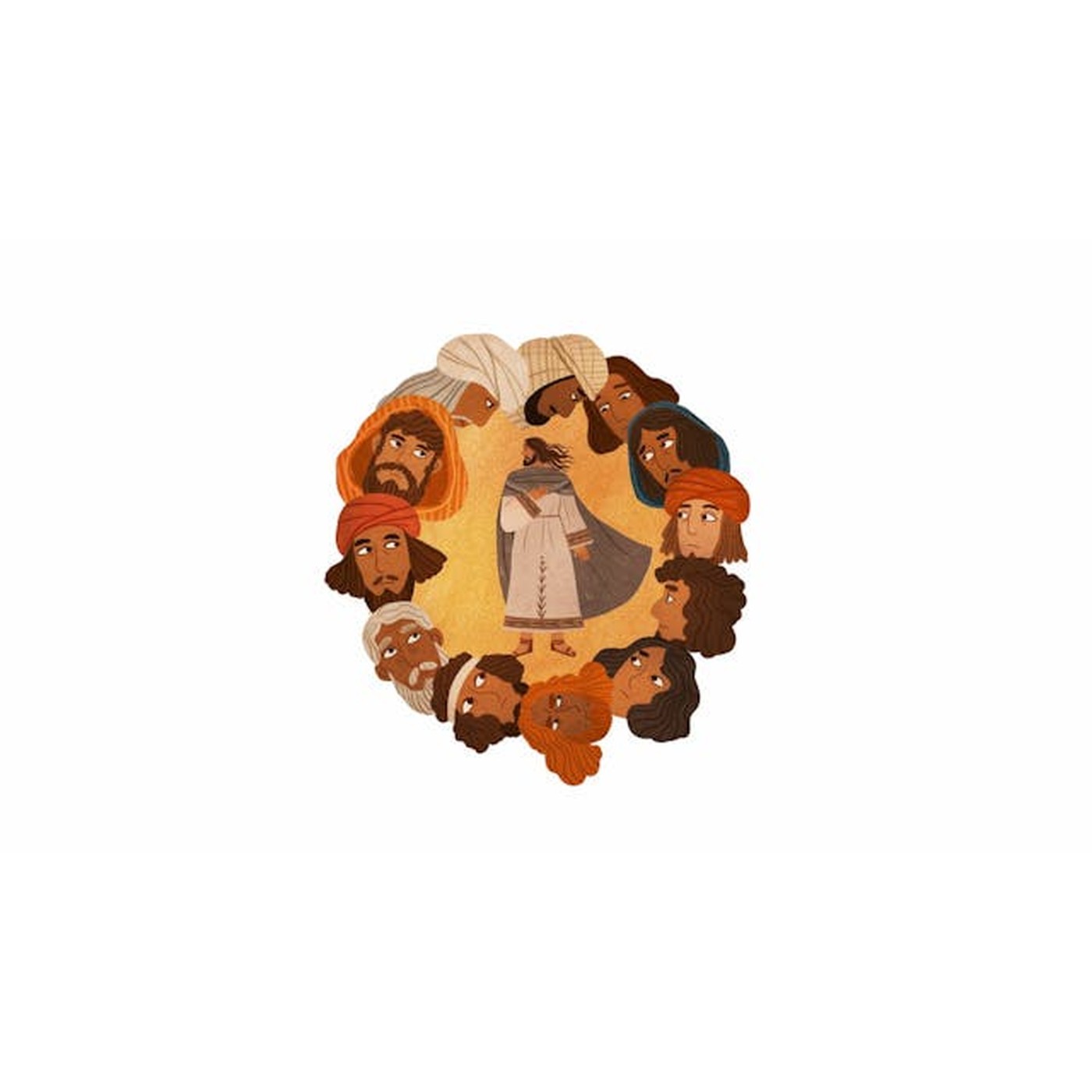
52. Keys of the Kingdom
2025-10-13
This reflection centers on the moment Jesus asks His disciples, “Who do you say that I am?” and Peter, moved by the Father’s revelation, proclaims Jesus as “the Christ, the Son of the living God.” In response, Jesus renames Simon as Peter, the rock, and promises to build His Church upon him, giving him the “keys of the kingdom” and a share in His own authority. Here we see both the mystery of who Jesus truly is—true God and true man—and the beginning of the Church’s visible leadership in Peter.
Yet this glory is immediately joined to the mystery of the Cross. Jesus foretells His suffering, death, and resurrection, shocking and frightening the disciples. Peter, trying to protect Jesus, is rebuked for thinking “as the world thinks” rather than as God does. Jesus then teaches that anyone who follows Him must deny themselves, take up their cross, and accept suffering for His sake. But this path of sacrifice is not meaningless: He promises that every loss for His sake will be repaid with a life more wonderful than we can imagine. The passage invites us to recognize Jesus as Lord, trust the Church He founded, and follow Him even when the road leads through the Cross.
Bible References:
- Matthew 16:13-28
- Mark 8:27-38
- Luke 9:18-27
- John 21:15-19
Transcript:
Keys of the Kingdom
Jesus looked like a man, talked like a man, and ate like a man. He clearly was a man, but he also clearly was no ordinary man. He literally walked on water. Sometimes he seemed a little more like God, but how could that possibly be? When Jesus wasn't around, the disciples would puzzle over this problem. Who was this man? What was this man? Then one day, Jesus asked them, Who do people say that I am? One of Israel's great prophets, whom God has sent back to earth, said one disciple. Like John the Baptist, suggested a second disciple. Or Elijah, added a third. Or maybe Jeremiah, chimed in a fourth. Jesus didn't respond to those suggestions. Instead, he asked another question. But who do you say that I am? At that, the disciples fell silent. Each had their own thoughts, their own guesses, their own hopes. But what was the right answer? Then Simon spoke. You are the Christ, the Son of the living God, he said. The other disciples looked from Simon to Jesus. How would Jesus respond? What would he say? Would he laugh at such an outrageous claim? Get angry? Accuse Simon of dishonoring God? Or would he say Simon was right, that such an impossible thing was true after all? Blessed are you, Simon, son of Jonah, answered Jesus, breaking the silence. This is not something you know because anyone told it to you, or because of human reason. You know this because God has revealed it to you. You have said who I am, Jesus continued. Now I will say who you are. You are no longer Simon. You are Peter, the rock upon whom I will build my church, a church so strong that the gates of hell will not stand against it. To you I will give the keys of my kingdom. You will be my steward, and my authority will be your authority when I am no longer here. The last sentence surprised the disciples more than anything else Jesus said. No longer here, they asked. Why would you not be here, teacher? The time for my suffering is coming, answered Jesus. The time for my death is drawing near. The grave won't hold me. God will restore life to me on the third day. But to my Father's house I must return. If the disciples had been confused before, they were even more confused now and frightened. How could the Messiah who came to restore Israel die? Peter, alarmed, pulled Jesus aside. God forbid that these things come true, Lord. This will never happen to you. Silence, Jesus commanded. That is the devil talking, Peter. You can only hurt me by saying such things. If you don't understand that I must suffer and die, you're thinking how the world thinks, not how God thinks. Then, turning to the rest of the disciples, Jesus said, If you want to follow me, understand this. It will not be easy. Each of you will need to deny yourself and carry a cross. You will have to suffer. The servants are not greater than the master. But when I come again in glory with my angels, every sacrifice you have made for me will be rewarded. You will have your life, a life more wonderful than you can imagine, because you gave it away. After that, everyone was silent, full of concern and confusion, for this was the first time Jesus had spoken of the suffering that was to come, for him and them.
E52
Full
0:04:50

53. The Transfiguration
2025-10-13
Jesus leads Peter, James, and John up a high mountain just days after predicting his own suffering and death—words that had left them confused and afraid. On the mountaintop, he is transfigured before them: his face shines like the sun, his clothes become dazzling white, and the disciples glimpse his divine glory. Moses and Elijah appear, representing the Law and the Prophets, and together they speak with Jesus about the suffering and glory that await him in Jerusalem. It is as if the veil between heaven and earth is briefly lifted, and the disciples see who Jesus truly is.
Peter, overwhelmed, tries to respond by offering to build tents, but the Father’s voice interrupts from a bright cloud: “This is my beloved Son, with whom I am well pleased. Listen to him.” The disciples fall down in fear until Jesus touches them and reassures them: “Get up, you have nothing to fear.” The vision fades, but the memory of that light remains. Jesus asks them to keep this mystery hidden until after his resurrection, giving them a glimpse of glory to strengthen them for the scandal of the cross. In the same way, the Lord sometimes grants us moments of light and consolation, not to escape suffering, but to help us trust that beyond the cross lies the fullness of his risen glory.
Bible References:
- Matthew 17:1-9
- Mark 9:2-10
- Luke 9:28-36
Transcript:
The Transfiguration
For five days, the disciples pondered Jesus' prediction of his death. It seemed unthinkable. Could he be wrong? Then, on the sixth day, Jesus asked Peter, James, and John to go on a short journey with him. First, Jesus led them to the base of a tall mountain. Then together they climbed. As soon as they reached the top, something extraordinary happened. Right before their eyes, Jesus changed. Jesus' mood didn't change. He didn't become angry or sad or grumpy. Rather, he changed. His face, his hands, his whole body was transfigured. It was still Jesus. The disciples still recognized him, but Jesus no longer looked like just a man. Light seemed to radiate from every part of him. His face shone like the sun, and his clothes, his ordinary worn and faded clothes, were suddenly as white as snow. And Jesus wasn't alone. Standing next to him, talking to him, appearing out of nowhere, were two men. The disciples knew who they were without asking. One was Moses, who had talked with God on Mount Sinai long ago, and from him received the law. The other man was Elijah, Israel's greatest prophet, who also had heard the voice of the Lord on the very same mountain as Moses. Like Jesus, the two men were bathed in light. Their eyes were fixed on him, and together the three spoke about the suffering and glory awaiting Jesus in Jerusalem. Looking upon the three men, not one of the disciples knew what to think. It was like the veil between heaven and earth had been drawn back, and Peter, James, and John were catching a glimpse of heaven itself. Peter couldn't remain silent. Lord, what should we do? he asked. Set up three tents, one for each of you? Peter was still speaking when a bright cloud filled the sky above them, and a voice spoke from the cloud. This is my beloved Son, with whom I am well pleased. Listen to him. Overcome with fear, wonder, and awe, the disciples fell down on the ground and hid their faces. Only when they felt Jesus' touch and heard him say, Get up, you have nothing to fear, did they lift their eyes from the ground. Moses and Elijah were gone, and Jesus was again the man they knew. The light was gone from his face, but not from their minds. Do not tell anyone what you have seen, he cautioned them. Keep this to yourself until I return on the third day, and the Son of Man is raised from the dead. They nodded in agreement. How could they explain such a thing anyhow? Who would believe them? Transcription by ESO. Translation by —
E53
Full
0:03:45

54. Stories of Forgiveness
2025-10-13
Jesus reveals the heart of God’s mercy through two powerful stories. When the woman caught in adultery is dragged before him, the crowd expects condemnation and death. Instead, Jesus turns their gaze inward: “Let the one among you who has never sinned be the first to throw a stone.” One by one they leave, and Jesus, the only sinless one, chooses not to condemn her. He sends her forth with both mercy and a call to conversion: “Go, and do not sin again.” We see that God’s desire is not to destroy the sinner, but to restore and heal.
To those who still struggled with the idea of forgiving others, Jesus tells of the king who forgives an unimaginable debt, only to see that servant refuse mercy over a small sum. The king’s anger shows how serious it is to receive mercy yet withhold it from others. Jesus’ warning is clear: as the Father has forgiven us a debt we could never repay, we must extend that same forgiveness to those who hurt us. In God’s eyes, forgiven people are called to become forgiving people, trusting that his grace can soften even the hardest heart.
Bible References:
- John 8:1-11
- Matthew 18:21-35
Transcript:
Stories of Forgiveness
Early one morning, Jesus was teaching in the temple area. He had come to Jerusalem with his disciples, and people were crowded around him, hungry to hear him speak. Suddenly, a crowd of scribes and Pharisees, yelling and shouting, entered the temple area, dragging a woman behind them. They took her straight to Jesus.
This woman committed a horrible sin, they said. We caught her in the act. The law says to stone her. What do you say we do with her? The Pharisees didn't truly want Jesus' opinion. What they wanted was to trap him. If Jesus said, stone her, her death would be on his hands. If he said, let her go, he would be violating the law of Moses, which said the type of sin she committed was deserving of death. But Jesus said neither. Instead, he knelt down on the ground and wrote something with his finger. When he finally stood up, he looked around and said, the one among you who has never sinned, who has never broken God's law in any way, can throw the first stone. He then knelt down again and went back to writing in the dirt. Minutes later, he looked up. Only the woman remained. All the men had gone. Where did they go? he asked. Has no one condemned you? No one, Lord, she replied. I don't condemn you either, he said. Go, but learn from this. Do not sin again. Not everyone understood why Jesus didn't condemn the woman. Some saw her as the worst kind of sinner, deserving the wrath of both God and men. Sometime afterward, they went to him and said, surely God doesn't expect us to forgive every sin. Jesus responded with a story. Once there lived a mighty king who was owed a great deal of money by one of his servants. It was an enormous sum, more than 100 men could earn in 100 lifetimes. Much time passed, but the servant, not surprisingly, never repaid his debts. Finally, the king had the servant brought before him. You owe me 10,000 talents, the king said to the servant. It's time to pay me back the money, or I will have no choice but to sell you, your wife, your children, and all you own in exchange for payment. Please, your majesty, the servant begged, have patience with me, and I will find a way to repay you, but don't separate me from my family. And the man began to weep. Moved by the man's plea, the king decided to forgive the servant's entire debt. Go home, he said. No repayment is necessary. The servant left the king and began his journey home. On the way, however, he ran into another one of the king's servants who owed him only 100 denarii, which was a few months' worth of wages. Seizing his fellow servant by the throat, the first servant said, pay me what you owe me, or I will have you thrown in jail. Just as the first servant had done with the king, the second servant begged for mercy. Have patience with me, and I will find a way to repay you, he said. But the first servant would not be moved, and had the man thrown in prison until he could repay the debt. Soon, word got back to the king about what the unforgiving servant had done. Furious, the king again summoned his servant. You wicked man, the king shouted. How could you not have mercy on your fellow servant after I had mercy on you? With that, the king had the servant thrown in jail until the entire debt could be repaid. And so it will be with you, Jesus concluded. No matter what your brother has done to you, unless you forgive him, my father will not forgive you.
E54
Full
0:04:56

55. The Lost Sheep and the Prodigal Son
2025-10-13
Jesus uses the parables of the lost sheep and the prodigal son to reveal the heart of the Father: a love that never gives up on us, no matter how far we wander. Like the shepherd who leaves ninety-nine sheep to search for the one that is lost, God actively seeks out each of us when we stray. He does not wait coldly at a distance; he comes after us, longing to bring us safely home.
In the prodigal son, we see that same mercy in the father who runs to embrace his repentant child. The son returns expecting only to be treated as a servant, but instead he is restored as a beloved son and a great feast is prepared in his honor. Even the older brother’s resentment becomes a moment of teaching: the father reminds him that he has always been loved and that rejoicing over a sinner’s return is right and just. Jesus concludes that this is how God rejoices over every person who turns back to Him—heaven itself celebrates whenever a heart comes home.
Bible References:
- Luke 15:1-7
- Luke 15:11-32
Transcript:
The Lost Sheep and the Prodigal Son
There had to be a catch. The disciples were sure of it. How was it possible that God could forgive every sin? And how could God expect them to forgive everyone who sinned against them? So, the disciples continued to press Jesus for an explanation. Jesus' explanation came in the form of more stories. God is like a shepherd, Jesus told them. He loves each and every one of his sheep so much that if one wanders off, he will leave ninety-nine sheep behind to go in search of his one lost sheep. No matter what you do, if you have wandered away from God, he will do everything he can to bring you back home. He then told them another story. There once was a father who had two sons, he said. The younger of the two sons was a foolish young man, and he didn't want to wait until his father died to enjoy his inheritance. So, he went to his father and said, Give me my share of the money now. That way I can enjoy it while I am still young. The father did as the son asked, and the son did as he said he would. He spent every dime on himself, buying anything and everything he desired. His father was a rich man, and the younger son's share of the inheritance was large. But it didn't matter. The money was soon gone. The son spent so much so quickly that before long he had nothing left. Then, just as the money ran out, famine hit the land where the younger son lived. To avoid starving, he found work as a farmhand. There, the pigs he fed ate better than he did. Hungry, alone, and full of regret, the young man wondered if his father could ever forgive him. Perhaps he would take me back as his servant, the young man thought. I will go and ask. And so it was that one day, as the father stood looking out across his land, he saw his son slowly walking toward the house. Overwhelmed with joy, the father ran as fast as he could toward his boy. He felt no anger, no pride, just relief that his son was home. He gathered him up in his arms and kissed him. Father, I have sinned against heaven and am not worthy to be your son, protested the son. But the father couldn't stop hugging his boy. You were dead and now you're alive, he said. You were lost and now you are found. All is forgiven. All is well. This is your home, where you belong. To celebrate his son's return, the father ordered his servants to prepare a great feast. While the servants were cooking, musicians played and the whole household danced. Around this time, the older son began making his way home from the fields where he had been working. As he got closer to the house, he heard the music and dancing, and he wondered why the household was celebrating. He soon found a servant standing outside who told him, Your brother has returned home and your father has called for a great celebration. The elder brother wasn't happy though. He was angry and resentful and refused to enter the house. When the father heard his older boy was outside, he went to find him. Son, why are you standing around out here? the father asked. Come inside where there's food and music. Celebrate with us. When was the last time you threw a feast for me? the older son answered. All this time I have been here working hard, helping you, while my brother spent his entire inheritance on foolish and wicked things. Now he is back and gets a feast? What about me? You are always with me, and everything I have is yours, said the father. But your brother was lost, and now he's found. How can we not celebrate? That is how God rejoices over every person who repents of their sin, Jesus concluded. All of heaven feasts for every person who comes home. The End
E55
Full
0:05:16
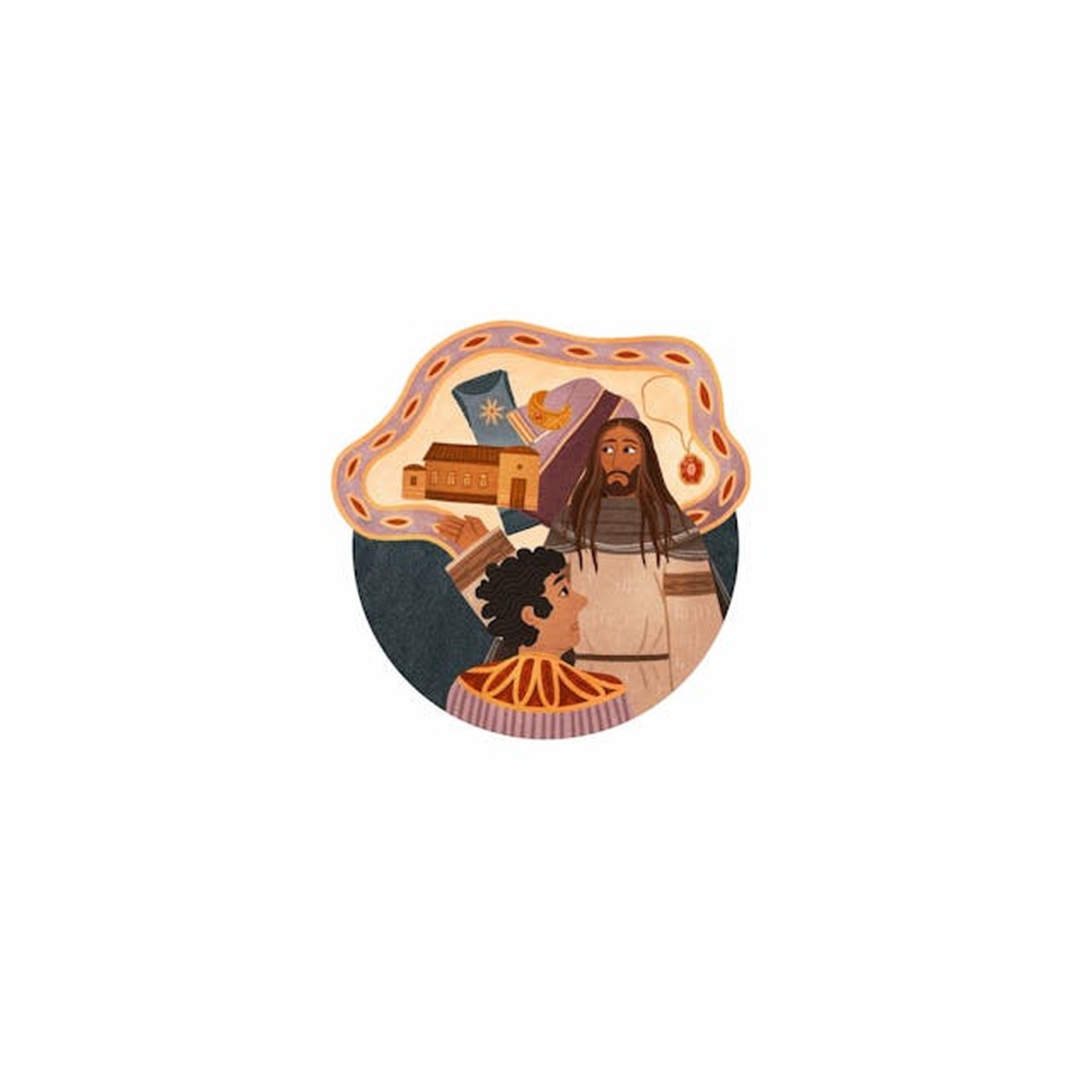
56. Greatness in the Eyes of God
2025-10-13
This reflection weaves together two Gospel scenes to show what true greatness looks like in God’s eyes. A rich young man, eager for eternal life, asks Jesus what great deed he must do. Jesus first points him to the commandments—faithfulness in ordinary, daily obedience. When the young man insists he has kept them, Jesus invites him deeper: “Sell everything…give to the poor, and follow me.” Faced with the cost of letting go of his wealth and security, the young man walks away sad, revealing that his heart clings more to possessions than to God.
In contrast, when the disciples argue over who will be greatest in the kingdom, Jesus answers not with titles or honors, but by embracing a child. He teaches that the greatest are those who become small—who trust, love, and receive the kingdom like little children. Greatness in God’s kingdom is not found in power, status, or impressive achievements, but in humble trust, simplicity of heart, and a willingness to let go of whatever keeps us from following Jesus. We are invited to examine what we cling to, and to come to Christ as children—confident that we are seen, loved, and protected before the Father.
Bible References:
- Mark 10:17-31
- Matthew 19:16-30
- Luke 18:18-30
- Mark 9:33-37
- Matthew 18:1-5,10
- Mark 10:13-16
- Matthew 19:13-15
- Luke 18:15-17
Transcript:
Greatness in the Eyes of God
One day, after Jesus finished teaching the crowds, a young man approached him.
The young man had sat listening to all Jesus taught, and now he wanted to know more.
Most of all, he wanted to know what it would take to live forever with God.
Was there something he needed to do?
Some great or noble deed God wanted him to perform?
He believed that if he knew what it was, he would do it in a heartbeat.
So he asked Jesus,
Good teacher, what must I do to inherit eternal life?
Keep the commandments, Jesus replied.
This wasn't the answer the young man wanted.
It seemed too simple.
But which ones, he pressed.
You know the commandments, Jesus said.
The ones God gave to Moses.
Don't lie, steal, cheat, or kill.
Honor your parents.
Be true to your wife.
Love your neighbor.
None of this seemed challenging enough to the young man.
But I do all these things already, he told Jesus.
Jesus looked at the young man with his fine clothes and expensive shoes,
then said, If you want to be perfect, sell everything you have.
Your home, your land, your jewels, your clothes, the whole lot of it.
Keep nothing for yourself.
Then give everything to the poor and follow me.
As Jesus spoke, the young man's face changed.
He had thought he would do anything for God.
But sell everything?
Give away his wealth, his comfort, his security?
It was too much.
So he walked away, full of sorrow, for he loved his possessions more than he loved God.
On another day, several of the disciples got into an argument.
When Jesus becomes king, I'll be his right-hand man, boasted one.
Why would you get that honor, said another.
Surely it will be me.
I'll outrank you both, said a third.
The disciples went round and round about who would be greatest in the kingdom,
about who would have the most power and authority and be closest to Jesus.
Finally, they decided to let Jesus settle it.
At the time, Jesus was speaking to a crowd.
But the disciples pushed past the people and put their question to him.
Who will be the greatest in the kingdom, they asked.
Jesus didn't answer their question.
Instead, he looked beyond the disciples to the fringes of the crowd,
where other disciples were talking to some people who held small children in their arms.
People were always trying to get their children near Jesus.
They wanted him to hold their children and bless them.
Somehow, they knew that being close to Jesus was the very best thing for their babies.
Some disciples, however, didn't understand this.
They thought Jesus' teaching was just for grown-ups.
Jesus has more important things to do than bless your children, they told the parents.
Take your children home and let him preach.
When Jesus realized what was happening, he picked up one of the children and held her close.
Then he spoke to the disciples.
You ask who will be the greatest in the kingdom of heaven, and I tell you,
it will be these children, my little ones.
He who is the least among you will be the greatest.
So if you want to inherit the kingdom, become like children.
Trust like them.
Love like them.
If you cannot receive the kingdom of God like a little child, you will never enter it.
Also, never stop them from coming to me, Jesus added.
Every single one of them has an angel in heaven who looks upon the face of the Father.
E56
Full
0:04:47

57. Parables of Justice
2025-10-13
Jesus uses three parables to reveal that God’s justice looks very different from ours. In the story of the vineyard workers, those who labored all day receive the same wage as those who worked only an hour. The landowner’s generosity offends those who think they deserve more, but he reminds them he has kept his promise. Jesus is teaching that in God’s kingdom, all who respond to His call—early or late—receive the same gift of salvation. God’s mercy is not a limited resource; His generosity toward others does not diminish His goodness to us.
In the wedding feast, those first invited refuse the king’s joy, so he gathers everyone from the streets. Yet one guest is thrown out for not bothering to dress for the occasion, showing that while God invites all, we must respond with reverence and conversion of heart. Finally, in the parable of the wicked tenants, the servants and the beloved son are rejected and killed, pointing to Israel’s rejection of the prophets and of Jesus Himself, the cornerstone. These stories invite us to trust God’s justice, welcome His mercy with gratitude, and honor His Son by bearing fruit in our lives.
Bible References:
- Matthew 20:1-16
- Matthew 22:1-14
- Matthew 21:33-46
- Psalm 118:22-23
Transcript:
Parables of Justice
The disciples didn't understand. They didn't understand what Jesus meant by his coming kingdom. They didn't understand what he meant by the greatest serving the least, and they definitely didn't understand the strange things he kept saying about his coming suffering and death. So, Jesus told more stories. There once was a rich man, Jesus began, who needed help in his vineyard. Early in the morning, he went into the center of town where all the people in need of work gathered. Come work for me, he called out, and I will pay you a denarius for a day's labor. Several men took him up on the offer and headed off to the vineyard to begin work. A few hours later, the landowner went walking through town again and saw more men standing around with nothing to do. Come work for me, he said again, work the rest of the day, and I will pay you one denarius. They agreed and headed off. The same thing happened three times more that day. Each time, the landowner offered the men one denarius in exchange for their help. Each time, the men accepted. When the day finally ended, the workers waited in line for their pay. Those who worked only one hour received theirs first. One denarius as agreed upon. When it came time for those who had worked longer to receive their pay, they expected to receive more. But when just one denarius was paid out, they grew angry. How can you pay us who worked all day the same as those who worked only one hour, they protested. We worked for you longer, so we deserve more. You're being unfair. But the landowner did not change his mind. How am I unfair, he asked. You agreed to work the full day for one denarius, and you received one denarius. What does it matter to you if I give the same reward to others who were in the vineyards for a shorter time? My generosity isn't hurting you. And so, in the kingdom of God, the last will be first, and the first will be last, Jesus concluded. Later, Jesus told another story, this time about a king. There once was a great king who was planning a magnificent wedding banquet for his son. He invited all his friends, but one after another, they said no. Everyone had other things to do and other places to go, and no one cared enough about the king or the wedding to change their plans. When the king learned that no one would come to the feast, he was furious. He then called his servants and said, Go out into the streets and invite everyone you see, beggars and thieves, rich and poor, women and children, bring anyone and everyone you find. When the time for the feast came, the banquet hall was packed to overflowing. Everyone was wearing the very best clothes they owned, even if their best wasn't very good. But one guest wasn't wearing his best clothes. One guest had accepted the invitation, but had not cared enough about the feast, the king, or the king's son to change out of his ordinary clothes and put on something special. When the king saw this, he asked him about it, but the man wouldn't even answer. So the king had the rude guest thrown out of the feast. As Jesus finished, he added, In the kingdom, many are called, but few are chosen. Jesus had one more story, one even stranger and sadder than all the rest. Once, a man who owned a beautiful vineyard had to leave it and travel to a far-off country. While he was gone, he entrusted the care of the vineyard to his tenants. Sometime later, the landowner sent a servant back to the vineyard to collect the fruit they owed him. But instead of giving the servant the fruit, the tenants beat him, saying, Tell that man he'll get no fruit from us. When the landowner learned what had happened, he sent another servant. But the same thing happened all over again. He then sent another and another and another. But the same thing happened to them, too. Finally, the landowner decided to send his own beloved son. Surely, they'll show some respect to him, he thought. But when the son arrived, the servants cried out, Let's kill him, and then we shall inherit the vineyard instead of him. And kill him they did, but inherit they did not. For when the landowner learned of their treachery, he had every last tenant killed and entrusted the vineyard to other tenants. Jesus concluded this story with a warning. This is how it will be in the kingdom of God. The stone the builders reject will become the one upon which the whole building depends. The people who heard the story puzzled over its meaning, not realizing that Jesus was talking about himself and what was soon to come.
E57
Full
0:06:16

58. The Good Samaritan
2025-10-13
Jesus is approached by a clever lawyer who isn’t really seeking truth, but trying to trap Him with a question: “What must I do to inherit eternal life?” Jesus turns the question back, and the lawyer correctly answers with the two great commandments: love God with all your heart, and love your neighbor as yourself. Wanting to justify himself, the lawyer presses further: “And who is my neighbor?” In response, Jesus tells the parable of the Good Samaritan.
A man is beaten and left for dead on the road. A priest and a Levite, both religious men, see him but pass by, avoiding involvement. Then a Samaritan—someone considered an enemy by the Jews—stops, is moved with compassion, tends the man’s wounds, brings him to an inn, and pays for his care. Jesus asks who proved to be a neighbor, and the lawyer can only answer: “The one who was merciful to him.” Jesus then says, “Go and follow his example.” The Lord teaches that our neighbor is not limited to those like us or those we find easy to love; a true disciple shows mercy to anyone in need, even at personal cost.
Bible References:
- Luke 10:25-37
- Deuteronomy 6:5
- Leviticus 19:18
Transcript:
The Good Samaritan
When the disciples asked Jesus questions such as,
Who will be the greatest in the kingdom of heaven?
they were sincere.
They were a little silly for asking such questions,
but they truly wanted to know the answers.
Some people who asked Jesus questions, however, were not sincere.
They didn't want to learn something from Jesus.
They wanted to trap him.
They hoped their questions could trick him into saying something wrong,
something that would prove he wasn't truly wise or good or a man of God.
One day, when Jesus was teaching,
a sly young lawyer asked him just such a question.
Teacher, he said,
what do I have to do to inherit eternal life?
Jesus knew what the lawyer was up to,
so he asked a question right back.
What do the scriptures say you need to do?
They say you should love God with all your heart,
all your soul, all your strength, and all your mind,
the lawyer answered.
They also say you should love your neighbor as yourself.
You are correct, Jesus replied.
Do that and you will live.
But the lawyer wasn't done.
Who is my neighbor, though? he pressed,
thinking Jesus would surely stumble on this question.
Let me tell you a story, answered Jesus.
There once was a Jewish man who was traveling from Jerusalem to Jericho.
Along the way, he was attacked by a gang of thieves.
They beat him, stole everything he had,
and left him for dead on the side of the road.
For hours the man lay there, bruised, bleeding, and in pain.
During that time, a priest from the temple walked by.
He saw the man, but did nothing.
He just crossed over to the other side of the road and kept walking.
Later, another man, a Levite who served in the temple, came along.
He too saw the man.
He too crossed to the other side of the road,
putting as much distance between them as possible.
And he too kept walking.
Finally, a Samaritan,
who was supposed to be an enemy of the Jews, approached.
He didn't keep going, though.
Filled with compassion, he got down off his horse,
went over to the man, and tended to his wounds.
He then lifted the stranger up onto his horse
and took the man to a nearby inn.
There, he spent the night nursing the injured man.
In the morning, the Samaritan went to the innkeeper and said,
I need to leave today, but let my friend stay as long as it takes for him to recover.
Here is money to cover the cost of his room
and anything else he might need while he's here.
If it's not enough, I'll pay you the rest when I return.
Now I ask you, Jesus concluded,
Who was a neighbor to that wounded man?
The priest? The Levite? Or the Samaritan?
The lawyer knew there was only one right answer.
The one who was merciful to him, he said.
Jesus nodded.
There is your answer.
Go and follow his example.
E58
Full
0:03:56

59. Jesus Raises Lazarus
2025-10-13
As Jesus draws closer to His own Passion, He chooses to return near dangerous Jerusalem to visit His dear friend Lazarus, who has died. The disciples fear for His life, but Jesus knows He is doing the Father’s will. When He arrives in Bethany, Martha runs to Him in her grief, expressing both sorrow and faith: “Lord, had you been here, he would not have died… But I know… it’s not too late.” Jesus reveals something deeper than a future hope: “I am the resurrection and the life.” He invites Martha—and us—to trust that life is found in Him even in the face of death.
Mary comes weeping with the same words of pain, and Jesus Himself weeps at the tomb, showing His tender heart in the midst of human suffering. Then, before the gathered mourners, He commands the stone to be rolled away and calls, “Lazarus, come out.” Lazarus steps forth alive, and many come to believe, even as others run to report Jesus to the authorities. This moment foreshadows Jesus’ own death and resurrection and reminds us that He enters our darkest places, shares our tears, and has power to call us from death—sin, despair, fear—into new life with Him.
Bible References:
- John 11:1-44
- John 11:45-53
- John 11:16
- John 11:21-27
- John 11:32-36
- John 11:39-40
- John 11:41-43
- Matthew 16:21
- Matthew 17:22-23
- Matthew 20:17-19
- Mark 8:31
- Mark 9:30-31
- Mark 10:32-34
- Luke 9:22
- Luke 18:31-33
Transcript:
Jesus raises Lazarus. The weather was changing. Spring was approaching, and the authorities, the scribes and Pharisees, were changing too. Their tolerance of Jesus' preaching was coming to an end. Jesus spoke often now about his death, telling his disciples that soon he would suffer and die in Jerusalem. But on the third day, he promised, I will rise again. The disciples still didn't understand him, but they knew Jerusalem was not safe. So when news came that Jesus' good friend Lazarus was sick, no one was eager to rush off and check on him, for Lazarus lived in Bethany, just outside Jerusalem. Two days after they first learned of Lazarus' illness, though, Jesus said to them, Lazarus has fallen asleep. I must go to him. The disciples thought that going close to Jerusalem, when so many authorities were looking to arrest Jesus, seemed like an awfully big risk to take for someone who was just sleeping. If he is sleeping, teacher, surely he can manage fine without you, they said. He'll wake up soon enough. Jesus wasn't talking about regular sleep, though. Lazarus was sleeping the sleep of the dead. Jesus had to go to him. It was the Father's will, and Jesus knew it. So he told the disciples plainly, Lazarus is dead, and I must go to him. Very well, said Thomas, when he realized there was no changing Jesus' mind. If you're going to Jerusalem, where they will surely kill you, we will go and die with you. Then they all set off toward Bethany. The journey wasn't a quick one, and by the time they arrived, Lazarus had been dead and buried for four days. It was Martha, one of Lazarus' sisters, who first saw Jesus approaching. His other sister Mary sat at home weeping, but Martha took off running down the road to meet Jesus. Where were you? she cried when she reached him. Lord, had you been here, he would not have died. You could have saved him. But I know, even now, if you will it, it's not too late for him. He will rise again, Jesus promised. I know he will rise again, said Martha, in the resurrection on the last day. But I want him to rise now. I want my brother back. Jesus looked at her. Then he spoke. I am the resurrection and the life. Whoever believes in me, even if they die, will live. And whoever lives and believes in me will never die. Do you believe this? Yes, Lord, Martha answered. I believe you are the Christ, the Son of God come into the world. She then turned and went back to the house to call for Mary. Mary, still weeping, set out to find Jesus. He still stood where Martha had left him. Mary had the same words for him as her sister did. Lord, had you been here, he would not have died. Where have you laid him? Jesus responded. And as she led him toward the tomb, Jesus wept. Once they arrived at the small cave where Lazarus was buried, Jesus gave an order. Take away the stone. It's been four days, Lord, Martha reminded him. It will smell. I'm not worried about that, he told her. Trust me. Have the stone removed. So with the help of all the friends and family gathered there, they rolled the stone away. And as everyone stood watching, Jesus lifted up his eyes and said, Thank you, Father, for hearing me. Thank you for always hearing me. Next, in a loud voice, he said, Lazarus, come out. A moment passed. Then, from the darkness of the tomb, Lazarus emerged. His face and body were wrapped tight with bandages, but he was no ghost. It was him, living and moving and breathing. He was just as he had been, alive, whole, well. And many who saw that day believed in Jesus. But others were afraid and ran to the Pharisees to report what Jesus had done.
E59
Full
0:05:29

60. Jesus Enters Jerusalem
2025-10-13
After raising Lazarus, Jesus’ fame spreads and many begin to hope He is the long-awaited Messiah who will free Israel. As Passover approaches, excitement grows: some disciples expect a political victory, while others fear the Pharisees will kill Him. Jesus, however, knows exactly why He has come and that the salvation of the world depends on what awaits Him in Jerusalem. In obedience to the Father, He sets His face toward the city.
Riding a donkey like Solomon once did, Jesus enters Jerusalem as a humble king. The crowds greet Him with palm branches and cries of “Hosanna,” blessing Him as the Son of David and the One who comes in the name of the Lord. Yet even amid this joy, Jesus’ heart is troubled. He knows that the cheers will soon turn to cries for His death, and that His path leads to the Cross. Still, He embraces His mission: through His suffering, death, and resurrection, “the ruler of this world” will be cast out, and He will draw all people to Himself. The holiest and hardest week in history has begun, and Jesus walks into it for love of us, that we might have life.
Bible References:
- John 11:1-44
- John 11:45-53
- Luke 9:51
- Zechariah 9:9
- 1 Kings 1:32-40
- Matthew 21:1-11
- Mark 11:1-10
- Luke 19:28-40
- John 12:12-19
- Psalm 118:25-26
- John 12:27-33
Transcript:
Jesus enters Jerusalem. A man rising from the dead is not something you see every day. It's not something most people see any day, ever. So not surprisingly, those who stood by as Lazarus came walking out of his tomb didn't just go home and forget about it. They talked about it and talked about it and talked about it some more, telling everyone they knew about the great miracle they had witnessed and also about the man, Jesus, who had performed it. Many of the people who were there that day came to believe that Jesus was the promised Messiah. Many of the people they told about the miracle came to believe the same. Throughout all of Judea, excitement was growing. Was it finally time? Had God at long last sent their promised deliverer? In the midst of all this excitement, the week of the Passover celebration approached. The hour has come, Jesus told his disciples. We will celebrate the feast in Jerusalem. Some of Jesus' followers greeted this news with joy. He is finally going to take back the throne of David and restore the kingdom, they said to one another. Others, however, remembered Jesus' words about suffering and dying and argued against going. The Pharisees will surely kill you, they said to him. Going to Jerusalem is not worth risking your life. But Jesus knew what he had to do. He knew why he had come into the world. He knew why he needed to leave the world, and he knew the fate of the world hung on what awaited him in Jerusalem. So, taking his disciples with him, he set out for the city. When they were still a little way out, Jesus turned to two of his friends and said, Nearby you will find a donkey tied up. Untie him and bring him to me. If anyone asks what you're doing, just tell them I need the animal. The donkey was right where Jesus said he would be, and when the disciples returned, Jesus climbed up onto him. He then rode the animal the rest of the way into the city, just as Solomon had done long ago on the day he was crowned king of Israel. Jesus' entry into Jerusalem did not go unnoticed. So many people had come to believe in him. So many were sure he was the Messiah. So many believed the day of deliverance was at hand, and when word spread through the city that Jesus had arrived, the people couldn't contain their excitement. They rushed out into the streets, craning their necks and climbing trees for a look at him, shouting his name, and spreading palm branches on the ground as he approached. Hosanna, they cried. Here comes the Son of David. Blessed is he who comes to save his people. Blessed is he who comes in the name of the Lord. It was a glorious entrance to God's glorious city on a glorious day. It was a day the prophets had long ago envisioned, and a day about which the patriarchs had dreamed. But Jesus knew that soon the shouts of joy would fade, and different shouts would rise in their place. This is why later that day, when the disciples went to speak to him, he wasn't triumphant. He was troubled. The time for the judgment of this world has come, he told them. The devil who has ruled the world will be defeated. And when I die and rise again, I will draw all people to myself. My heart is heavy, but I came into this world for this purpose, to give my life so that others might have life. With that, he left them, knowing that the hardest and holiest week in all the world's long history had just begun.
E60
Full
0:04:38

61. Jesus Cleanses the Temple
2025-10-13
In this reflection on Jesus cleansing the temple, we see how deeply God cares about the sincerity of our worship. The temple in Jerusalem was meant to be a holy place, the dwelling of God among his people. Yet its outer courts had become a noisy marketplace where merchants and moneylenders took advantage of the poor who came to pray. Jesus, who had known this temple all his life, finally confronts this corruption. With righteous anger, he drives out those who turned his Father’s house into a “den of thieves,” reminding everyone that worship is not a business but a sacred encounter with God.
When the religious leaders challenge his authority, Jesus points beyond the stone building to the true temple—his own body, which will be destroyed and raised up in three days. He also exposes the hypocrisy of those who appear holy on the outside but are far from God within, like “whitewashed tombs.” This passage invites us to let Jesus cleanse the “temple” of our own hearts: to examine where our faith may have become routine, self-serving, or focused on appearances. The Lord desires not outward show, but a sincere, humble heart that seeks to honor God in truth.
Bible References:
- Matthew 21:12-17
- Mark 11:15-19
- Luke 19:45-48
- John 2:13-22
- Jeremiah 7:11
- Matthew 12:38-39
- Matthew 16:1-4
- Luke 11:29
- Matthew 23:1-7
- Matthew 23:25-28
Transcript:
Jesus Cleanses the Temple
In the center of Jerusalem stood the temple, the heart of the city and the heart of Jewish life. This wasn't the temple Solomon had built. The Babylonians had destroyed that temple centuries ago. Rather, the temple in Jesus' time was a new one built by King Herod the Great about fifty years earlier. Like Solomon's temple, the most sacred place within Herod's temple was the Holy of Holies. There, incense burned, priests prayed, and sacrifices were offered. The priests who entered it knew they stood on holy ground. But outside, it was a different story. Merchants and moneylenders were everywhere in the temple courts, selling animals for sacrifice, making loans, and profiting off the poor who came to worship God. Jesus had been to the temple many times before. He had visited there as a baby, taught there as a boy, and preached there as a man. On every visit, he had seen people treat God's holy house like a marketplace, and now, at last, with his work on earth coming to an end, he knew the time had come to remind people that the worship of God was not a money-making business. After his entrance into the city, Jesus made straight for the temple. With a whip in hand, he moved swiftly through the courts, overturning tables, scattering coins, loosing animals, and casting out all those trying to make a profit off prayer. This is my father's house, he said, and you have made it into a den of thieves. The Pharisees were alarmed. Who did this man think he was? What gave him the right to act in such a way and unleash such chaos in the temple of the Lord? Give us a sign, they said, gathering around Jesus before he could leave. Show us by what authority you do these things. Destroy this temple, and in three days I will raise it up, he said. You're out of your mind, they answered. It has taken 46 years to build this temple, and you think you can raise it in three days? They were trying to trap him. Jesus knew this, so he didn't explain that he was talking about the temple of his body. Instead, he gave them a warning. Take care, he said. You preach what you do not practice. You place burdens on people that you do not carry. You care what people think about you, but not what God thinks about you. If people are watching, you do good deeds so all might see, but when you are alone, the darkness of your heart shows. You want to be honored, not to serve, and as long as you want that, as long as you live this way, you cannot know God. You cannot please God. You are like whitewashed tombs, all beautiful and clean on the outside, but full of rotting flesh and bones on the inside. You have no life in you. With that, Jesus left the temple, and the chief priests and elders began plotting against him.
E61
Full
0:03:56

62. Judas' Betrayal
2025-10-13
The story contrasts two hearts responding to Jesus. The religious leaders, who should have recognized the long-awaited Redeemer, instead plot his death out of fear, pride, and a desire to protect their own power. They cannot deny his goodness or the people’s love for him, yet they harden their hearts and look for a secret way to destroy the One sent to save them.
In Bethany, Mary responds very differently. She pours out costly oil on Jesus’ feet, an act of extravagant love, humility, and adoration. Jesus receives her gift as preparation for his burial and promises her love will be remembered wherever the Gospel is preached. Judas, however, masks his greed with pious words about the poor. Resentful when Jesus defends Mary, he lets anger, pride, and love of money take root, and slips away to betray his Lord for thirty pieces of silver. This passage invites us to examine our own hearts: do we approach Jesus like Mary, holding nothing back, or like Judas and the leaders, clinging to our own plans, resentments, and comforts?
Bible References:
- Matthew 26:3-16
- Mark 14:1-11
- Luke 22:1-6
- John 12:1-8
- Zechariah 11:12-13
- Genesis 3:1-24
Transcript:
Judas' Betrayal
This cannot go on.
Again and again,
the chief priests and the Jewish elders
shouted those words.
He is dangerous.
He is out of control.
This cannot go on.
The men had gathered at the house of the high priest,
a man named Caiaphas,
hoping to find a way to arrest Jesus
and put an end to his teaching and healing
and, perhaps most of all,
his questioning of them. They were angry and humiliated,
but they did not know what to do.
The people loved Jesus.
They would riot if they saw him arrested.
Nevertheless,
this could not go on.
The hours they pondered and plotted
were dark and sorrowful.
Not the most sorrowful.
Those would come just days later,
but full of sorrow just the same.
For more years than anyone could count,
the world had waited for its Redeemer.
For centuries upon centuries, God had prepared the people of Israel
to receive that Redeemer.
And now, at last,
he was here,
the one who could put right
all that Adam and Eve had put wrong
and restore friendship between God and man.
But the very people
who should have recognized him
and rejoiced in his coming,
the men who had given their whole lives
to studying the scriptures and reading the prophecies about the Messiah, those men wanted to kill him instead.
How they would do that, though,
they did not know.
So their meeting that night ended with frustrated goodbyes.
No one could figure out
how to arrest Jesus
without the people rioting
and the Romans responding to the riots
with violence of their own.
And no one wanted the Romans doing that.
Meanwhile, Jesus and his disciples
went to Bethany
to spend time with his friends
Mary, Martha, and Lazarus.
Before dinner was served,
Mary approached Jesus.
She believed in him with her whole heart.
She loved him and adored him.
She wanted to show him that,
to pour out her love and gratitude
in some visible way.
So while the others sat at table,
Mary unbound her hair,
poured a rich and expensive oil
all over Jesus' feet, and washed those feet with her hair.
It was extravagant, the whole thing,
the oil, the love, the humility.
And for one disciple,
it was too extravagant.
Stop, he protested.
This is wasteful. The oil should be sold
and the money used to feed the poor.
How can you allow this, teacher?
Jesus looked at the disciple
whose name was Judas Iscariot. He knew what was in Judas' heart, and he knew it wasn't concerned for the poor.
It was concerned for himself. Judas loved money
and had been secretly helping himself
to whatever went into the poor box.
He wanted the money from the oil for himself.
But Jesus didn't reveal to Judas or anyone else that he knew about Judas' thieving.
Instead, he praised Mary, saying,
Let her keep the oil
and use it when you bury me.
The poor will always be with you.
They will always need your help.
But my time here is short. She has done a beautiful thing, and until the end of time,
wherever the gospel is preached, what she has done will be remembered. Judas fell silent, but inside,
his anger raged.
And so, as the others talked,
he snuck out full of resentment and hate, greed and pride.
He then stole back into Jerusalem where he went to the chief priests
with an offer.
I am one of the teacher's most trusted friends,
he said.
I know where he is and where he is going. For a price, I will lead you to him
so you can arrest him when he is away from the crowds and no one is watching.
The offer was accepted. The price was set at 30 pieces of silver,
and the deal was made.
Now, the elders just had to wait for Judas
to deliver Jesus into their hands.
They would not need to wait long.
E62
Full
0:05:11

63. The Last Supper
2025-10-13
On the night of the Passover, Jesus shared a final meal with his disciples, knowing it would be his last before the cross. In a stunning act of humility, he knelt to wash their feet, teaching that true greatness in his kingdom is found in serving others. He spoke tenderly of going to the Father’s house to prepare a place for them, and he gave them a new commandment: “Love one another as I have loved you.” He promised the Holy Spirit, the Counselor, who would guide them into all truth, and prayed that all his followers would be one, united in the love he shares with the Father.
During this same supper, Jesus revealed that one of them would betray him, and Judas slipped away into the night. Then, in the most mysterious and sacred moment, Jesus took bread and wine and gave them new meaning: “This is my body… this is my blood… given for you.” He invited them—and us—to remember him through this gift, the beginning of the Eucharist. Even as the disciples argued about who was greatest, Jesus gently reminded them that the leader must be the one who serves, and he assured Peter that though he would stumble, he would be strengthened and then strengthen others. From this table of love, service, and sacrifice, Jesus walked out toward the Mount of Olives and the suffering that would redeem the world.
Bible References:
- Matthew 26:17-30
- Mark 14:12-26
- Luke 22:7-39
- John 13:1-38
- John 14:1-31
- John 15:1-17
- John 16:5-15
- John 17:1-26
- Exodus 12:1-14
Transcript:
The Last Supper
Soon it was Thursday, the day the Passover began. That day Jesus sent his disciples ahead of him into Jerusalem to prepare the same feast that the Israelites had prepared long ago on the last night of their captivity in Egypt. And later that night, Jesus sat down with his disciples over the meal they had prepared. As dinner began, Jesus knew what no one else did, that this holy meal on this holy day would be his last. It would be his last supper and his last chance to prepare his disciples for what was to come. He still had so many things to say to them, so many things to share. But first he needed to show them something. In the middle of the supper, Jesus stood up, took off his cloak, and filled the bowl with water. He then knelt down at the feet of one of his disciples and began to wash them. He did the same with the next disciple, and the next, and the next after that. But when he came to Simon Peter, Peter shook his head. No, Lord, he said, I should be washing your feet. I can't let you do this. If I do not wash you, you can have no place with me, Jesus replied. With that, Peter stuck out his feet saying, then wash my feet, Lord, and my hands and my head. Just your feet will do, Peter, Jesus said. When Jesus finished washing everyone's feet, he put his cloak back on and began to speak. He told his disciples many things. He told them where he was going, to his father's house, a mansion with many rooms. He told them what he would do there, prepare a place for them. He told them what he wanted them to do, wash one another's feet, serving one another as he had served them. He gave them a new commandment. Love one another as I have loved you, he said. Jesus also said things that puzzled the apostles, that anyone who had seen him had seen the father, that whatever they asked for in his name, he would give to them, that he was the vine and they were the branches, and that they needed to abide in him. After that, Jesus told them about a counselor, the Holy Spirit, whom the father would send to lead them into all truth. He said, if you love me, you will keep my commandments. And he prayed that all his disciples, all his followers, would be one as the father and I are one. As the supper continued, Jesus looked around at his 12 disciples, his closest friends, who had followed him faithfully for almost three years, and said to them, one of you will soon betray me. A chorus of questions and protests followed. No, Lord, who would do such a thing? Surely not I, teacher. Jesus looked at the last disciple who spoke. It was Judas. You have said so, he replied. The most mysterious thing that happened that night though, happened toward the end of the supper. While they were eating, Jesus took a piece of unleavened bread in his hands, blessed it, broke it, and said, take, eat. This is my body, which is given for you. Do this in remembrance of me. He then took a cup of wine, blessed it, and said, drink of it, all of you. This is my blood of the covenant, which is poured out for many for the forgiveness of sins. After he was finished, the disciples revisited an old fight. Who was to be the greatest in Jesus' coming kingdom? And once more, Jesus reminded them that his kingdom was not like other kingdoms. Let the greatest among you become the least, he said. And the leader must be the one who serves. He then turned to Peter. I have prayed especially for you, Peter. You will stumble soon, but you will be strengthened. And then it will be you who strengthens the others. Not long afterward, they left the room and walked to the Mount of Olives, where Jesus hoped to pray. Only 11 disciples walked with him though, for before the dinner ended, Judas had slipped away, intent on earning his 30 pieces of silver.
E63
Full
0:05:29

64. The Garden of Gethsemane
2025-10-13
Jesus enters Gethsemane knowing his closest friends will abandon him, even as Peter passionately insists he will never deny the Lord. In the garden, Jesus experiences the full weight of the mission before him—the pain, betrayal, and burden of the world’s sins. In deep anguish he prays, asking the Father if there is another way, yet fully surrendering: “Not my will, but yours be done.” Strengthened by this prayer, he rises ready to face what comes, while his disciples, unable to keep watch, sleep through his hour of agony.
Judas arrives with an armed crowd, betrays Jesus with a kiss, and Jesus freely allows himself to be taken, even healing the servant Peter wounds in a misguided attempt to defend him. Before the high priest, Jesus openly proclaims his identity as the Christ, the Son of the living God, and is condemned for blasphemy, mocked and abused. Outside, Peter—who had promised to die with Jesus—denies him three times out of fear, until the rooster crows. Realizing his failure, Peter breaks down in tears. In this night of sorrow, we see both the steadfast love of Christ, who chooses the Father’s will for our salvation, and the weakness of our human hearts—yet Peter’s tears also hint at the mercy and restoration God longs to give.
Bible References:
- Matthew 26:30-75
- Mark 14:26-72
- Luke 22:39-71
- John 18:1-27
Transcript:
The Garden of Gethsemane
No one knows what the disciples talked about as they walked from the upper room where they had eaten to the Mount of Olives. Perhaps they continued arguing about who would be the greatest, or perhaps they walked in silence, pondering all the mysterious, hard, and beautiful things Jesus said over dinner. Either way, when they arrived, Jesus had yet another hard thing to say. Tonight, all of you will leave me, he told the men. Never, Lord, Peter said. Even if everyone else leaves you, I never will. Oh, Peter, said Jesus. Even tonight, before the rooster crows, you will deny me three times. Master, I would die with you before I would deny you, Peter insisted. Jesus and the disciples then entered a garden called Gethsemane. There, Jesus invited Peter, James, and John to continue on with him. The others remained behind. Once the four men had gone a bit further, Jesus asked his three friends to sit and keep watch while he went off to pray. And pray he did. Jesus prayed to the Father with all his heart, all his soul, all his strength, and all his mind. He prayed like no one had ever prayed before, feeling the whole weight of what he had to do, of what he had come into the world to do. He saw it all, the pain, the betrayal, the horror of the world's sins that would rest on his shoulders, and it was almost unbearable. If it doesn't have to be this way, Father, he prayed, then please show me another way. But it's your will I want, not mine. Let your will be done. Time passed, and so did the struggle in Jesus' heart. He rose from prayer ready, at peace, prepared to do whatever came next. Peter, James, and John were not so prepared. They all had fallen asleep, their exhaustion greater than their desire to keep watch for Jesus. Wake up, he told them. It's time. My betrayer is here. Bleary-eyed, the disciples saw Judas approaching. With him came the chief priests, the elders, and a great crowd of people carrying swords and clubs. Judas had told the crowd to capture the man he kissed, so he walked right up to Jesus, kissed him, and said, Greetings, teacher. With that, the crowd fell on Jesus, seizing hold of him. Peter jumped into the fray, grabbing a sword and slashing at a servant of the high priest. He took an ear off the man, but no sooner did the ear fall to the ground than Jesus was putting it back on, healing the man who had come to capture him. Put your sword away, Peter, Jesus said. My father could send twelve legions of angels if I wanted them, but I don't. This is how it needs to be. With that, the apostles fled, and the crowd led Jesus away. Peter trailed behind, following them at a distance. Once they reached Caiaphas' house, the priest brought out one witness after another, hoping to find someone who could give them reason to put Jesus to death. But no charges stuck. Finally, the high priest cried out, Enough! Tell us if you are the Christ, the Son of the living God. You have said so, Jesus answered, and you will see the Son of Man seated at the right hand of power and coming on the clouds of heaven. That did it. The high priest tore his garments and cried, Blasphemy! We need no more witnesses. With those words, the people gathered around Jesus, spitting on him, slapping him, and jeering at him. Out in the courtyard, where Peter sat waiting, a young woman recognized him. You were with Jesus, the man from Nazareth in Galilee, she said. You are mistaken, said Peter, startled and scared. Then another woman came. You were one of his disciples, she said. No, Peter said again. Once more, a bystander approached Peter. I know you were with him. I can tell by your Galilean accent. I swear to you, Peter insisted, I do not know the man. Immediately, the rooster crowed. Dawn had come, and Peter had betrayed Jesus three times, just as Jesus said he would. Realizing what he had done, Peter ran from the crowds and wept.
E64
Full
0:05:43

65. Jesus Before Pilate
2025-10-13
On Friday morning, Jesus is brought from the high priest’s house to Pontius Pilate, accused of claiming to be “King of the Jews” and rejecting Caesar’s authority. Though warned by his wife’s dream and convinced of Jesus’ innocence, Pilate tries to avoid responsibility by sending him to Herod. Herod, curious and eager for a miracle, is disappointed when Jesus refuses to perform signs and sends him back. Both rulers find no crime in Jesus, yet the religious leaders demand not just death, but crucifixion. Pilate offers to release Jesus according to the Passover custom, but the crowd chooses Barabbas instead and cries out, “Crucify him!” Fearing unrest, Pilate gives in.
Through it all, Jesus remains silent—before Pilate, before Herod, under the soldiers’ mockery, scourging, and the crown of thorns. He does not defend himself or protest the injustice. Instead, he embraces the heavy cross laid on his shoulders, fully aware of the mission before him. In every insult and every wound, he is freely offering himself for the sins of the world. This scene invites us to contemplate the quiet strength and obedient love of Christ, who accepts humiliation and suffering so that we might have life. The greatest sacrifice is still ahead, but already we see the depth of his mercy and the cost of our redemption.
Bible References:
- Matthew 27:1-31
- Mark 15:1-20
- Luke 23:1-25
- John 18:28-19:16
- Isaiah 53:3-7
- 1 Peter 2:21-24
Transcript:
Jesus Before Pilate
When the sun rose Friday morning, Jesus was a prisoner in the high priest's home. He didn't remain there for long, though. At first light, the chief priests and elders marched him off to the palace where the Roman governor Pontius Pilate lived.
This man is a criminal, they declared. He claims to be King of the Jews and will not accept the authority of Caesar. He must be put to death.
Pilate looked at Jesus. His wife had sent a message to him just moments before, saying she had a dream about the Nazarene.
Have nothing to do with that righteous man, her message warned. His enemies are up to no good.
Pilate decided to question Jesus.
Are you the King of the Jews? he asked.
You have said so, Jesus answered.
Pilate tried again.
What do you say about the charges brought against you?
But Jesus would say no more.
Pilate didn't know what to make of Jesus. He only knew he didn't want to crucify him. It would bring trouble with the Jews, and the Romans had enough trouble with them as it was.
They say you're a Galilean, he announced.
Well, let Herod deal with you then.
And with that, he ordered his soldiers to take Jesus to Herod, who was in Jerusalem at the time.
When Jesus arrived, Herod was pleased. He'd heard so many things about the miracle worker from Nazareth, and he wanted to meet the man for himself.
So, you are a king, are you? asked Herod when they met. Then prove it. Show me a sign. Work one of your miracles for me, and I will believe in you.
Jesus would work no miracles for Herod, though. He had more important work to do.
And so, a disappointed Herod sent Jesus back to Pilate to do with as he pleased.
What would have pleased Pilate was to release Jesus.
So he went back to the chief priests and elders and said,
I've examined this man and found him guilty of no crime. Neither has Herod. He has done nothing to deserve death. I'll have him beaten for you, but then I'm letting him go.
The Jewish leaders, however, would not accept that. It must be death, they insisted, and not just death, but the most humiliating, painful kind of death the Romans could inflict upon anyone. Crucifixion.
Pilate, hoping the people might think differently, went before the crowds gathered outside his palace.
Each year, on the Passover, he released one Jewish prisoner. Right now, he had two he could release. Jesus or a murderer named Barabbas.
He thought if he asked the crowds, they would surely ask him to release Jesus.
Who shall I release? he called out to the people. The murderer Barabbas or Jesus who was called the Christ?
Barabbas, they shouted. Give us Barabbas!
It wasn't the answer Pilate wanted.
Why do you want this man's death? he asked the crowds. I have examined him and he has done nothing wrong. I will have him flogged and then I will release him.
But the people would not have it. Their shouts grew louder. Crucify him! Crucify him!
Fearing a riot, Pilate conceded. All this time, Jesus had remained silent. He didn't protest. He didn't plead. And when Pilate had him taken away to be beaten, he still didn't say a word.
The whip fell on Jesus again and again, leaving bloody stripes across his back. But Jesus said nothing.
He continued saying nothing when the soldiers gathered around him, laughing at him, spitting in his face, pressing a crown made of sharp, piercing thorns onto his head and beating his bruised and bloody body.
Not even when the soldiers placed a hard, heavy cross on Jesus' shoulders did words of protest escape his lips. Jesus knew what he had to do. He came to pay the price for all the world's sin, to offer his life so that others could live.
And with every insult endured and every injury offered up, he was doing what he came to do. The greatest injury and the greatest offering, however, was still to come.
E65
Full
0:05:26

66. The Passion, Death, and Burial of Jesus
2025-10-13
Jesus walks the road to Calvary carrying not only a heavy wooden cross, but the far greater weight of the world’s sins. Once hailed as Messiah, he is now mocked and rejected by the same crowds. Along the way, Simon of Cyrene is pressed into service to help carry the cross, sharing for a brief time in Jesus’ suffering. On Golgotha, Jesus is nailed to the cross under the title “Jesus of Nazareth, King of the Jews.” Surrounded by jeers, he responds not with anger but with mercy: “Father, forgive them, for they know not what they do.”
Two criminals are crucified beside him. One joins the mockery, but the other recognizes Jesus’ innocence and humbly asks, “Jesus, remember me when you come into your kingdom,” receiving the promise of paradise that very day. At the foot of the cross stand Mary, the faithful women, and John, to whom Jesus entrusts his mother: “Behold your mother.” In darkness and agony, Jesus prays Psalm 22, expresses his thirst, and finally declares, “It is finished,” surrendering his spirit to the Father in perfect obedience and love. After his side is pierced and his body taken down, Joseph of Arimathea and Nicodemus lay him in a nearby tomb. All creation then waits in silence for the third day, when the Father’s saving plan will be revealed in full.
Bible References:
- Matthew 27:32-61
- Mark 15:21-47
- Luke 23:26-56
- John 19:16-42
- Psalm 22:1
Transcript:
The Passion, Death, and Burial of Jesus
Jesus was marching through streets, up hills, toward the place of his execution. The cross that lay upon his shoulders was heavy, so heavy that the weight of it almost crushed Jesus. But it wasn't as heavy as the weight of the world's sins, all sins, past, present, and future, that Jesus also carried as he made his way through Jerusalem. Just five days earlier, people had filled the city's streets, celebrating Jesus as the Messiah. Now, those same people filled those same streets once more, only this time they taunted him. A few times, kind faces appeared in the crowd, the faces of women weeping, wanting to help. But none of them could take the wood from his shoulders. One man, however, did. The man's name was Simon, and he came from the city of Cyrene in Africa. Seeing that Jesus was struggling, the Roman soldiers pulled Simon out of the crowd to help Jesus carry the heavy cross. And for a time, the two men journeyed together, carrying the wood upon which Jesus would be sacrificed up Mount Calvary to a place called Golgotha, which means the place of the skull. There, the soldiers nailed Jesus to the cross, then lifted him high into the air as they planted the cross firmly into the ground. At the very top of the cross hung a sign. It proclaimed, Jesus of Nazareth, King of the Jews. Finally, Jesus spoke. Father, forgive them, for they know not what they do. Jesus' words did nothing to quiet the jeering crowds, which had followed him to Calvary. People continued to point at him and taunt him, shouting, If you are the Christ, then save yourself. Others yelled, You said if someone destroyed the temple, you could rebuild it in three days, but you can't even climb down off your cross. On either side of Jesus, two men, both criminals, hung from crosses of their own. One criminal joined in with the crowds, shouting and mocking Jesus. The other came to his defense. What gives you the right to say such things? He asked his fellow criminal. We're hanging from crosses too, but you and I are guilty. This man is innocent. He did nothing wrong. Then, looking at Jesus, he said, Jesus, please remember me when you come into your kingdom. I promise, Jesus said, speaking for a second time, today he will be with me in paradise. Standing below the cross was Jesus' mother, Mary, along with one of her relatives, also named Mary. Mary Magdalene and the mother of the apostles James and John. John also was there, standing with the four women. He was the only apostle on Calvary. Judas, racked with guilt and despairing of forgiveness, had taken his own life that morning. The rest had scattered just as Jesus said they would, afraid of arrest, afraid of execution. The hours passed slowly while Jesus hung on the cross, struggling to breathe, gasping for air, feeling the weight of his own bleeding body suffocating him, but still loving the world for which he suffered. He endured it all out of pure, perfect love. The sky grew dark and the air itself felt heavy with grief. Then Jesus spoke again, this time to his mother. He looked down at the woman who had carried him in her body and carried him in her arms and asked her to do one more thing for him. Woman, Jesus said, looking from his mother to the only one of the twelve disciples on Calvary, behold your son. He then addressed the disciple, behold your mother. After that, Jesus would speak four times more from the cross. He prayed the opening line of Psalm 22, my God, my God, why have you forsaken me? He called out in need, I thirst, and drank from a sponge dipped in vinegar. He declared, it is finished. Then he offered one final prayer to the Father. The Father who had loved the Son from all eternity and loved him now. The Son, in perfect loving obedience to the Father's will, offered everything he had, everything he was, to buy back a world enslaved to sin. Father, he prayed, into your hands I commend my spirit. With that, Jesus bowed his head and breathed his last. When the soldiers realized Jesus was dead, one pierced his side with a spear. Blood and water poured out. They then removed his body from the cross and entrusted it to Joseph of Arimathea, a good and just man who had asked Pilate for permission to bury Jesus. Because the Sabbath was drawing near, Joseph and Nicodemus, the Pharisee who had first come to Jesus in the night, placed his body in a nearby tomb which Joseph owned. And both heaven and earth waited for the third day.
E66
Full
0:06:45

67. The Risen Lord Appears to Mary Magdalene
2025-10-13
On the third day after Jesus’ death, his disciples were hiding in fear and confusion, unable to grasp his promise that he would rise again. Mary Magdalene, going to the tomb simply to anoint his body, expected only grief and silence. Instead, she found the stone rolled away, the guards gone, and the tomb empty. Assuming someone had taken Jesus’ body, she ran to tell the disciples. Peter and John came, saw the burial cloths neatly left behind, and returned still unsure of what it all meant, while Mary remained outside the tomb, weeping.
In her sorrow, Mary encountered angels who asked why she was crying, and then a man she assumed was the gardener. Only when he spoke her name—“Mary”—did she recognize the risen Lord. At that moment, despair turned to joy. Jesus gently redirected her from clinging to him and sent her instead as the first witness of the Resurrection: “Go and tell the disciples.” Mary ran to share the good news that Jesus is alive and ascending to the Father. Her encounter reminds us that in our own confusion and grief, the risen Christ is often closer than we realize, calling each of us by name and sending us out to share his life and hope.
Bible References:
- John 20:1-18
- Mark 16:1-11
- Matthew 28:1-10
- Luke 24:1-12
- John 2:19-22
- Mark 5:35-43
- Luke 8:49-56
- John 11:1-44
Transcript:
The risen Lord appears to Mary Magdalene.
Three days. Again and again, Jesus had told his disciples it would take three days. Three days for him to rebuild the temple. Three days for him to rise from the dead. Three days for him to make all things new. But Jesus's words were too inconceivable for them to fully understand. His disciples had seen him raise others from the dead, both Jairus's daughter and Lazarus, but they couldn't wrap their minds around how Jesus could raise himself from the dead. After all, Jesus was dead. How could he do anything? So instead of counting the hours to Sunday morning, the third day, and waiting in joyful expectation for Jesus to return, the disciples hid. They hid on Friday while Joseph of Arimathea and Nicodemus laid Jesus in a tomb. They hid on Saturday while the Jewish people celebrated the Sabbath. And they hid on Sunday morning as Mary Magdalene and a handful of other women went to Jesus's tomb with spices to finish anointing his body. That morning, the women weren't hiding, but they weren't expecting miracles either. What they expected to find was Jesus's body wrapped in linen, laying in the quiet stillness of the tomb. But that is not what they found. When the women arrived, they discovered that the soldiers Pilate had posted there were gone. So too was the giant stone that had blocked the tomb's entrance. It had been rolled off to the side, and the tomb was open. Thinking that someone must have come and stolen Jesus's body in the night, Mary Magdalene went running to where the disciples hid. They have taken our Lord, she cried. Come! Most of the disciples stayed put. Peter and John, however, took off running as fast as they could toward the tomb. John was faster and arrived first. As he bent down and looked into the tomb, he saw the burial linens lying there, but he didn't go in. When Peter arrived, he moved past John and went into the tomb. There he saw more linens as well as the cloth used to cover Jesus's face folded neatly and set to the side. When they saw this, they were amazed. Neither disciple knew what to do next though, so they left and went back to their hiding place with the other disciples while Mary Magdalene lingered at the tomb crying. After a while, she turned and looked around. Waiting there were two angels dressed in white. They asked her, Woman, why are you weeping? Someone has taken my Lord, she answered. To where, we don't know. Then she went back to crying. Moments later, Mary turned again and this time she saw a man standing there, a gardener perhaps. She wasn't sure who he was, but he asked her the same question the angels had. Woman, why are you weeping? She gave him the same answer. Someone has taken my Lord. If you know where he is, please tell me. Mary, the mysterious man said, and that was all he needed to say. It took just that one word, Mary, for her to realize that the man she had mistaken for a gardener was none other than Jesus. Somehow, she hadn't recognized him. Lord, she cried and threw herself at his feet. Don't hold tightly to me, Mary, he said. I'm here. Now, go and tell the disciples what you have seen. Tell them I am ascending to the Father, to my Father and yours. With that, Jesus disappeared. And Mary took off, running once more, bringing with her the very best news that ever was or ever will be.
E67
Full
0:04:58

68. The Road to Emmaus
2025-10-13
On the road to Emmaus, two discouraged disciples wrestle with the seeming failure of Jesus’ mission and the confusing report of the empty tomb. The risen Christ Himself draws near, but they do not recognize Him. Patiently, He opens the Scriptures, showing how all of salvation history—from Adam and Eve through the patriarchs, prophets, covenants, and the Law—points to Him and to the necessity of His suffering and death. Their hearts burn within them as the story of God’s plan suddenly makes sense, yet their eyes remain closed until He takes bread, blesses, breaks, and gives it to them. In that Eucharistic gesture, they finally recognize the Lord.
They rush back to Jerusalem to share the news, only to find Jesus already in their midst, passing through locked doors to stand among the fearful apostles. He calms their fears, shows His wounds, eats in front of them, and once again opens their minds to understand the Scriptures. Then He entrusts them with His own authority to forgive sins, breathing the Holy Spirit upon them. This encounter reveals a Lord who seeks out the doubting and the brokenhearted, meets them in His Word and in the breaking of the bread, and offers the Church His enduring presence and mercy through the gift of the Holy Spirit and the sacrament of reconciliation.
Bible References:
- Luke 24:13-35
- Luke 24:36-49
- John 20:19-23
Transcript:
The Road to Emmaus
When Mary Magdalene came running back to the disciples, bringing the good news of Jesus' resurrection, they should have believed her. Peter and John had seen the empty tomb. They'd all heard Jesus talk about rising again on the third day, but it seemed impossible, and they didn't believe. It can't be true, they said to one another. She must be mistaken. Still, the news of Jesus' missing body puzzled them. And later that morning, when two of the disciples set out on the road to the nearby village of Emmaus, they could talk of nothing but Jesus' death and his body's disappearance. As they walked, a man joined up with them, and they began talking. The man was Jesus. But the disciples, like Mary Magdalene, didn't recognize him. They thought him a stranger, and an uninformed one at that. Somehow, this stranger seemed to know nothing about Jesus and all that had taken place in Jerusalem over the past week. So, the disciples began telling their fellow traveler about Jesus' miracles and teachings and how they'd hoped he would be Israel's Redeemer. They also told him how those hopes had been crushed on Calvary. A woman from our group claims she saw him this morning and that he lives, they concluded. But of course, that can't be true. Why not? asked Jesus, still not revealing himself. And with that, Jesus went back to the very beginning, to Adam and Eve, Noah, Abraham, Isaac, Jacob, Joseph, and Moses. He walked the two disciples step by step through the story of all stories, showing them how every patriarch and prophet, every covenant and law, all pointed to Jesus and how all the promises God had made to his people were fulfilled in the man from Nazareth. The Christ had to suffer, Jesus concluded. That's how he redeemed you. That's how he brought you back. It's all there if you have the eyes to see. The men were astonished. It made so much sense now, but they still didn't recognize Jesus. When they reached their destination, they asked him to stop and have dinner with them. Jesus agreed. Together, the three men went inside and sat down at a table. When bread was set before them, Jesus took the bread, blessed it, broke it, and gave it to them. Finally, in an instant, the disciples recognized their traveling companion. Lord, they cried, but Jesus was no longer there. He had vanished. How could we not know, they exclaimed. Our hearts burned within us as he explained the scriptures. The disciples wasted no time. That very minute, they got up from the table and raced back to Jerusalem to tell the others. When they arrived, they knocked on the door of the upper room where the others were gathered. The disciples unlocked the door to let them in, then locked it again behind them. We have news, the disciples who walked with Jesus said. We have seen him. We recognized him in the breaking of the bread. As the two disciples spoke, Jesus suddenly appeared in their midst. No locks had turned. No door had opened. But there he stood. A few cried out in fear. Perhaps he was a ghost. Jesus quickly put those fears to rest. Touch my hands. Touch my feet. See my wounds, he said. It's me. I am real and I am here. Now, do you have anything to eat? They gave him a piece of fish and he ate it. Jesus then explained many things to them, just as he had done with the two disciples on the way to Emmaus. Then he gave the remaining apostles a gift. I am giving you a new power, my power to forgive sins, he said. Then he breathed on them. Receive the Holy Spirit. From now on, if you forgive any person's sins, they are forgiven by you and by me. If you don't forgive their sins, they are not forgiven. Not by you, not by me. Soon afterward, he left, but not yet for good.
E68
Full
0:05:13
69. Jesus Appears to the Disciples
2025-10-13
This reflection walks us through two tender resurrection encounters that reveal Jesus’ mercy toward our weakness. First, Thomas refuses to believe the other apostles’ testimony, insisting he must see and touch Jesus’ wounds himself. Jesus does not reject Thomas for his doubt; instead, He comes directly into that doubt, inviting Thomas to touch His wounds and believe. From this, we hear Jesus’ gentle blessing over all who will believe without seeing: faith is not about having perfect certainty, but about trusting the Risen Lord who meets us where we are.
The second scene on the Sea of Galilee shows Jesus caring for His disciples in their ordinary work and failure. After a fruitless night of fishing, they obey a stranger’s simple instruction and are overwhelmed by a miraculous catch—John recognizes, “It’s the Lord!” On shore, Jesus has already prepared breakfast, a quiet sign of His ongoing care. Then He turns to Peter, who had denied Him, and three times asks, “Do you love me?” Each affirmation of love becomes a new mission: “Feed my lambs…tend my sheep…feed my sheep.” Jesus both forgives and entrusts Peter with responsibility, warning that the path will include suffering, yet promising His guidance: “Follow me.” These stories invite us to bring our doubts, failures, and fears to Jesus, trusting that He still comes to us, restores us, and calls us to love and serve in His name.
Bible References:
- John 20:24-29
- John 21:1-19
Transcript:
Jesus appears to the disciples. I don't believe you. Ten of the apostles stood staring at the eleventh. Not many hours earlier, none of them had believed Mary Magdalene when she came bursting into the room, overjoyed and astounded after her conversation with Jesus. Now Thomas, who was the only apostle absent when Jesus first appeared in the upper room, didn't believe them either. I'm sorry, Thomas continued. I don't know if you're grieving or lying or crazy or just having fun at my expense, but I don't believe Jesus has risen from the dead. I don't believe he has spoken to you. And until I see the nail marks with my own eyes and touch the wounds in his hands and side with my own hands, I won't believe it's true. Thomas meant it. For eight days, the apostles talked of nothing but Jesus appearing to them. And for eight days, Thomas refused to believe. Then, as all eleven sat gathered together behind locked doors, it happened again. With no opening or closing of doors, Jesus suddenly appeared standing among them. Thomas, he said, I hear you need to do something in order to believe it's me. Then, extending his hands, he continued, Here, see the wounds in my hands. See the wound in my side. Touch them so you might believe. My Lord and my God, Thomas gasped, believing at last. Now you have seen, and so you believe, Jesus said. But blessed are all those who have not seen me as you do now, but will still believe. This was not the last time Jesus appeared to his disciples. On another day, some of the eleven took a boat out on the Sea of Galilee, hoping to catch some fish. But after spending a night out on the waters, they had caught nothing. As day broke, a man called out to them from the shore. Have you caught any fish? No, they shouted across the waters. Try casting your net over the other side, the man shouted back. Deciding it couldn't hurt to try, they moved to the other side of the boat, cast their net into the waters, and before they quite knew what was happening, they had caught so many fish that the nets were too heavy to haul in. At once, John recognized who was calling out to them, and he shouted, It's the Lord! When Peter heard this, he jumped overboard and began swimming back to Jesus as fast as he could. When everyone else returned to shore, dragging the nets full of fish, they found a fire going and bread baking. Jesus was making breakfast for them. After they ate, Jesus spoke to Simon Peter. Simon, do you love me more than these? Peter was confused. Why would Jesus ask such a thing? Lord, you know I love you, he said. Then feed my lambs, Jesus replied. Jesus wasn't done, though. He repeated his question. Simon, do you love me? Yes, Lord, Peter replied again, you know that I love you. Then tend my sheep, Jesus said. Moments later, Jesus repeated himself one more time, asking, Simon, do you love me? Now Peter was upset. Why would the Lord keep asking him this? Lord, he replied, you know everything. You know that I love you. Yes, said Jesus, so feed my sheep. What lies ahead will not be easy, not for you. There will be suffering. There will be death. But follow me, and I will lead you as you lead my sheep.
E69
Full
0:04:36
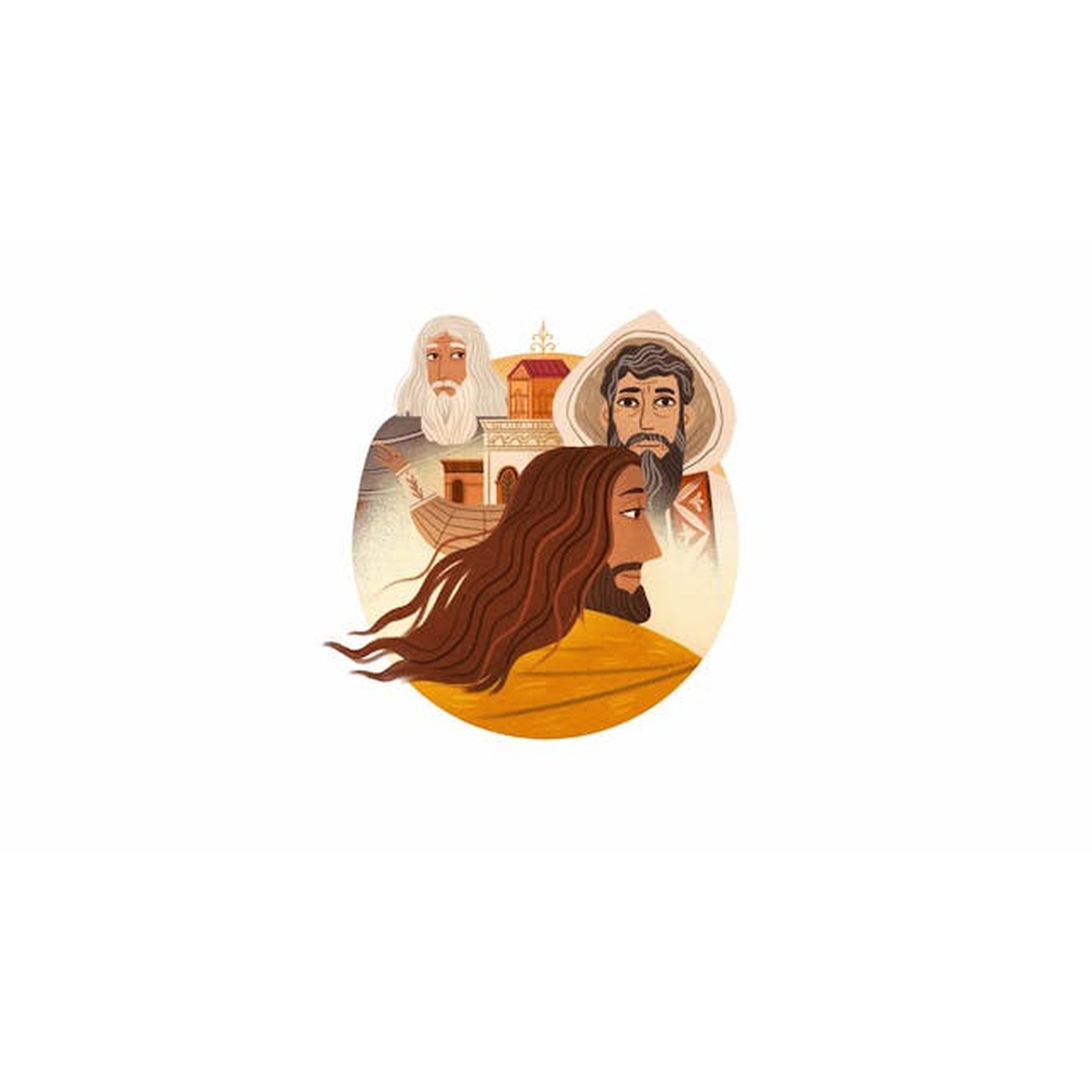
70. The Ascension
2025-10-13
The reflection traces a biblical pattern of “forty” as a time of waiting and preparation—Noah in the ark, Israel in the desert, Jesus in the wilderness—leading to the forty days after the Resurrection when Christ walks with his disciples. In those days, Jesus prepares them for a new mission: to stay in Jerusalem until they receive a new baptism, not of water but of the Holy Spirit—fire, power, and truth. Only then will they be ready to carry out the work he entrusts to them: to make disciples of all nations, to teach what he has taught, to proclaim that the world’s ancient wound can be healed through his Cross, and to invite all people into the joy of his Kingdom.
At the Ascension, Jesus returns to the Father, blessing his disciples and promising, “I am with you always, to the end of the age.” The apostles stand gazing upward, reluctant to let go, until angels gently redirect them: he will return, but for now they must obey his command. They go back to the upper room and wait in prayer. This moment holds together two essential movements of the Christian life: trusting that Christ is truly with us, even when unseen, and faithfully stepping into the mission he gives—confident that the Holy Spirit will come to strengthen, guide, and send us out.
Bible References:
- Genesis 7:4
- Genesis 7:12
- Genesis 7:17
- Numbers 14:33-34
- Deuteronomy 8:2
- Deuteronomy 29:5
- Matthew 4:1-2
- Luke 4:1-2
- Acts 1:1-5
- Acts 1:9-11
- Acts 1:12-14
- Matthew 28:18-20
- Mark 16:15-16
- Luke 24:49-53
- John 1:26-33
- John 14:16-18
- John 14:26
- John 16:7-13
- Revelation 19:7-9
Transcript:
The Ascension
For forty days, while rain fell upon the earth, Noah and his family waited for God to bring a new world out of the waters. For forty years, Moses and the Israelites wandered through the wilderness waiting to enter the promised land. For forty days, Jesus fasted in the desert preparing to begin his public ministry. And for forty days more, the resurrected Christ walked, talked, and ate with his disciples, preparing them to embark upon a whole new mission. Finally, the time came for Jesus to return to the Father. Before he left, he had some final instructions for his disciples. You must stay in Jerusalem for a little while longer, he told them. There is so much work for you to do, but for now, you must wait. John baptized people with water, but another baptism will come, a baptism in spirit and fire and truth. You will be baptized with the Holy Spirit, and then you will be able to do the great work I have for you. Your work, he continued, is to make disciples of all nations. Teach them what I have taught you. Tell them the story of all stories, and how every story in it has led to me. Tell them that the world's hurt which began in the garden long ago can now be healed because of what I did on Calvary. Tell them about my kingdom and invite them to the wedding feast. Lastly, tell them to observe all my commandments, for all authority in heaven and earth has been given to me. Now go, Jesus concluded, and baptize all people in the name of the Father and of the Son and of the Holy Spirit. And remember, I am with you always to the end of the age. Then, before their eyes, Jesus' feet left the earth and slowly his body began ascending to the clouds, not like he was flying, but more that he was being lifted up and carried home by the hand of the Father. The apostles stood staring, not blinking, not turning their heads, not taking their eyes off the Lord until he disappeared from sight. Even then, they couldn't bring themselves to look away or move from the spot where they stood. What if he came back? Just then, two angels appeared. Men of Galilee, why do you stand there? What are you looking at? One asked. He is gone, said the other, not waiting for their answer. He will eventually come back the same way, but not today. Now go and do as he said. So the disciples returned to Jerusalem, to the upper room where they had celebrated their last supper with Jesus before his crucifixion. And there they waited.
E70
Full
0:03:31

71. Pentecost
2025-10-13
After Jesus’ Ascension, the apostles gathered in the upper room, afraid and unsure, yet faithful in prayer. Together with Mary and other disciples, they waited for the promised Holy Spirit, even taking the time to replace Judas with Matthias so that the Twelve would be complete. Their waiting was not empty; it was filled with trust, prayer, and quiet preparation for whatever God would do next.
Then, on the feast of Pentecost, God answered in power. A mighty wind filled the room, tongues of fire rested on each disciple, and the Holy Spirit transformed their fear into courage and burning zeal. They rushed into the streets, proclaiming Jesus to people from every nation, and by a miracle of the Spirit, everyone heard the message in their own language. Peter boldly preached that Jesus—crucified and risen—is Lord and Christ, the fulfillment of God’s saving plan. When the crowd asked what to do, he called them to repent, be baptized, and receive forgiveness and new life. That day, about three thousand people believed. Pentecost reminds us that when we bring our fears and waiting to God in prayer, the Holy Spirit can change everything—filling us with courage, faith, and a desire to share Christ with the world.
Bible References:
- Acts 1:4-5
- Acts 1:12-14
- Acts 1:15-26
- Acts 2:1-41
Transcript:
Pentecost. For ten days after Jesus' ascension into heaven, the apostles huddled together in the upper room, not going out into the streets and not speaking to anyone they didn't trust. They wanted to do the work Jesus had called them to do, but they still struggled with fear. They knew that the people who hated Jesus would hate them too, and they knew that what those people had done to Jesus also could be done to them. While the disciples struggled with those fears, they prayed. They also welcomed other followers of Jesus, including Jesus' mother Mary, into the upper room to pray with them. And as they prayed, they kept waiting for the coming of the Holy Spirit about which Jesus had spoken. One day, while they were still waiting, Peter stood up before the group and said, Jesus chose twelve of us to be his apostles. One of us turned out to be a traitor and is now gone. We need to choose his replacement, and we should choose from those followers who have been with us from the beginning. The other apostles agreed, and after praying, the choice was made. A man named Matthias would be the twelfth apostle. Then they kept on praying and waiting. The waiting ended with a sudden rush of wind. One minute, Jesus' apostles and closest followers were gathered together in prayer, and the next minute, a mighty wind was racing through the room, while a holy fire danced about over each disciple's head. The Holy Spirit had come at last, and he changed everything. The apostles' fear left them in an instant, and an overwhelming desire to tell everyone in the world about Jesus burned within them. Together, the apostles raced out into the streets. It was the Jewish feast of Pentecost, and people from every land had come to Jerusalem to celebrate. When the visitors heard the apostles speaking, they were astonished, for everyone heard what was said in their own language. Somehow, the Holy Spirit had made every word that came out of the apostles' mouths understandable to everyone else, no matter what language they spoke, all at the same time. As the crowds expressed their astonishment, Peter stood up and began speaking. Friends, he said, I know what you're thinking. They've had too much wine to drink, but it's only nine in the morning. We've drunk no wine. We've drunk nothing. Our joy and excitement come from knowing the living God. Jesus of Nazareth was here. He walked among us and taught us and worked the greatest of miracles right before our eyes. The world was blind and crucified him, but then he rose from the dead. He lived again and walked among us again, all according to God's glorious plan, a plan he made out of love for us from all eternity to save his people and give us the chance to enter eternal life with him. Jesus is the one about whom David spoke, Peter continued. Jesus is the one whom all the prophets foretold. He is the one who will sit forever on the throne of David, not in this earthly city as we thought, but in heaven with the Father. God has made this Jesus, whom you crucified, both Lord and Christ. As Peter spoke, the Spirit moved in the hearts of those who listened. What do we do? they asked. Repent and be baptized, answered Peter. Seek forgiveness and mercy, and the Lord will welcome you into eternal life with him. That day, more than three thousand people came to believe and were baptized.
E71
Full
0:04:40

72. The Ministry of Peter
2025-10-13
In the early days of the Church, the apostles—especially Peter—preached boldly about Jesus in the temple, and many people believed, were baptized, and witnessed miracles of healing. The same power Jesus had promised them was now at work: sins were forgiven, the sick were cured, and the Church grew day by day. This new life in Christ, however, stirred up opposition from the chief priests, who arrested Peter and the others and ordered them to stop preaching in Jesus’ name.
Peter’s response was firm and faith-filled: he would obey God rather than men. Even imprisonment could not stop the Gospel, as an angel freed the apostles and sent them back to preach. Though the religious leaders were enraged and considered killing them, the Pharisee Gamaliel wisely counseled that if this movement was not from God, it would fade on its own—but if it was from God, no human power could stop it. Beaten but undeterred, the apostles rejoiced to suffer for Christ and continued to proclaim Him with even greater joy. Their witness invites us to trust that God’s work cannot be silenced and to ask for the courage to put obedience to Him above every human fear.
Bible References:
- Acts 2:37-47
- Acts 3:1-10
- Acts 3:11-26
- Acts 4:1-22
- Acts 4:23-31
- Acts 5:12-16
- Acts 5:17-42
Transcript:
The Ministry of Peter
The church was growing. Every day the apostles would go to the temple to proclaim the good news. And every day, someone, usually many someones, would welcome that news. They would hear about Jesus, all he did, all he taught, all he suffered, and they would believe. Baptism followed baptism in those first days. Miracles also followed miracles. The power Jesus had promised to his apostles had finally come. They could forgive sins, they could bind and loose, and they could heal. All Peter had to do was walk through the streets, and people would carry out their sick relatives, hoping his shadow would fall upon them. When it did, the blind saw, the lame walked, the sick returned to health. The chief priests and temple guards, however, were not pleased. They didn't like it when Jesus had worked miracles, and they liked it even less when his apostles did the same. So one day, after Peter healed a lame man in the temple, they had Peter and John arrested. The next morning, they examined them, demanding by whose authority Peter had healed the man. Peter wasted no words. By the authority of Jesus of Nazareth, whom you crucified, but whom God has raised from the dead. The priests knew if they punished Peter, the people would riot. So they tried to keep him quiet instead. Promise us that if we let you go, you will no longer preach in Jesus's name, they said. I will promise no such thing, answered Peter. If God says to speak, and you say to be quiet, who is it better for me to obey? God or you? Flummoxed, the chief priests let Peter and John go, but not for long. The apostles kept preaching and healing. The people kept believing, and the church kept growing, with more and more people receiving the gift of baptism every day. So this time, the chief priests had all the apostles arrested. They threw them in prison and went home for the night, leaving armed guards in charge. That very night, however, an angel of the Lord visited the prison and threw open the gates. Go back to the temple and keep preaching, the angel told them. The apostles thanked the angel and did as he said. The next morning, when the chief priests discovered that their prisoners were not in prison where they were supposed to be, but back in the temple doing the very thing they'd been told not to do, they rounded the apostles up for a third time and brought them before the ruling council. You have been told to stop preaching, they said, yet you fill all Jerusalem with your words. Why? We told you, answered Peter, we must obey God rather than men. We saw what the Lord did. We heard his words and witnessed his miracles and touched his wounds after he rose from the dead. How can we not speak about this? The priests were enraged and wanted to silence Peter for good, killing him and all the other apostles as they had Jesus. But a wise Pharisee named Gamaliel intervened. We have seen false teachers come and go, he said. They create a stir for a while, then they fade away. The same will happen to these men if what they teach is not true. But if they are doing God's will, nothing we do will stop them. And if we try, we will be the ones opposing God. The council saw the logic of his argument and settled for beating the apostles, then releasing them. Once more, however, they warned Peter and the rest of the apostles not to speak of Jesus. But once more, the apostles ignored them. They saw their beatings as a blessing, a chance to suffer with Christ. And so with even greater joy, they continued preaching and teaching about Jesus Christ everywhere they went.
E72
Full
0:05:04

73. Stephen's Martyrdom and the Conversion of Saul
2025-10-13
Stephen, a Spirit-filled deacon, boldly preached Christ even when arrested, reminding the religious leaders how they had rejected God’s prophets and crucified Jesus. Enraged, they stoned him outside the city, and Stephen became the first Christian martyr, dying with Christlike mercy on his lips: “Lord, do not hold this sin against them.” Among those watching was a young Pharisee named Saul, who soon led a fierce persecution against the Church, scattering believers from Jerusalem.
On his way to Damascus to arrest more disciples, Saul was stopped by a blinding light and the voice of Jesus: “Why do you persecute me?” Struck blind and humbled, Saul waited in darkness until the Lord sent Ananias to lay hands on him. Saul’s sight was restored, he was baptized, and the persecutor became a passionate preacher of the very Christ he once opposed. Though many feared and doubted him at first, Barnabas stood by him, and Saul—now known as Paul—began proclaiming Jesus with power. This story reminds us that God can bring grace out of violence, turn enemies into apostles, and write a new story even from our worst sins.
Bible References:
- Acts 6:8-15
- Acts 7:1-60
- Acts 8:1-3
- Acts 9:1-30
- Acts 22:3-16
- Acts 26:9-18
Transcript:
Stephen's Martyrdom and the Conversion of Saul
When Gamaliel had told the council it was better to let the apostles go rather than risk opposing God, they had listened. They watched and waited. As they did, the apostles continued to preach, and the church continued to grow. Some of the priests and teachers came to believe too, but others did not. And as fear and anger spread among certain Jewish leaders, a deacon named Stephen, who was leading many people to Christ, found himself arrested. When Stephen was brought before the council, he didn't apologize for his preaching. Instead, he preached to the council, proclaiming God's goodness and reminding the chief priests and elders of what they had done to Jesus. You have always tormented the prophets God has sent to you, and now you have killed the Christ, he concluded. Enraged by his words, the council had Stephen dragged out beyond the city gates, and the people threw heavy stones at him until he finally collapsed and died, becoming the first martyr of the early church. His last words before dying were, Lord, do not hold this sin against them. As those stones flew, a young man watched. His name was Saul. He was a teacher of the law and a hater of the church. After that day, he became the church's chief opponent, going from house to house, arresting Jesus' followers and sending them to prison. The persecution led by Saul was so fierce that all the faithful, except for the apostles, fled Jerusalem, fearing for their lives. That wasn't enough for Saul, though. He wanted to stamp out the disciples of Jesus wherever they were. So, full of zeal, he asked the high priest for permission to go to Damascus and arrest the disciples there. Permission was granted, and Saul set off on the road to Damascus. Saul had almost reached the city when a bright light from heaven flashed around him, dazzling and frightening Saul and his companions. Awestruck, Saul fell to the ground. Then, a voice spoke to him. Saul, Saul, it said, why do you persecute me? Who are you? answered Saul, both terrified and confused. I am Jesus, the voice said, whom you are persecuting. Now get up and go into the city. You will soon be told what to do. Saul moved to stand up, but he didn't know which way to go. His sight was suddenly gone. He was blind. His companions helped him up, then led him into Damascus, where for three days, Saul sat in darkness, neither eating nor drinking. On the third day, the Lord appeared to a disciple in Damascus named Ananias and told him to go to Saul. Ananias, however, hesitated. Are you sure, Lord? he asked. I've heard of that man. He is no friend of ours. He came here to arrest us and kill us. I have chosen him for a great work, answered Jesus. Now go. So Ananias went. The man he found waiting for him, however, wasn't the murderous enemy of the church who had left Jerusalem, but rather a humble, contrite believer who wanted to be baptized and learn more about Jesus. Ananias laid his hands on Saul and prayed over him. Then, as suddenly as Saul's sight was lost, it was restored. He rose, was baptized, and joined the disciples. Within days, Saul was preaching in the synagogues in Damascus, teaching about Jesus and calling people to repent and believe. Many were amazed and came into the church because of his preaching. Some were angry, however, and plotted to kill Saul as he had plotted to kill other believers. Learning of the plot, Saul's new friends helped him escape by lowering him over the city walls in a basket. He then returned to Jerusalem. There, the local disciples did not give him the warmest of welcomes. It's a plot, they said among themselves. He has come to trap us and kill us all. But Barnabas, one of the disciples who knew what had happened in Damascus, took Saul to the twelve and told the story of the voice, the blindness, the baptism, the preaching, everything. Afterward, with the apostles' blessing, Saul, who became known as Paul, began preaching in Jerusalem, using his deep knowledge of the scriptures to show how they all pointed to Jesus the Christ, and many more came to believe.
E73
Full
0:05:49
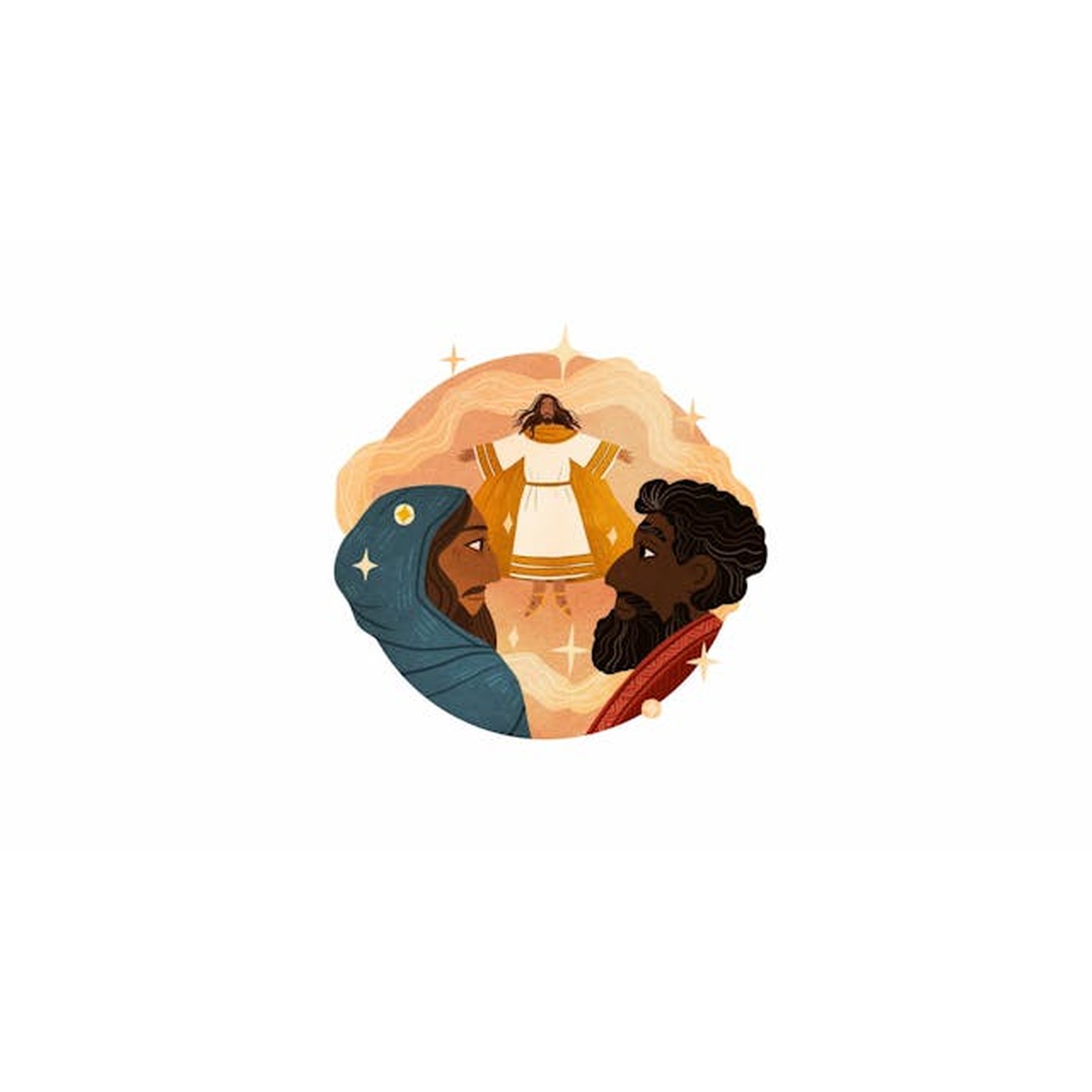
74. Philip and the Ethiopian
2025-10-13
This reflection on Philip and the Ethiopian shows how God reveals that Jesus came not only for the Jewish people, but for every nation and every heart that is open to Him. Though Israel had been prepared for centuries to receive the Savior, many still wondered: was this salvation only for the descendants of Abraham, Isaac, and Jacob? God’s answer unfolds as the early Church is scattered by persecution and the gospel begins to spread beyond Jerusalem, into Judea and Samaria, and then even farther.
Philip’s encounter with the Ethiopian official makes this universal call of the gospel very personal. The Ethiopian is already seeking God, reading Isaiah but not yet understanding. Philip draws near, listens, and gently explains that the suffering servant is Jesus, the One sent to heal the world’s wounds and open the way to eternal life with God. The man’s eager response—“Is there anything to prevent me from being baptized?”—shows that the grace of Christ is offered freely, without distinction of race, nation, or background. In Philip’s simple obedience and the Ethiopian’s humble desire, we see our own invitation: the Lord wants every one of us, wherever we come from, to hear the good news, to be baptized, and to walk in the new life Jesus gives.
Bible References:
- Acts 8:1-8
- Acts 8:26-39
- Isaiah 53:7-8
- Matthew 28:19-20
- John 3:16
- Acts 1:8
- Galatians 3:28
Transcript:
Philip and the Ethiopian
Jesus was Jewish. His mother was Jewish. His disciples were Jewish. All the first believers in Jerusalem were Jewish, and every one of them came from a long line of Jews, men and women who were descended from Abraham, Isaac, and Jacob. They were a people set apart, Israel, God's chosen people, to whom he had entrusted the law and sent the prophets and spent thousands of years preparing for one special purpose, to receive the Savior.
But even with all that preparation, many of the Jewish people didn't recognize Jesus when he came, and even among those who did recognize him, who knew Jesus, loved Jesus, and believed in Jesus, there were questions. One question was this, did Jesus come for every person from every nation, or did he come only for the descendants of Abraham, Isaac, and Jacob?
God answered that question around the same time Saul began persecuting the church. When the disciples fled Jerusalem, they began to proclaim the gospel throughout the rest of Judea and in Samaria. Among those disciples was Philip, a deacon in the early church. He too went and preached in Samaria, and many more believed in Jesus and were baptized. But then Philip heard the Lord say, get up and go south toward Gaza. Philip obeyed, and soon enough he ran into an Ethiopian man who served the queen of Ethiopia. The man was sitting in his chariot reading the prophecies of Isaiah. Philip approached him. Do you understand what you're reading? Philip asked.
Not really, answered the Ethiopian. I need someone to explain it to me, especially this part that talks about a sheep who is led to the slaughter and who is denied justice. About whom is the prophet writing?
I can tell you if you let me travel with you for a while, said Philip. And climbing into the Ethiopian's chariot, Philip shared with him the story of all stories, telling him about what God had done to prepare his people and how he had sent his son into the world to help heal the world's hurts and to restore the chance to live the life people were always meant to live, eternal life with God. As Philip finished explaining the good news, the Ethiopian spied a pool of water not far from the road.
Look, there is water, he said. Is there anything to prevent me from being baptized right now? I want to follow Jesus too and receive the gift of eternal life. There is nothing to prevent it, said Philip. Then both men climbed out of the chariot, went to the water, and there Philip baptized the Ethiopian in the name of the Father and of the Son and of the Holy Spirit.
E74
Full
0:03:33

75. Peter's Vision
2025-10-13
This episode reflects on Peter’s vision in Acts 10 and how God gently led the early Church to see that Jesus came to save all people, not only the Jews. Peter, a faithful Jew, had always kept the laws about clean and unclean foods and about avoiding table fellowship with Gentiles. These laws once helped Israel stay faithful in a world full of false gods, but now God was doing something new: the time had come for the Gospel to go out to every nation.
Through a vision of a great sheet filled with every kind of animal and the words, “What God has made clean, you must not call unclean,” God prepared Peter’s heart. When the Holy Spirit then led him to the Gentile Cornelius, Peter witnessed the Spirit fall on these non-Jews just as at Pentecost. Peter realized that God’s love and salvation in Jesus are for everyone, and he baptized Cornelius’s household and shared a meal with them. Even the hesitant disciples in Jerusalem came to praise God when they heard what had happened. From then on, the apostles went out to the whole world, proclaiming that in Christ no one is excluded: all are invited into God’s family.
Bible References:
- Acts 10:1-48
- Acts 11:1-18
- Acts 8:26-40
- Matthew 28:18-20
- Mark 16:15
- Genesis 12:1-3
- Exodus 32:1-35
- Leviticus 11:1-47
- Deuteronomy 14:3-21
- Acts 2:1-4
- Galatians 3:28
- Ephesians 2:11-22
Transcript:
Peter's vision. God made it clear to Philip that Jesus came to rescue all people from sin and death, not just the Jews. But he still had the apostles and other disciples to convince. He started with Peter. Peter was a faithful Jew who obeyed all the laws of Moses. This included the big laws, like the Ten Commandments, and the smaller, more detailed laws, like the ones about ritual cleanness. For example, the Jewish people had laws about what foods they could and couldn't eat, and laws about what kind of people they could and couldn't eat with. God had given these laws to Moses long ago, after the Israelites worshipped the golden calf. He knew that without these laws, the people were in danger of forgetting what he had taught them and worshipping the pretend gods of other nations. Having rules that kept Israel separate from other peoples was supposed to help prevent Israel from losing their way. But now, the time for which God had been preparing his people had arrived. He didn't want them to avoid other nations. He wanted them to go out to all the world and proclaim the good news. They couldn't do that, however, if they were only allowed to eat with fellow Jews. The need for the laws about ritual cleanness had come to an end. God revealed this to Peter in a dream. One day, as he was praying, Peter had a vision. He saw a huge white tablecloth descending from the sky. Across it moved every kind of animal—cows and chickens, sheep and goats, turkeys and fish, and hundreds, maybe thousands more, including some of the animals Jewish people weren't allowed to eat—pigs and rabbits, birds and bears, creeping insects and crawling snakes. Then a voice spoke to Peter, telling him, Peter was shocked. But Lord, he said, some of these animals are unclean. I would never do that. God has made all things clean, Peter, the voice answered. Peter, however, wasn't convinced. Three times he was shown the tablecloth covered in animals. Three times he was told to eat what God had provided. And three times Peter questioned God. Finally, after the voice insisted for the third time that God had made all things clean, Peter awoke from his vision. That very minute, three men arrived at the door. They were Gentiles, not Jews, but the Holy Spirit whispered to Peter that he should go with them to the house of their master, Cornelius. When they came to the house, Cornelius told Peter how an angel had come to him and told him to find Peter, who would explain how to be saved. So Peter began speaking to them about Jesus. Just then, the Holy Spirit came upon the Gentiles, just as he had upon the disciples at Pentecost. Peter now understood what Philip had understood when he met the Ethiopian. God's gift of his life and love was for everyone, not just the Jews. So Peter baptized the whole household and sat down to dinner with them, eating everything they served. When word of what Peter did got back to some of the disciples in Jerusalem, they were concerned. How could you do such a thing? they asked him. You had to know they were unclean. That's when Peter told them about the vision and about how the Holy Spirit had come down on the Gentiles while he was speaking. Praise God, the disciples said when Peter finished his story. And salvation really is for the Gentiles too. And from that day forward, the apostles traveled as far as ships and horses and feet could carry them, proclaiming to everyone the good news of God's love and salvation in Jesus Christ.
E75
Full
0:04:45

76. Revelation
2025-10-13
Revelation reminds us that God’s great story did not end with Jesus’ Ascension or the death of the last apostle. It continues through the Church’s worship, every act of love done in Christ’s name, and every heart that longs for God—including yours. Your hopes, wounds, and struggles are not forgotten; from the very beginning, God has had a plan to bring something beautiful out of them. You are truly part of the “story of all stories.”
In the Book of Revelation, John is given a vision of how this story moves toward its fulfillment: a heavenly liturgy around God’s throne, the Lamb who was slain, the struggles between good and evil, the prayers of the saints rising like incense, and Mary crowned in glory. Though the story on earth is marked by battles and tribulations, it does not end in war but in a wedding feast—the marriage supper of the Lamb. There, in the new heaven and new earth, God’s people will shine with his own radiance, and every tear will be wiped away. Until that day, the Church keeps praying with John, “Come, Lord Jesus,” trusting that the Author of the story is leading us toward a joy that never ends.
Bible References:
- Revelation 1:9-11
- Revelation 4:1-11
- Revelation 5:1-14
- Revelation 6:9-11
- Revelation 8:3-4
- Revelation 11:19
- Revelation 12:1-17
- Revelation 13:1-10
- Revelation 14:12-13
- Revelation 19:6-9
- Revelation 21:1-5
- Revelation 21:9-11
- Revelation 22:1-5
- Revelation 22:17
- Revelation 22:20-21
- Matthew 13:43
- John 1:29
- Ephesians 5:25-27
- Ephesians 5:31-32
- 1 Corinthians 13:12
- Hebrews 12:22-24
Transcript:
Revelation
The story of all stories didn't end when Jesus ascended into heaven, nor did it end with Pentecost, or the martyrdom of Stephen, or the conversion of Saul. It went on and on as the apostles traveled the world proclaiming the gospel, as the church grew in its understanding of who Jesus was and what Jesus taught, and as the faithful endured suffering and persecution for following Christ.
The story of all stories didn't end with the death of the last apostle either. In fact, it hasn't ended yet at all. It goes on still. The story of all stories is still being told. Every liturgy that's celebrated, every kind deed done in Christ's name, and every heart that longs for God is part of the story of all stories.
You are part of the story of all stories, too. Your hopes, your dreams, your hurts, your struggles, God sees it all. Even better, he's had a plan to make something wonderful from it all since the moment the story of all stories began.
The story of all stories will end someday, though. The story we know, the only story we've ever known, will conclude, and a new story, the everlasting story, will begin.
Near the end of his life, the apostle John had a vision of how this will happen. While he was imprisoned on the island of Patmos, Jesus came to John and pulled back the veil between heaven and earth, giving John a glimpse into the city of God, where the Father sits on a throne surrounded by a sea of glass, where Christ offers himself eternally for us as the Lamb of God, standing as though slain, and where angels and saints fill the skies with songs of praise, crying out,
Holy, holy, holy is the Lord God Almighty, all day and all night.
There, standing in the courts of heaven, John saw the story of all stories from beginning to end, not as men and women on earth see it, but as the angels and saints in heaven see it. He saw what we cannot see, from the great battle at the beginning of the story of all stories, when Satan rebelled against God, to the battle still being fought for the soul of every believer.
He saw persecutions and tribulations. He saw civilizations rise and civilizations fall. He saw a wicked dragon and the Ark of the Covenant. He saw Mary hounded by Satan and Mary crowned with twelve stars standing with the moon under her feet.
He saw martyrdoms and miracles, good and evil, life and death. And through it all, John saw the prayers of the angels and saints rising like incense before the throne of God, strengthening the faithful, defeating the devil, and bringing the story of all stories to the most joyful of ends.
For although battle follows battle, and tribulation follows tribulation through every part of the story of all stories, the story itself doesn't end with war. Instead, it ends with a feast. It ends with the wedding supper of the Lamb, where Christ is the bridegroom and the church is his bride, and all things are made new.
That end, however, is also a beginning. Where the story of all stories ends, the everlasting story begins. The feast, the supper of the Lamb, ushers in a new Jerusalem, a new heaven and new earth, a new us.
We will shine like the sun, made radiant by the one who reigns forever, the one who wrote the story of all stories and is writing it still in each and every heart.
The supper of the Lamb which John witnessed is so joyful, so glorious, and so mysteriously lovely, that when John returned to the world of men, he wanted nothing more than for the old story to end and the everlasting story to begin.
Come, Lord Jesus, he prayed.
With those words, the Bible ends, but the prayer goes on. Every day until the story of all stories comes to a close, the church waits in hope for the next story, the story that goes on forever.
The story where there is no pain, no loss, no tears, where every moment of the story is more beautiful and more glorious than the moment before, and where God's faithful, beloved children are safe, at home, at last.
Come, Lord Jesus, come quickly, come soon, make all things new. Amen.
E76
Full
0:06:02