
The Story of All Stories
The Catholic story Bible you’ve been waiting for! Enter into the most important tale of all: the true story of God’s love for you. Experience the wonder and excitement of salvation history through Emily Stimpson Chapman’s compelling storytelling and Diana Renzina’s beautiful illustrations. Each chapter is accompanied by the voices of the Church—saints, popes, and Church Fathers—which highlight how every Bible story is a thread in the great tapestry of God’s redemption.
Kids & Family
Stories for Kids
Subscribe
Choose your podcast app
Subscribe
Choose your podcast appIf the button doesn't work on your device, follow by RSS:
- iPhone/iPad: Open Apple Podcasts → Library → tap More (···) → Follow a Show by URL → paste the RSS URL below → Follow.
- Mac: Open Apple Podcasts → File → Follow Show by URL → paste the RSS URL → Follow.
RSS feed
Use this URL to subscribe in any podcast app that supports RSS.

01. Creation
2025-10-13
This reflection retells the story of creation as the one great story that begins not with “once upon a time,” but with God alone, before time itself existed. By the power of His word, God calls everything into being: light breaking into darkness, the vast heavens and galaxies, the earth with its oceans, rivers, plants, and trees. He adorns creation with the sun, moon, and stars, then fills sea and sky with living creatures, and the land with animals of every kind. At each step, God delights in the goodness and beauty of what He has made.
The high point of creation comes when God forms human beings—Adam and Eve—in His own image and likeness. He creates them capable of reason, creativity, moral choice, and self-giving love, and places them in the garden of Eden to be fruitful, to build families, and to care for the earth and all living things. Everything in the universe begins as a loving thought in the mind of God, who declares it “very, very good” and then rests, not from exhaustion, but to rejoice in His creation. This story reminds us that our lives and our world are willed, loved, and entrusted to our care by God.
Bible References:
- Genesis 1:1-31
- Genesis 2:1-25
Transcript:
Creation
Most of the world's best stories begin with the same four words, once upon a time. But the one great story can't begin that way, for in the beginning, there was no time. In the beginning, there was nothing, no sun, no moon, no earth, no sky, no wind, no sound. There was only God. He was there in the beginning when all was dark, and he knew when the moment came for darkness to end. In that moment, God spoke into the darkness saying, let there be light. And at his word, with one spark of brightness, time began. Then God spoke again. This time he said, let the heavens take shape. And again, at his word, great galaxies appeared, dark and deep, stretching on and on toward infinity. When God spoke for a third time, he spoke earth, our home, into being. Let there be a world filled with vast oceans, he said. Let rivers run through the dry land, and let lakes and creeks bubble up to make green things grow. Let trees shoot toward the sky, and let all the earth be covered with plants that are good to eat, and flowers of every color and shape. God looked upon what he had done. He smiled at how good and beautiful it was, but he still had more work to do. This time, God said, let there be two great lights, one to rule the day and one to rule the night. As he spoke, rays from the warm golden sun danced upon the earth, while the cool light of the moon waited its turn to shine in the darkness. Elsewhere in the heavens, gleaming stars suddenly twinkled bright, ready to add their light to the light of the moon. Next, God said, let there be life in the oceans and the skies. And just like that, the seas filled with every kind of creature that swims, from the littlest of fish to the greatest of whales, while above the waters, winged birds took flight, soaring high into the sky. God then looked at the earth and said, let there be life on all the land. And there was. There were snakes that slithered and bugs that crawled. There were bunnies that hopped and dogs that jumped. There were mighty gray elephants that lumbered through the jungles and sleek black horses that raced along the plains. There was every animal you could ever imagine, and some that you probably can't imagine, all created by God. Finally, God spoke one last time. Let there be someone made in our image, he said. Creatures who can think great thoughts and create works of beauty, who can know right from wrong, and who can give themselves in love to another. And so God made Adam and Eve, a man and a woman, in his image and likeness. He made Adam from the dust of the earth, and he made Eve from a rib taken from Adam's side. He then gave them a home, a garden paradise called Eden. Be fruitful and multiply, he told the two. Bring children into this world and make a home of this earth, filling it with people and beauty and order. Care for every living thing and protect this garden, keep it safe. With those words, creation was almost complete. A whole universe had been born, with every part of it starting as a thought in the mind of God. He made it all. He loved it all. It is very, very good, he said. And with that, on the seventh and last day of creation, God completed his work and rested.
E1
Full
0:04:42

02. The Fall
2025-10-13
This episode retells the story of the Fall, showing how sin first entered the world and wounded our friendship with God. Adam and Eve begin in perfect harmony with God, each other, and creation, living as beloved children in a beautiful garden. God gives them everything and asks only one act of trust: do not eat from the tree of the knowledge of good and evil. Satan, a fallen angel consumed by pride, tempts them by twisting God’s words and stirring up doubt and desire. When they choose to disobey, the life of God in their souls is lost. They feel shame, hide from the Lord, and begin blaming one another—signs that their inner harmony and their relationships are now broken.
Yet even in this moment of tragedy, God’s love and mercy shine through. He grieves over the damage their sin has caused and explains how suffering, toil, and death will now mark human life. But he also speaks a promise: one day, a woman will bear a Son who will defeat the serpent and restore what has been lost. The story ends with Adam and Eve leaving Eden, but not with God abandoning them. Instead, it points forward to Christ, the Savior who will come into our fallen world to heal our hearts, conquer sin, and lead us back into true communion with God.
Bible References:
- Genesis 2:7-9
- Genesis 2:15-17
- Genesis 3:1-24
- Revelation 12:7-9
- Wisdom 2:23-24
- Romans 5:12-19
- 1 Corinthians 15:21-22
- 1 Corinthians 15:45-49
Transcript:
The Fall. Adam and Eve should have lived happily ever after. They had each other, a beautiful home in paradise, and most of all, their friendship with God, who walked in the garden with them every evening and who had breathed his very own life into them. God was a true father to Adam and Eve and gave them everything they needed. In return, he asked only one thing, that they never eat the fruit from the tree of the knowledge of good and evil. If they did, God explained, they would die. Adam and Eve obeyed and all was well until Satan arrived. Satan was an angel who had served God in heaven. He had been the most beautiful of all the angels, but then his beauty went to his head and he became so puffed up with pride that he refused to serve. There was a great battle. God won, of course, and Satan, along with a whole legion of other bad angels, was cast out of heaven forever. Satan wasn't sorry, though. Instead, he wanted revenge. That's why the once glorious angel disguised himself as a snake and slithered into the garden. There he found Adam and Eve standing near the tree with the forbidden fruit. What a beautiful garden, he said to Eve. Such lovely fruit. It's a shame God won't let you eat any of it. Oh no, Eve replied. We can eat anything we want, just not the fruit from the tree at the center of the garden. But that's the best fruit of all, said the sly snake. I'll tell you a secret. God doesn't want you to eat that fruit, because if you do, you'll become as wise as he is. Eve looked at the snake. Then she looked at the fruit. It did look delicious, so ripe and juicy. She also thought about how wise God was. Why shouldn't she be wise too? Suddenly, desire for the fruit overwhelmed her. She walked up to the tree, plucked a piece from its branches, and took a bite. She then handed it to Adam. Without so much as a word of protest, he took a bite too. And just like that, Adam and Eve died. Really, they did. Now, it's true they didn't keel over on the spot. Their hearts kept right on beating for many more years. But inside, the life that had filled their souls, the life of God, was gone. It was like a great light went out in their hearts. They died spiritually that day, and Adam and Eve knew it. When they looked at each other, both felt ashamed of who they were and what they had done. Soon, evening approached, and God came to walk with his children. Normally, they ran right to him. But this time, when they heard him, they ran away and hid. Adam, Eve, where are you? God called. What have you done? Adam poked his head out from behind a tree. It's not my fault, he cried. That woman whom you gave to me ate the forbidden fruit first. It's not my fault either, protested Eve. The snake tricked me. God looked at the pair and grieved. I love you so much, God said. But you've broken the whole world by turning your back on me. Repairing the damage will take time. And for now, life will be so much more difficult for you. You'll struggle to love one another as you should. You'll try to control, manipulate, and use one another. Bringing children into the world will be painful. Work will be toil. All creation will fight against you. And sickness and death will come for all. God then turned to the snake and cursed him, saying, I am not done with you. One day, the woman will bear a son who will defeat you and restore what has been lost. You will not win. With that, God sent Adam and Eve away from Eden and placed mighty angels and a flaming sword at its gates to guard it against all who might enter, even until the end of the world.
E2
Full
0:05:10

03. Cain and Abel
2025-10-13
After Adam and Eve are sent out of Eden, they begin a hard new life and become parents to two sons: Cain, a farmer, and Abel, a shepherd. Both learn to worship God, but their hearts differ. Abel offers God the very best of his flock, holding nothing back, while Cain offers only some of his crops, keeping the best for himself. God is pleased with Abel’s wholehearted gift but not with Cain’s half-hearted one. Instead of repenting, Cain lets jealousy and anger grow in his heart, ignoring God’s gentle warning that sin is “crouching at the door” and must be mastered.
In his rage, Cain lures Abel into the field and kills him, destroying the brother he was meant to love and protect. When God confronts him, Cain lies and refuses responsibility: “Am I my brother’s keeper?” God reveals the truth, declares a just punishment—Cain must wander the earth—and yet still shows mercy, placing a mark on Cain to protect him from being killed. Adam and Eve mourn the loss of both sons, but God allows new life through another son, Seth, whose descendants remember the Lord. This story reminds us that God desires our whole hearts, calls us away from resentment and sin, and even in the face of grave evil, continues to offer both justice and mercy.
Bible References:
- Genesis 4:1-26
Transcript:
Cain and Abel
In the garden, God had told Adam and Eve that their refusal to listen to him and trust him, their sin, would make life much more difficult for them. They soon learned he was right. The gates of Eden were shut against them, and they had to make a new home for themselves in the east, which wasn't easy. Soon, they also had to make a home for a new baby, for Eve gave birth to a son. They named him Cain. After that, another little boy was born to Adam and Eve. They named him Abel. We don't know much about these two brothers when they were little. We don't know if they liked to play games together and wrestle. They probably did. We also don't know if they fought and hurt each other's feelings. They probably did that too. But we do know that when they grew up, the saddest, most awful, most terrible thing happened between them. As a young man, Cain helped his family by working the land and growing food, while Abel helped by caring for their animals. Both men had learned about God from their parents and knew that it was important to thank God for all he gave them. So one day, each gave a gift to God. Cain gave God some of his crops, though not the best, while Abel gave God the very best meat from his very best animals, the firstborn of the flock. When God saw Abel's gift, he was pleased. Abel had given him the best he had to give. He had held nothing back from God. God was less pleased with Cain's gift, for Cain had not given him his best. He had kept that for himself, perhaps out of fear or maybe pride. Either way, it was clear which gift honored God the most, Abel's, and that made Cain angry. God knew this. He watched the young man's anger grow and grow and knew no good would come of Cain's brooding. So he called out to Cain, saying, Why are you so angry? You know where you went wrong. Choose differently next time, and I'll be proud of you too. God then added a word of warning. You need to let go of your anger, Cain. Sin is crouching at the door. If you do not master your anger, it will master you. But Cain didn't listen. Instead, the next day, he asked Abel to go out into the fields with him. While they were there, the elder brother turned on the younger brother. He lashed out in his anger and then did the most horrible thing. He killed his little brother, taking the life of someone he was supposed to love and protect. God, who sees all, saw what Cain had done and called out to him again. Cain, God asked, where is your brother? Cain should have confessed and asked for forgiveness right then and there, but instead, he added sin to sin. How should I know? He lied. Am I my brother's keeper? I know the evil you have done. Do you not realize how wrong that was? God thundered back. Your brother's blood cries out to me from the ground. That same ground will now curse you. Nothing will grow for you anymore. You have no home. You must leave here and be a fugitive and wander the earth. Cain was overwhelmed with fear and despair. I am cursed. Someone will find me and kill me. No, said God. I will not let anyone do to you what you did to your little brother. I will put my mark upon you and that will keep you safe. God did as he said he would and marked Cain so everyone would know who he was. Then Cain left his family, never to return. Adam and Eve grieved the loss of both their sons, but in time they welcomed a new child, Seth. Cain and Seth would both have children too, but only the children of Seth remembered the Lord.
E3
Full
0:04:57

04. Noah and the Ark
2025-10-13
Humanity had turned away from God so deeply that people no longer wanted goodness; they chose anger, jealousy, and violence instead. God grieved over this broken world and decided to begin again, but in His mercy He preserved the one man who still walked with Him: Noah. God revealed His plan to send a great flood and asked Noah to build an ark large enough for his family and two of every kind of animal. Though others surely mocked and misunderstood him, Noah trusted God and obeyed. When the rains came for 40 days and 40 nights and the waters covered the earth, God kept Noah and all in the ark safe.
When the flood finally ended and the ark came to rest, Noah and his family stepped into a renewed world with a fresh call: to live differently than those before them, to be fruitful, to care for creation, and to walk in God’s ways. God then made a covenant, promising never again to destroy the world by flood. He set the rainbow in the sky as a sign of His unbreakable faithfulness. While human beings often fail and forget, God does not. The story of Noah invites us to trust God in dark times, to turn away from sin, and to remember that every rainbow is a gentle reminder that God keeps His promises and always desires to lead us into a new beginning.
Bible References:
- Genesis 6:5-22
- Genesis 7:1-24
- Genesis 8:1-22
- Genesis 9:1-17
Transcript:
Noah and the Ark. Many years passed, and with each new year, men and women grew more wicked. They forgot about Adam and Eve. They forgot about God's love for them and his life that had lived in them. They forgot about everything good God had done. All they knew was a world broken by sin. Worst of all, and this is the very saddest part, they didn't want to know anything else. They wanted to be angry, jealous, and fighting all the time. God looked at all he had made and mourned what was lost. He knew there was no making things better. The time had come to start over. So God went to talk to the last good man, the only person who wasn't wrecking the world from sunup to sundown. The man's name was Noah. Noah loved God and all God had made. He couldn't walk with God like Adam and Eve did, but he still talked to God every day and tried his best to serve the Lord. God called out to Noah and told him his plan. People will not follow the good path I have created for them, God said. They won't stop hurting themselves, so I must stop them. I'm going to send a great flood which will wash over all the earth. It will rain for 40 days and 40 nights, but I will keep you safe, Noah, for I have a special job for you. That job, God explained, started with Noah building a huge boat. God called it an ark. The boat had to be big enough to hold Noah, his wife, his three sons, and their wives, and two animals of every kind, both male and female. God then told Noah how to build the boat. Now, get busy, finished God. You haven't much time. Noah set to work. His neighbors must have been very confused why an old man like Noah had suddenly taken to shipbuilding. But no matter what they said, Noah kept at it, for he trusted that God, being God, knew what he was talking about. Once the ark was finished, God told Noah to get his family and all the animals on board, for soon the waters would come. Again, Noah did as God asked. Two by two, they went inside. Then, just as Noah sealed the door shut, it began. First, the sky grew dark and thunder boomed. Next, the heavens burst open and water poured down. At the same time, all the waters beneath the ground rushed upward and exploded out of the earth like great fountains. There was water everywhere, and it didn't stop coming. For 40 days and 40 nights, the storm raged. Puddles became creeks. Creeks became rivers. Rivers became oceans, until finally, one great ocean covered the whole earth. But even then, the waters rose higher and higher. To Noah and his family, it must have felt like the rain would never stop, that the water would just keep rising straight up to heaven. But at last, after 40 days, the clouds parted, the sun came out, and a great wind slowly dried up the waters. Days passed, then weeks. Eventually, the boat came to rest on dry ground. When all its passengers emerged, a whole new world awaited them. There was no hatred or violence. There was only Noah, his family, and the chance to start again. After Noah gave thanks to God, the Lord spoke to his family, saying, I want you to do better than those who came before you. Be fruitful and multiply. Welcome new babies and take good care of this world. Also, God concluded, I promise I won't destroy the world with a flood again. When you see a rainbow in the clouds, know that it is a sign from me reminding you of my faithfulness. Men and women break their promises, but I never break mine.
E4
Full
0:05:04

05. The Tower of Babel
2025-10-13
After the flood, Noah’s descendants stayed together in one place, all speaking the same language and sharing the same life. When they settled in the land of Shinar and discovered they could make strong bricks, they decided to build a great city and a tower “that reaches all the way to heaven.” Their goal was not to honor God, but to make themselves great, famous, and powerful—wanting to be like God without needing God.
Seeing this, God knew their pride would only lead them to misery. He had created them out of love and for love, to live with Him and depend on Him, not to seek greatness apart from Him. Instead of destroying them, He gently but firmly stopped their project by confusing their language. Suddenly they could no longer understand one another, and in fear and confusion they scattered across the earth. The unfinished city became known as Babel, “confusion.” This story reminds us that whenever we try to build our lives on our own strength and glory, without God at the center, our plans ultimately crumble. True greatness and unity come only from living in humble relationship with the Lord.
Bible References:
- Genesis 11:1-9
Transcript:
The Tower of Babel. When Noah walked off the ark, his wife, his three sons, and his sons' wives walked off with him. His sons' names were Japheth, Ham, and Shem. Each of those sons would go on to have children of his own. Then those children would have even more children. Eventually, Noah's descendants would fill the whole earth, but that took a long while. Before then, Noah's descendants lived close together near two great rivers, the Tigris and the Euphrates. Because they were all part of the same family, everyone spoke the same language. There was no such thing as Spanish or English or Arabic. Instead, everyone used the same words for everything, and everyone understood each other. They also traveled together. Huge groups of grandparents, parents, brothers, sisters, aunts, uncles, and cousins moved from one place to another, all at the same time. This is what the descendants of Noah did for several generations after the flood. Hundreds and hundreds of them, maybe even thousands, went looking for a better place to live and found it in a place called Shinar. There, they discovered rich soil and clay that they knew could make strong bricks. We should build a great city, someone suggested. Yes, someone else said, and we should build a tall tower there, the tallest tower anyone has ever seen, a tower that reaches all the way to heaven. We will show everyone how great and strong we are. We will be famous for our tower. We will reach the very stars. We will be like God. Now, you would think that after the flood, people wouldn't be so foolish. They should have known that without God's help, they couldn't reach heaven. They were simply human beings who needed God. But this is one of the things Adam and Eve's sin did to the world. It hurt people's ability to think clearly, and these people were not thinking clearly. So, once the bricks were made, they started building. They built their tower taller and taller and taller, one floor after another, one stairway after another, leaving the earth far behind. How marvelous and strong we will be, they cheered as the tower inched toward the clouds. Our tower will touch the heavens. God, however, saw things quite differently. He had been watching these people from the start, and he knew they had made a poor choice. Oh, these children learn nothing, he thought. If they keep building this tower, trying to prove how great they are, they will never be satisfied. They want to make themselves great and their name great. They want to do it on their own, apart from me, but they don't see. They weren't made to do anything apart from me. I made them out of love and for love, and they can't know that love if they try to live apart from me. They won't know greatness. They will just know misery. I must stop them before they ruin everything all over again. The last time God put an end to people wrecking the world, he sent that terrible flood, but he had promised he would never do that again. So this time, he confused the speech of everyone in the whole city. No one knows quite how it happened. One minute everyone was chatting about how great they were, and the next minute nobody understood each other. It was like they were all babbling babies. Every word that came out of one person's mouth sounded like nonsense to the other people. They were all speaking different languages. Confusion and chaos followed. Quite understandably, people were terrified and fled as fast and far from their new city as their legs could take them. They deserted the tower built to touch the sky, and over time it crumbled to the earth. Today, the city is remembered as Babel, which means confusion, because God confused the language of the people there and scattered Noah's descendants across the earth.
E5
Full
0:05:00

06. Abram Follows God
2025-10-13
After the confusion of Babel, people spread across the earth but drifted further from God, worshiping created things like stars, rivers, and animals instead of the loving Creator who alone can bless and truly satisfy the human heart. In this darkness, God chose a gentle, patient way to heal the world: he would begin with one person, reveal himself little by little to that person’s descendants, and form a people who could make his love known to everyone.
That one person was Abram, an elderly, wealthy man living comfortably in Haran with his wife Sarai and his nephew Lot—yet with no children and no obvious future as a “father” of anyone. God saw Abram’s capacity to trust and called him to leave his home for an unknown land, promising to bless him, make his name great, and bless the whole world through his descendants. Without knowing where he was going, Abram said yes, gathered his household, and set out into the desert, trusting that God would show him the way. Abram’s story invites us to the same trust: to leave our false “gods” behind and follow the Lord, even when we cannot yet see the full path ahead.
Bible References:
- Genesis 11:1-9
- Genesis 11:27-32
- Genesis 12:1-9
- Joshua 24:2
- Romans 1:21-25
- Hebrews 11:8-10
Transcript:
Abram follows God. After the Tower of Babel fell into ruin, people spread out all over the world, but they didn't behave any better. They lied, they fought, and worst of all, they forgot about God. Instead of worshiping him and doing the good things he asked them to do, they started worshiping things like stars, rivers, and even cows. Now, all those things are wonderful. Stars are magnificent, rivers are powerful, and cows are quite nice. But none of those things are God. They're just things created by God. They can't love you or bless you or help you live in a way that makes you truly happy. So no one was truly happy. They didn't even know what truly happy meant. Fortunately, God had a plan to help. Instead of trying to teach everyone in the whole world about himself, he would teach just a little bit about himself to one special person. Then slowly, generation by generation, God would reveal more and more about who he was to that person's descendants, raising up a people all his own, God's chosen people, who could teach the rest of the world about him. But first, God had to start with that one special person, a man named Abram. Abram came from a city called Ur, in the land of the Chaldean people. With his father, Abram later moved to another city, Haran, and made his home there with his wife Sarai and his nephew, Lot. Abram was a very rich man, but he was not who most people would have picked to be the father of God's chosen people. Abram wasn't actually a father at all. He was an old man in his 70s, and he and his wife had never been able to have children. God, however, saw that Abram would follow him and trust him, even when following and trusting him wasn't easy. So one day, God called out to Abram. "'Abram,' said God, "'I know you have a good life in Haran. "'You're settled and comfortable, "'and not a young man anymore, "'but I have a plan for you. "'I will bless you and bless the whole world "'through your descendants. "'I will make a great nation of you "'and make your name great. "'Everyone will know about you. "'First, though, I need you to leave this city "'and go to the land I will show you.' That's all God told Abram. He gave no reason, no explanation, not even any directions for where Abram should go. But just like God knew he would, Abram said yes to God's plan. He packed up Sarai, Lot, and all their servants and animals, then headed off into the desert. He had no idea where he was going. He just trusted God would tell him when he got there. And God did. ["Abram's Theme"]
E6
Full
0:03:39

07. God's Promise to Abram
2025-10-13
Abram journeys long and far until God shows him the land of Canaan and promises it to him, even though it is already filled with wicked Canaanites. Abram trusts God, builds an altar of thanksgiving, and later bravely rescues his nephew Lot from kidnappers, relying on God’s protection in battle. On his way home, he meets Melchizedek, the mysterious king-priest of Salem, who brings out bread and wine and blesses Abram in the name of “God Most High,” hinting at a deeper, sacred plan unfolding in Abram’s life.
Back home, God speaks again, renewing His promise of a great reward. Abram, honest in his frustration, asks how this can be since he has no son. God leads him under the star-filled sky and promises descendants more numerous than the stars. Then, in a solemn covenant ritual, God alone passes as a flaming torch and smoking pot between the sacrificed animals, binding Himself to His promise with His own life. In this powerful moment, Abram learns that God’s faithfulness does not rest on human strength, but on God’s own unbreakable word—so Abram chooses to trust and wait.
Bible References:
- Genesis 12:4-9
- Genesis 13:1-4
- Genesis 13:12-18
- Genesis 14:1-24
- Genesis 15:1-21
Transcript:
God's Promise to Abram
Abram and his family traveled for many, many weeks, maybe months, before they entered the land of Canaan. There, God spoke to him again. This is the place, Abram, he said. This is the land I give to you. The land was beautiful, rich, and filled with growing things. There was only one problem. People already lived there. They called themselves the Canaanites, and they were a wicked, cruel people. It would be a while before they would accept Abram making his home among them. So, Abram built an altar where he could offer thanks to God, then kept on going, traveling down into Egypt and back up again. This time, when he returned to Canaan, he knew it was time to stay. The Canaanites, however, had not grown any less wicked. Not long after Abram returned, a war broke out. Abram's nephew Lot got caught up in the fighting and was kidnapped. As soon as Abram heard the news, he gathered his servants and they raced off to rescue Lot. When they found the kidnappers, a great battle took place, but God protected Abram, and he and his men defeated the kidnappers. Lot was saved. After the battle, Abram took Lot back to his home. This is when some very mysterious things began. First, as Abram made his way home, he met a strange man named Melchizedek, who was the king of Salem and a priest of God Most High. Melchizedek brought out bread and wine and blessed him, saying, Blessed be Abram by God Most High, maker of heaven and earth. Then when Abram got back to his home, something even more mysterious happened. God appeared to Abram and repeated the promise he made long ago. I am looking out for you, he said. You will receive a great reward. Abram loved God, but he was also frustrated. What do you mean by that, Lord, he asked. How will you bless me? You promised to bless the world through my descendants, but I'm an old man and have no son. You will have a son, answered the Lord. He then took Abram outside and stood with him under a black velvet sky, studded as far as the eye could see with bright twinkling stars. Look up, Abram, God said. Do you see those stars? Can you even begin to count them? Trust me, you will have a son, and one day your descendants will be more numerous than the stars in the sky. After that, God did the most mysterious thing of all. He told Abram to bring him a cow, a goat, a ram, a dove, and a pigeon, and cut the larger animals into pieces. Once Abram did this, God caused a deep sleep to come upon him. While Abram slept, God appeared to him in his dreams, but he didn't appear as a man or an angel. He appeared as a flaming torch and a smoking pot. He then passed right through the pieces of the animals that Abram had cut into two as a sacrifice to God. Even though this seems strange to us, Abram knew what it meant because this is how people in his day sometimes made sacred agreements called covenants. They would pass through the pieces of dead animals as a way of saying, if I don't honor my word, let the same thing be done to me that was done to these animals. That's what God was saying too. He was making a solemn vow to bless Abram, and he was guaranteeing that vow with his own life. God swore on himself that he would honor his promise, so Abram trusted God and waited.
E7
Full
0:04:39

08. Abraham and Isaac
2025-10-13
God renews His promise to Abraham when he is ninety-nine, changing his name to “father of multitudes” and Sarai’s to Sarah, “princess.” Though they are both very old and Sarah laughs at the idea of bearing a child, God gently asks, “Is anything too difficult for the Lord?” In time, Sarah gives birth to Isaac, proving that God is faithful and able to do what seems impossible.
Later, God asks Abraham to offer Isaac, his beloved only son, as a sacrifice on Mount Moriah. In deep, trusting obedience, Abraham sets out, and Isaac freely allows himself to be bound, prefiguring another only Son who would one day offer His life. At the last moment, God stops Abraham and provides a ram in Isaac’s place. Abraham receives his son back as if from death, and God confirms His blessing. This story reveals a God who is faithful to His promises, who asks for our total trust, and who Himself provides the true Lamb of sacrifice for our salvation.
Bible References:
- Genesis 17:1-8
- Genesis 17:15-19
- Genesis 18:1-15
- Genesis 21:1-7
- Genesis 22:1-19
- Hebrews 11:17-19
- Romans 4:18-21
- John 1:29
Transcript:
Abraham and Isaac
Years passed. Abram grew older and older, and Sarai grew older right along with him. But still no baby came. Then one day, when Abram was ninety-nine years old, God appeared to him again. I've not forgotten you, God said. I promise a child will be born to you soon, and you will have a new name, Abraham, which means father of multitudes. Sarai will have a new name, too. She will be called Sarah, which means princess, for she will be the mother of kings. Not long after that, Abraham was resting under an oak tree when he looked up and saw three men standing in front of him. Abraham knew there was something special about these visitors and leapt to his feet. My Lord, he said, stay with us a while. Let me get you some food. As quick as he could, Abraham prepared a feast for his mysterious visitors. Then one spoke to him. I will return to you in the spring, and Sarah shall have a son. Sarah stood listening at the tent door. When she heard this, she laughed and laughed. It's impossible for an old woman like me to have a child, she said, when she finally could catch her breath. Sarah was then surprised to hear the voice of God who asked, Is anything too difficult for the Lord? He had a point. Sure enough, in the spring, Sarah gave birth to a beautiful baby boy, Isaac. God had been faithful to his promise and done the impossible. But all those long years of waiting were nothing compared to what God asked next. One day, when Isaac was older than a little boy, but not yet a man, God spoke to Abraham. Abraham, he said, take your son, your only son, to the land of Moriah. There, he will sacrifice him as an offering to me. We don't know how Abraham reacted. We don't know if he argued or cried or demanded an explanation. We just know that the next morning, Abraham and Isaac set out for the mountains of Moriah with a donkey and wood, the wood upon which Isaac was to be sacrificed. It took them three long, terrible days to make the journey. Then they still had to climb to the top of the mountain. It was too steep for the donkey, so they left him behind, and Isaac carried the wood. Father, Isaac asked as they climbed, the fire and the wood are here, but where is the lamb for the offering? God will provide the lamb, my son, replied Abraham, perhaps trusting that God would give them a substitute at the last minute. But when they reached the top, no substitute was in sight. So Abraham built an altar, laid the wood upon it, and turned to his son. The time for sacrifice had come. Abraham was an old man. Isaac was young and strong, strong enough to carry the wood. He could have fought back, but when his father reached out to bind his hands and feet, Isaac didn't stop him. Isaac was ready to give his life at his father's command, just like another only son would someday offer his life willingly. But God didn't want Isaac's life. He just wanted Abraham to trust him with everything, even his beloved son. So when Abraham raised the knife over Isaac, God's angel cried out, stop, the Lord knows you trust him. Your son is spared. Take him home. The Lord will bless you just as he promised. As the angel spoke, Abraham spied a ram caught in a bush. He untied his son, fetched the ram, and offered it in thanksgiving for receiving his son back, almost as if from death. God had indeed provided the lamb for sacrifice, and someday he would do it again.
E8
Full
0:05:02

09. Jacob and Esau
2025-10-13
This episode reflects on how God often chooses the unlikely and the overlooked to carry out His plans. In the story of Jacob and Esau, Esau seems like the obvious favorite: strong, outdoorsy, and firstborn. Yet God had already revealed that the younger would rule over the elder. Jacob, smaller but shrewd and spiritually alert, deeply desired the blessing and birthright tied to God’s promises, while Esau treated them lightly, trading them away for a simple bowl of stew.
Through Rebekah’s intervention and Jacob’s deception, the blessing meant for the firstborn passes to Jacob. The story is messy—full of favoritism, trickery, and anger—but God still works through it to continue His plan to bless the world through Abraham’s family. This reminds us that God’s grace is not limited by human weakness, family dysfunction, or our imperfect motives. He sees beyond outward strength and status, choosing those who may seem small or unimportant so that His mercy and faithfulness can shine all the more clearly.
Bible References:
- Genesis 25:19-34
- Genesis 27:1-45
- Romans 9:10-13
- 1 Corinthians 1:26-29
Transcript:
Jacob and Esau
The world likes a champion, someone who is big, strong, and powerful. God, however, likes an underdog. In the story of all stories, he again and again passes over the biggest, strongest, richest, and oldest to bless the smallest, weakest, poorest, and youngest. One of the first times we see this is with Isaac's twin sons, Jacob and Esau. When Jacob and Esau were still growing in their mother, Rebekah's belly, she feared something was wrong. It felt like her babies were fighting inside her. When she asked God for an explanation, he said, The children have set themselves against each other. They are divided. Their children will be divided, and the younger will rule over the elder. If you don't fully understand what God meant, that's okay. Rebekah didn't understand either, but she trusted God and remembered his words. Those words started to make sense when she finally gave birth. The babies came into the world almost at the same moment. Esau was born first, but his younger brother, Jacob, came immediately after, holding on to Esau's heel. Jacob was determined not to let Esau get too much of a head start. It was a competition from the beginning. Now, parents are not supposed to have favorites, but Isaac and Rebekah did. Isaac loved Esau best because Esau was big and strong and liked to do things outdoors, while Rebekah loved Jacob best because he liked to keep her company at home. Jacob was smaller than Esau, but he was clever and knew the value of God's promises to their family. At that time, a family's treasure and blessings flowed to the firstborn son, but Jacob yearned to receive that birthright himself instead of Esau. So one day, when Esau came in from hunting, exhausted and famished, Jacob said to him, Brother, I can see you're hungry. How about we strike a deal? You give me your birthright, all the privileges you have as the oldest son, and I'll give you a bowl of lentil stew. Esau was so hungry, he said yes. He traded his birthright for a bowl of lentils, but that was nothing compared to what Esau lost next. Years later, when Isaac was close to death, he called for Esau and said, Go hunting, son, and make me a meal of what you bring back. Then I will give you my blessing. Rebekah, however, knew the blessing now belonged to Jacob, so she called Jacob and instructed him to bring her two of the goats from their flock. She used them to make a delicious stew. Take this to your father and tell him you're Esau, she told Jacob. Your father is blind and won't know it's you, so he'll give you the blessing instead of Esau. But Esau is hairy like an animal and smells like one too, said Jacob. Father will know it's me. That is easily fixed, said Rebekah, throwing a goatskin over her son. Now go. Rebekah was right. Jacob went in, gave his father the stew, and received the blessing once given to his grandfather, Abraham. He, the younger, smaller, weaker son, would now be the one through whom God would bless the world. Not long afterward, Esau returned home. When he found out what his brother had done, he was so angry he wanted to kill Jacob. But when Esau searched for his brother, he couldn't find him. Jacob had already set off for the distant land of his uncle, Laban, to find a wife and begin a new life.
E9
Full
0:04:40

10. Jacob's Ladder
2025-10-13
Jacob’s journey to his uncle Laban is long and lonely, yet in the middle of the desert—using a stone for a pillow—God meets him in a powerful way. In a dream, Jacob sees a ladder stretching from earth to heaven, with angels going up and down. God speaks, renewing the promises made to Abraham and Isaac: land, countless descendants, and a blessing for all the world through Jacob’s line. Awaking in awe, Jacob realizes that even this barren place is “the gate of heaven.” He sets up his stone pillow as an altar, makes a vow to follow the Lord, and entrusts his future to God.
Years later, returning home a wealthy man but burdened by fear of his brother Esau, Jacob again encounters God in the night. Wrestling with a mysterious man until daybreak, Jacob refuses to let go without a blessing. He receives not only a blessing but a new name—Israel—because he has “wrestled with God and men and won.” Strengthened by this encounter, Jacob goes out to meet Esau and finds not vengeance but mercy: Esau runs to embrace him, and the brothers weep together in reconciliation. In Jacob’s story we see that God is present in our hardest journeys, meets us in our struggles, and can turn even old wounds into moments of grace and restored communion.
Bible References:
- Genesis 28:10-22
- Genesis 32:3-32
- Genesis 33:1-11
- Genesis 2:18-24
Transcript:
Jacob's Ladder
Rebekah's brother Laban lived hundreds of miles away, and Jacob's journey to his home was long and hard. It was so long and hard that one night, after walking from sunup to sundown, Jacob became tired enough to think a rock would make a nice pillow. He found a stone, laid it under his head, and went right to sleep. While he slept, however, Jacob had a strange and mysterious dream. Above him, in the very spot in the desert where he slept, Jacob saw a ladder. But this was no ordinary ladder. It was filled with angels climbing up the ladder to heaven and down the ladder to earth. Jacob stared at the angels, trying to make sense of what he saw. Then a voice spoke to him. I am the Lord, the God of Abraham and Isaac, the voice said. I give to you and your descendants the land on which you now lie. Your descendants shall be more numerous than the dust of the earth, and through them all the people in the world will be blessed. Jacob awoke with a start. Had he really just seen a ladder in the sky and heard the voice of God? This place must be the gate to heaven, he decided. The next morning, Jacob took the rock he'd used as a pillow and turned it into a kind of altar. He poured oil onto it and made a sacred vow. If I survive this journey and make it back to my parents' house alive, I will follow this God who spoke to me and give him a tenth of everything I possess. Jacob did survive the journey. He made it to his uncle's land and found not one wife, but two, which became a big problem. It always does when someone doesn't follow the model for marriage God established in the Garden of Eden. Many years then passed before Jacob decided it was time to return home. When that day finally came, he packed up his wives, children, and servants, plus countless animals, for Jacob had become a very rich man, and began the journey back to his family's house. Jacob and his family traveled for months. The closer he got to home, the more he worried that Esau would still be angry with him. So Jacob sent many messengers ahead, bearing gifts for his brother. Maybe that will soften his heart, he hoped. Then one evening, Jacob received word that his brother was approaching with 400 men. He would be there the next day. Jacob sent his family in the other direction for their safety, just in case the gifts hadn't helped, and then made camp for the evening. That night, Jacob was sitting up alone when a strange man appeared before him. Jacob, ever the fighter, started wrestling with him. But this man was no ordinary man, and this wrestling match was no ordinary wrestling match. It lasted all night, and as the sun rose, the man said, Let me go, for the day is breaking. Not unless you bless me, insisted Jacob. Your name will no longer be Jacob, was the man's unexpected reply. You will now be called Israel, for you have wrestled with God and men and won. He then blessed Jacob and left as suddenly as he came. I have seen God face to face, and yet I live, Jacob said in amazement. The next morning, Jacob spied Esau in the distance. Fear gripped Jacob's heart as the brothers walked toward each other. But Jacob had no reason to fear. Whether it was the gifts or just time and grace, Esau ran toward his brother and threw his arms around him. Both brothers began to cry. All was well. All was forgiven. Jacob had indeed wrestled with God and man and won.
E10
Full
0:04:45

11. Joseph
2025-10-13
The story of Joseph shows how God can bring great good out of deep suffering and injustice. Joseph, the beloved son of Jacob and Rachel, was hated by his brothers because of their father’s favoritism and Joseph’s prophetic dreams. In their jealousy, they sold him into slavery in Egypt, where he endured false accusations and imprisonment. Yet even in these dark moments, God did not abandon Joseph. The Lord used Joseph’s gifts of wisdom and dream interpretation to raise him up, so that he became second in command to Pharaoh and was entrusted with preparing Egypt for a coming famine.
When famine struck, Joseph’s brothers came to Egypt seeking food, unknowingly bowing before the very brother they had betrayed—fulfilling Joseph’s earlier dreams. Instead of taking revenge, Joseph chose mercy and reconciliation. He wept with joy, forgave them, and invited his whole family to live safely in Egypt during the famine. Through Joseph’s trials and forgiveness, God preserved the children of Israel and advanced His saving plan. This story reminds us that even when we are wronged or find ourselves in painful circumstances, God is quietly at work, and He calls us to trust Him and to choose forgiveness over bitterness.
Bible References:
- Genesis 29:15-30
- Genesis 30:22-24
- Genesis 37:1-36
- Genesis 39:1-23
- Genesis 40:1-23
- Genesis 41:1-57
- Genesis 42:1-38
- Genesis 43:1-34
- Genesis 44:1-34
- Genesis 45:1-28
- Genesis 46:1-7
- Genesis 50:15-21
Transcript:
Joseph. Jacob, now Israel, had 12 sons, but only two of those sons were born of Rachel, the wife he loved. Jacob was also married to Leah, Rachel's sister, but Jacob hadn't wanted to marry her. He had been tricked into the marriage by their father, but he had wanted to marry Rachel, and because of that, he loved his sons by Rachel best. Jacob especially loved Joseph, the oldest of Rachel's sons, and so he gave him an expensive coat of many colors. Joseph's older brothers felt hurt by their father's favoritism. They also felt more than a little jealous. Joseph didn't help matters by talking about his strange dreams. Dreams where all his brothers bowed down before him. Eventually, jealousy overwhelmed the brothers, and they conspired to kill Joseph. Before they could do that, though, a group of traitors passed by. Rather than kill their brother, they decided to sell him. The traitors then took Joseph with them to Egypt, where he became a slave. This seems like it was a terrible thing, and it was. All sorts of awful things happened to Joseph when he was a slave. He even went to prison because someone told a lie about him. But no matter how terrible things are, God is always working in the midst of them to bring about something good. He doesn't abandon us, and he didn't abandon Joseph. Instead, he helped Joseph impress all the right people with his wisdom and insights, including the most trusted servant of the Pharaoh, the king of Egypt. Then, when the servant learned that Pharaoh was plagued by puzzling dreams, he suggested Pharaoh ask Joseph to interpret their meaning. Pharaoh agreed and called for Joseph. He told Joseph all about his strange dreams of seven thin cows eating seven fat cows, and seven scrawny stalks of grain eating seven plump stalks of grain. With God's help, Joseph understood their meaning immediately. Seven years of great prosperity are coming, he told Pharaoh. Seven years of famine will follow. God has shown you this so you can store up enough food during the years of plenty to support Egypt through the years of famine. Pharaoh was greatly impressed by Joseph's wisdom and decided to put him in charge of gathering up all the extra food during the years of plenty. Joseph was so good at his job that he became the most powerful man in Egypt, second only to Pharaoh. When the famine finally arrived, everyone in the land surrounding Egypt went hungry. But in Egypt, thanks to Joseph, everyone had plenty of food. Because of this, people from many different countries traveled to Egypt hoping to buy grain, including Joseph's brothers. When they met him, they didn't recognize him at all and bowed down before him, just like in Joseph's boyhood dreams. Joseph had every right to be angry at his brothers. He had the power to have them killed for what they had done to him. But Joseph wasn't angry. Instead, when he saw his brothers, he was so happy he cried. Go home and get our father, he said. Bring everyone, all our people, and live here in Egypt until the famine ends. And that is how God brought the children of Israel to live in Egypt and kept his people safe during the long years of famine. But unfortunately for the sons of Israel, getting out of Egypt would not prove nearly as easy as getting into Egypt.
E11
Full
0:04:29

12. Moses
2025-10-13
The story of Moses begins in a time when the Israelites had grown comfortable in Egypt and stayed too long, forgetting they were meant for a different homeland. A new Pharaoh, afraid of their growing numbers, enslaved them and ordered the death of every baby boy. Yet even in this darkness, God was quietly at work: one baby, hidden in a basket on the Nile, was rescued by Pharaoh’s daughter and named Moses. Raised as a prince, Moses tried to act on his sense of justice, but after killing an Egyptian, he fled in shame to Midian, where he lived a quiet life for 40 years, likely thinking his story was over.
But God had not forgotten His people—or Moses. From a burning bush that blazed without being consumed, God called Moses by name and revealed Himself as the God of Abraham, Isaac, and Jacob. He sent Moses back to Egypt with a mission: “Let my people go.” Though Moses doubted himself and feared Pharaoh’s power, God promised to be with him and gave him his brother Aaron as a helper. Through Moses, God sent powerful signs and plagues—turning the Nile to blood, sending frogs, insects, disease, hail, and darkness—yet Pharaoh’s heart remained hard. Still, beneath Pharaoh’s stubbornness, God’s faithful love was at work, preparing a way to free His people and lead them toward the promise He had never abandoned.
Bible References:
- Genesis 41:53-57
- Exodus 1:6-22
- Exodus 2:1-25
- Exodus 3:1-22
- Exodus 4:1-17
- Exodus 4:18-20
- Exodus 5:1-2
- Exodus 6:2-8
- Exodus 7:14-25
- Exodus 8:1-32
- Exodus 9:1-35
- Exodus 10:1-20
- Exodus 10:21-29
Transcript:
Moses. After seven long years, the great famine ended. The children of Israel, however, didn't return to their homeland. In Egypt, they had the richest farms with the best animals, and they couldn't see any reason to leave. So they stayed. They stayed a little too long though, so long that eventually both their protector Joseph and the Pharaoh he served died. Then a new Pharaoh came to power. It made him nervous that there were so many Israelites. What if they sided with his enemies? Filled with fear of the Israelites' power, the new Pharaoh decided to turn Jacob's descendants into slaves. He made them do the hardest, most awful jobs all day, every day. He also ordered the people to kill every Israelite baby boy as soon as he was born. That should stop the Israelites from becoming more powerful than me, he thought. The Israelites did everything they could to protect their babies from Pharaoh's evil order. One mother even hid her baby in a basket and sent him floating down the river, hoping someone kind would find him. And that's exactly what happened, because God was watching out for that little boy. Instead of being lost in the crocodile-infested waters of the Nile, the baby was found by Pharaoh's own daughter, who adopted him and named him Moses. Moses lived for 40 years as a prince of Egypt. He was rich, strong, and proud, with a strong sense of justice. When he saw an Egyptian beating an Israelite, the injustice overwhelmed Moses. In his fury, he killed the Egyptian. Ashamed and afraid, Moses left Egypt and settled in a place called Midian. There he got married, started a family, and lived for 40 more years. He probably planned to die there, but God had other plans. When Moses was 80 years old, God called out to him from a burning bush. Moses noticed the bush because, although it was engulfed in flames, it didn't end up as a pile of ashes like burning bushes normally do. It just burned and burned. Once God had Moses' attention, he called out to him from the fire. Moses, the Lord said, I am the God of your fathers, of Abraham, Isaac, and Jacob. I have not forgotten my people. I am sending you to Pharaoh. You will say to him, let my people go. Moses told God this was a bad plan. He didn't think the Israelites would believe him, and he knew Pharaoh wouldn't listen to him. But God's plans are never bad. They might not make sense to us, but God's plans are always good, and they always work. God assured Moses this plan would work too. Through Moses, he would perform great signs and wonders that Pharaoh couldn't ignore. He also promised Moses that his brother Aaron would help him. So Moses and his family headed back to Egypt. Then Moses and Aaron went to see Pharaoh. Just as Moses suspected, Pharaoh had no intention of letting anyone go. And just as God promised, he pulled out all the stops to convince Pharaoh to change his mind. First, God turned the water in the great Nile River into blood. Then God covered the whole land with frogs. Frogs were everywhere, in beds, shoes, pots, even soup bowls. God did the same with lice, flies, and locusts. Horrible hail rained down from the sky. All the cows got sick. And the Egyptians developed horrible sores everywhere on their bodies, called boils. Finally, darkness covered the land for three days. But no matter what Moses said, and no matter what plague God sent, Pharaoh refused to let the Israelites go. It seemed like nothing would change his mind. Until something did.
E12
Full
0:05:05

13. The Exodus
2025-10-13
This episode retells the dramatic climax of the Exodus: despite plague after plague, Pharaoh’s heart remains hard until the death of the firstborn finally forces him to release the Israelites. God protects His people through the first Passover, asking them to mark their doors with the blood of a lamb and share a sacred meal so that the angel of death will “pass over” their homes. Freed at last, they leave Egypt under God’s guidance, led by a pillar of cloud by day and fire by night.
When Pharaoh changes his mind and pursues them to the edge of the Red Sea, the people feel trapped and afraid, but Moses urges them to trust: “The Lord will fight for you.” God opens a path through the sea, saves Israel, and destroys their enemies. Yet only days later, the people begin to grumble about hunger and thirst. In response, God does not abandon them; instead, He provides manna—daily bread from heaven—teaching them to rely on Him one day at a time. The story reveals a God who saves powerfully, protects faithfully, and patiently feeds His people even when their trust is weak.
Bible References:
- Exodus 11:1-10
- Exodus 12:1-32
- Exodus 12:37-42
- Exodus 13:17-22
- Exodus 14:1-31
- Exodus 15:1-21
- Exodus 15:22-27
- Exodus 16:1-36
Transcript:
The Exodus. Frogs, lice, flies, boils, locusts, hail, pestilence, darkness, and turning an entire river into blood did not change Pharaoh's mind. He would not let the Israelites leave Egypt. So, God sent Moses to Pharaoh once more, this time with a warning. Let my people go, or the firstborn son of every family will die, Moses told him. Even that did not soften Pharaoh's hard, stubborn heart. I will not give up my slaves, he insisted. After Moses left Pharaoh, he went to tell the Israelites that if they wanted to escape this next plague, they needed to offer a lamb to God, brush their doorposts with its blood, and prepare for a special meal that became known as the Passover meal. Moses promised them that if they did this, the angel of death would pass over their homes and spare their firstborn. Everything happened just as Moses said it would. The firstborn son in every Egyptian household, including Pharaoh's, died in the night, while the firstborn sons among all the Israelites who celebrated the Passover meal were spared. The death of Pharaoh's son accomplished what no plague could. Go, he told Moses. Take your people and leave. At Pharaoh's word, the Israelites gathered up all they owned and left Egypt. After so many years as slaves, they were finally free. It seemed too good to be true. It almost was. No sooner did the Israelites depart than Pharaoh changed his mind. He wanted his slaves back. While the Israelites made their way through the wilderness, led by a pillar of cloud during the day and a pillar of fire during the night, Pharaoh rounded up his soldiers. With more than 600 chariots, they raced after the Israelites. The horses pulling the Egyptian chariots were fast and the Israelites were slow. It seemed certain that the Egyptians would catch them, and as the Israelites neared the Red Sea, they realized they were trapped. The Red Sea was in front of them. The soldiers were behind them. There was no escape. What have you done, Moses? the people cried. We were better off as slaves in Egypt. Do not be afraid, Moses replied. The Lord will fight for you. You just need to trust him. Then, at God's command, Moses stretched out his arms over the vast Red Sea, and the mighty waters rolled back, forming two great walls on either side of the sea floor. Immediately, the Israelites moved forward, passing between the two towering walls of water, while the angel of the Lord and the pillar of cloud shielded them from the Egyptians as they crossed. Foolishly, the Egyptian army followed the Israelites into the sea. But once the Israelites were safe on the other side, God again commanded Moses to stretch out his arms. This time, the walls of water came crashing down, swirling around and over the Egyptians, and drowning every last one. The Israelites rejoiced. God had delivered them. God had saved them. The rejoicing didn't last long, though. Not three days later, the grumbling began. I'm hungry, said some. I'm thirsty, said others. I told you God led us out here to die, said more than a few. Moses, said God, tell the people to stop their grumbling. I'm not going to let them starve. Every morning when you wake up, you will find the ground covered in bread. Gather as much as you can eat that day, no more, no less. This shall be your daily bread, and it will sustain you on your journey. All happened just as God said. As the Israelites journeyed, the bread appeared every morning. They called it manna and gave thanks for their daily bread, the bread from heaven.
E13
Full
0:05:09

14. Sinai
2025-10-13
God used the plagues in Egypt not only to free Israel from Pharaoh, but to free their hearts from false gods. Having begun to worship created things like the sun, the Nile, and cattle, the Israelites needed to rediscover the Lord as the one true God. After passing through the Red Sea, God led them to Mount Sinai, where amid thunder, fire, and cloud, he spoke to them as a Father to his firstborn son. There he offered them a covenant and a new identity: a free people, a kingdom of priests, a holy nation meant to lead the world back to him.
To live this freedom, God gave them the Ten Commandments—clear, loving instructions on worship, speech, rest, family, and how to treat one another. The people promised obedience, but soon fell back into idolatry, fashioning a golden calf when they felt abandoned. Moses shattered the tablets in grief, and the people suffered the consequences of their sin. Yet even then, God showed mercy after speaking again with Moses. The story reveals a patient God who keeps teaching, correcting, and forgiving his people, determined to form them—over time—into the holy people he created them to be.
Bible References:
- Exodus 7:14-12:32
- Exodus 12:29-32
- Exodus 13:17-22
- Exodus 14:1-31
- Exodus 15:22-27
- Exodus 16:1-36
- Exodus 17:1-7
- Exodus 19:1-25
- Exodus 20:1-17
- Exodus 24:1-18
- Exodus 31:18
- Exodus 32:1-35
- Exodus 33:1-6
- Exodus 34:1-10
- Deuteronomy 5:6-21
- Deuteronomy 7:6
- Deuteronomy 14:2
- Hosea 11:1
- 1 Peter 2:9
Transcript:
Sinai. When God sent locusts, lice, and frogs into Egypt, he didn't simply want to persuade Pharaoh to let the Israelites go. He also wanted to teach the Israelites an important lesson. During their time in Egypt, the Israelites forgot who God was and started worshiping the false gods of the Egyptians. They were worshiping things created by the Creator, things like the sun, the river, and cows, not the Creator himself. But the Israelites could never do their job as God's chosen people if they were worshiping cows. The Ten Plagues helped demonstrate God's power. They reminded the Israelites that the God of Abraham, Isaac, and Jacob was the one true God. The people still had a lot to learn, though. So God didn't lead them straight back to the land of their fathers. Instead, after they crossed through the Red Sea, the Israelites spent three months journeying to Mount Sinai. Along the way, they complained. They grumbled. They fought. But eventually, they made it to the base of God's holy mountain. There, while the mountains shook and thunder boomed, God spoke to Moses from a cloud thick with fire and smoke. The people listened. You are like my firstborn son among the nations, God said. I want to teach you how to be a truly free people, no longer slaves to Pharaoh or slaves to sin. Then I will raise you up as a kingdom of priests, a holy nation who will lead the world to me. God next explained the most important rules the people needed to follow if they wanted to be truly free. There are ten of them, which is why they're called the Ten Commandments. You must recognize that I alone am God and not worship any pretend gods, said the Lord God. You must not make statues of pretend gods and worship them. You must not swear foolishly by my name or use my name lightly. You must keep the Sabbath holy through rest and worship. You must honor your father and mother. You must not kill. You must not be unfaithful to your husband or wife. You must not steal. You must not lie. You must not envy. We will do as you say, shouted the people. And on that day, a solemn covenant was made between God and Israel. Afterward, God called Moses to go up the mountain and talk privately with him. It was a long talk. It lasted 40 days. While they talked, God gave Moses a great gift. The Ten Commandments carved on stone tablets by God's own hand. But the conversation stopped when the Israelites started misbehaving. Your people, whom you brought out of Egypt, have just broken our covenant, God said to Moses. Go to them. Grabbing the tablets, Moses raced down the mountain to discover the Israelites dancing around a statue of a golden calf. The people thought Moses and God had abandoned them, so they used all their gold to make a pretend God for themselves, a false idol like the ones the Egyptians worshipped. What are you doing? Moses cried, dashing the stone tablets upon the ground. How could you betray God like this? After that, things didn't go well for the Israelites. First, Moses ground up the golden calf into dust, put it into water, and made everyone drink their pretend God. Then there was a war among the Israelites, and the worst idolaters died. Finally, a plague swept through the camp. It could have been a lot worse, though. God and Moses had another big talk, and God had mercy on his people. They had so much to learn before they could be the people he made them to be, and he knew it would require more than a few months in the desert for that to happen. It would require much, much more.
E14
Full
0:05:02
15. The Tabernacle
2025-10-13
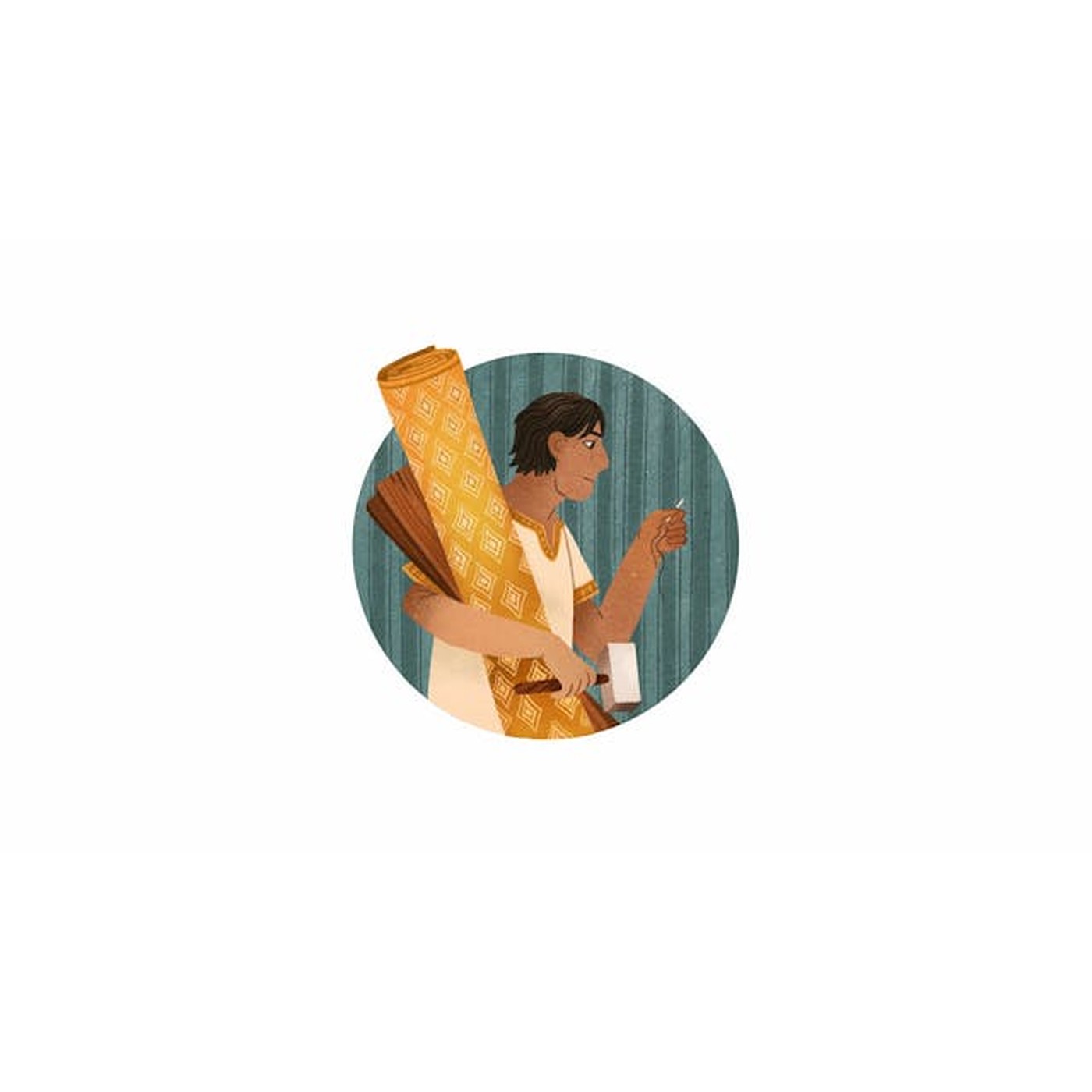
On Mount Sinai, God gave Moses detailed instructions for a very special tent: the tabernacle, a portable dwelling where God’s presence would live among His people. He chose Bezalel, a man gifted with many skills, to craft this holy place. Using the finest materials—gold, silver, precious woods, rich fabrics, and fragrant oils—Bezalel and the other artisans built the tabernacle, its furnishings, and especially the Ark of the Covenant, which held the Ten Commandments, the manna, and Aaron’s staff. At its center was the mercy seat, where God would speak to Moses.
God’s careful instructions show that worship matters deeply: how we worship and where we worship teaches us who God is. The sacrifices offered in the tabernacle could not fully take away sin, but they helped Israel understand the seriousness of sin and their need for a greater sacrifice still to come. When the work was finished, God’s glory filled the tabernacle in a cloud, showing that He truly dwelt in the midst of His people. Wherever they traveled, God went with them, reminding us that He desires to be close to us and to receive our very best in worship.
Bible References:
- Exodus 24:12-18
- Exodus 25:1-9
- Exodus 25:10-22
- Exodus 25:23-40
- Exodus 26:1-37
- Exodus 27:1-21
- Exodus 28:1-43
- Exodus 29:1-46
- Exodus 30:1-38
- Exodus 31:1-11
- Exodus 31:18
- Exodus 32:1-35
- Exodus 35:4-35
- Exodus 36:1-38
- Exodus 37:1-29
- Exodus 38:1-31
- Exodus 39:1-43
- Exodus 40:1-38
- Leviticus 1:1-17
- Leviticus 4:1-35
- Leviticus 16:1-34
- Numbers 10:33-36
- Numbers 17:1-11
- Deuteronomy 10:1-5
- Hebrews 9:1-14
Transcript:
The Tabernacle
Before the Israelites worshipped the golden calf, Moses and God had a long talk on Mount Sinai.
Do you know what they spent most of that time talking about?
A tent.
This wasn't an ordinary tent, though.
God and Moses didn't spend 40 days talking about the kind of tent people take camping.
This tent was more like a portable church where the presence of God would abide.
God called this tent a tabernacle and gave Moses detailed instructions about what this tabernacle should look like.
God also talked to Moses about the men who would serve him there as priests, what they would do, and even what they would wear.
Last of all, God told Moses who he wanted to build this tabernacle.
A man named Bezalel.
Bezalel could do just about anything with his hands.
He could build and sew, cut stones and carve wood, make jewelry and forge objects out of precious metals.
All those abilities, God told Moses, were special gifts from him.
Long before God led his people into the desert, he had blessed Bezalel with these talents so that one day Bezalel could do this great work.
And it was a great work.
Worship matters, every part of it, from the words we say to the items we use.
Right worship is a way we love God.
It's a way we glorify God.
It's also a way we learn about God.
How we worship and where we worship teaches us about who we worship.
This is why God gave Moses such specific instructions about the tabernacle.
It was important for Moses to get it right.
After the incident with the golden calf, Moses had Bezalel get to work.
With the help of other skilled Israelites, Bezalel made the tent's frames out of acacia wood and its base out of silver.
He made curtains out of blue, purple, and scarlet linen, and a lampstand out of gold.
He even made marvelous smelling oils for the priests to use.
Most importantly, Bezalel made the Ark of the Covenant, a golden chest that would sit in the part of the tabernacle called the Holy of Holies.
At the center of the Ark was the mercy seat, where God would speak to Moses.
Inside the Ark would be the most precious objects Israel possessed, the tablets with the Ten Commandments, manna from the desert, and the staff that belonged to Aaron, Israel's first high priest.
Once the tabernacle and Ark were finished, the plan was for Aaron and other priests to offer animal sacrifices there as a way of honoring God and showing how sorry Israel was for their sins.
No animal offering, of course, could ever fully make up for all the bad things God's people had done.
It would take a very different kind of offering for that to happen, and the time for that offering was still many centuries away.
Until then, the goats, sheep, and doves would teach Israel important lessons about how awful sin was and how broken the human race had become.
First, though, the Israelites had to finish the tabernacle, and they did, right before they left Mount Sinai.
Everything about it was beautiful, well-made and crafted from the finest materials the Israelites could find.
They had given God their very best.
As the people rejoiced in the great work Bezalel had done for the Lord, a cloud descended upon the tabernacle, and the glory of God filled the whole tent.
This meant God was dwelling with his people. He had placed himself in their midst in a special way, a way different from how he was present in the rest of his creation.
For years to come, wherever the Israelites would go, God would go too, abiding in his new home on earth, the tabernacle of Israel.
E15
Full
0:04:54

16. The Promised Land and the Bronze Serpent
2025-10-13
The story of the Promised Land and the bronze serpent shows how deeply God desires His people’s trust, and how patient He is with our weakness. After rescuing Israel from slavery and caring for them in the desert, God brought them to the very border of the land He had promised. Yet when the spies returned with fearful reports, the people chose panic over faith, forgetting all that God had already done. Only Joshua and Caleb believed that God would be faithful. Because the people refused to trust, they lost the privilege of entering the land and were sent back into the wilderness, where they continued to complain and blame God for the consequences of their own choices.
Even then, God did not abandon them. When their ingratitude led to a plague of fiery serpents, He provided a way of healing: a bronze serpent lifted high on a pole. All they had to do was look up in trust, and they would live. Many did, and were healed; some would not, and remained in their self-chosen misery. This scene is a powerful image for us: God continually offers mercy and salvation, but He will not force our hearts. Each day we are given the same choice—fear or trust, resentment or gratitude, death or life. By turning our eyes to the One lifted up for us—ultimately fulfilled in Christ on the Cross—we find healing, hope, and the courage to walk forward in faith.
Bible References:
- Numbers 13:1-33
- Numbers 14:1-38
- Numbers 21:4-9
- Deuteronomy 30:15-20
- John 3:14-15
Transcript:
The Promised Land and the Bronze Serpent. God had done so much for the Israelites. He rescued them from slavery in Egypt. He led them safely through the wilderness. He forgave their complaining, unfaithfulness, and ingratitude again and again and again. He did everything possible to earn their trust, yet for the Israelites, it wasn't enough. This became clear when the Israelites reached the border of the Promised Land. Generations had passed since Jacob and his sons left Canaan for Egypt. Because of that, the Israelites didn't know what would await them when they returned to their ancestral land. Were the people who now lived there few or many, strong or weak, kind or mean? Did they live in tents or cities? Would they fight hard to keep Israel out, or could Israel easily defeat them? To answer those questions, Moses sent a dozen spies ahead of the rest of the Israelites. They were gone for 40 days. When they returned, they were full of fear. The people are giants, they told Moses. We can never defeat them. They will crush us like ants. Only two of the spies, Joshua and Caleb, disagreed. Don't listen to them, they said. This land is amazing. It is everything God said it would be. Beautiful, rich, and full of good things. Yes, the people are many and fierce, but God is with us. He won't let us see defeat. The Israelites should have listened to Joshua and Caleb. They should have remembered all the good things God had done for them and all the ways he kept them safe. Instead, they listened to the other spies. God has brought us here only to die, cried one. Let's elect someone to lead us back to Egypt, cried another. As the people shouted and wept, God appeared to Moses. Enough, he thundered. Not one of these people will enter the promised land. They have lost that privilege. Instead, they will wander in the desert for 40 years. Only Joshua and Caleb will live to see the day when I give the land to this generation's children. And so, right on the border of the promised land, the Israelites turned around and went back into the desert. You would think this punishment would teach Israel an important lesson about trusting God, but they still didn't learn. In the years that followed, the Israelites continued to doubt God. They complained about their food. They complained about their leaders. And they complained a whole lot about wandering in the desert. Through their disobedience, the Israelites had brought all their problems on themselves, but they struggled to see that and mostly blamed Moses and God. God was still faithful though. No matter how often Israel refused to trust him, he kept finding new ways to show them that he could and would deliver them. For example, once when the Israelites were being particularly ungrateful, calling manna worthless food, God sent a horrible plague of fiery poisonous snakes into the Israelites' camp. That got their attention. Moses, they cried, do something. We're sorry for what we said about you and God. Please convince him to have mercy on us. Moses took their request to the Lord who told him how to save the people. Following God's instructions, Moses made a fiery serpent out of bronze and fixed it to a tall pole. He then went out among the people and lifted the pole high into the air. Everyone who looks upon this serpent will be saved, he told the Israelites. That's all they had to do, trust and look up. God would do the rest. Many did trust and were saved, but not all. Some still refused to raise their eyes to the one lifted high above them on a pole of wood. They could not trust, they would not trust, and God, even though he is God, could not make them trust. He had given them the choice. Life or death was theirs to choose, and they did not choose life.
E16
Full
0:05:24

17. The Fall of Jericho
2025-10-13
After forty years in the desert and the death of Moses, God led Israel into the Promised Land under Joshua. As the priests carrying the Ark stepped into the Jordan, the waters miraculously stopped, echoing the Red Sea and reminding the people that God was still with them. Yet the land was already inhabited by Canaanites who worshipped false gods. Out of love and a desire to protect Israel’s faith, God commanded that these peoples be driven out so Israel could remain set apart and be prepared for its mission to lead the nations back to Him.
The first great test was Jericho, a fortified city with towering walls. God’s battle plan seemed foolish by human standards: march silently around the city for six days, then seven times on the seventh day, with only the priests’ trumpets sounding. But Israel obeyed in faith, and when they finally shouted, the walls collapsed and Jericho fell. Over time, Israel conquered much of the land, yet some tribes chose to ignore God’s command and let the Canaanites remain. Their partial obedience would later lead them into idolatry and suffering. This story invites us to trust God’s wisdom, even when His ways seem strange, and to follow His commands completely, knowing they are always given for our good and our salvation.
Bible References:
- Deuteronomy 34:1-12
- Joshua 1:1-9
- Joshua 3:1-17
- Joshua 4:1-18
- Exodus 14:21-31
- Genesis 12:1-7
- Genesis 15:18-21
- Joshua 5:13-15
- Joshua 6:1-27
- Joshua 10:40-43
- Joshua 11:16-23
- Judges 1:21-36
- Judges 2:1-3
- Judges 2:10-15
Transcript:
The Fall of Jericho
The day had finally come. For forty years, the Israelites had wandered in the desert. Those of the generation that had first left Egypt passed away one by one. Moses was last of all. On the banks of the Jordan River, across from the Promised Land, he closed his eyes and breathed his last. Now it was time for the Israelites to claim their inheritance, the land promised to Abraham and his descendants so many years before. As the Israelites gathered near the Jordan, their new leader, Joshua, directed the priests carrying the Ark of the Covenant to wade into the river first. The current was strong and crossing on foot seemed impossible, but the Israelites were finally learning to trust. The priests waded in as Joshua instructed, and almost immediately the river stopped flowing and parted in two, just as the Red Sea had done forty years before. The priests then stopped, and all the other Israelites walked past them through the river to the other side. Once every Israelite had crossed to the opposite bank, the priests bearing the Ark crossed too, and the river resumed its normal flow. At long last, the Israelites had arrived in the Promised Land. They were home. There was just one tiny problem. Other people already lived there. Now, sharing is usually a good thing, but it would not be a good thing for the Israelites to share the Promised Land with the people already living there. Those people worshipped pretend gods and didn't follow God's laws. God knew that if the Israelites lived among them, all his work would be undone, and the Israelites would start worshipping pretend gods again. He needed to keep Israel apart from the other nations for a time so that he could continue preparing them for their role in leading the world to him. Which meant that before Israel could claim this land as their own, they had to drive out the Canaanites. God told Joshua to begin this conquest in Jericho, a great city surrounded by high, strong walls. He also told Joshua how to conquer the city, but God's battle plan was not your normal, everyday, run-of-the-mill battle plan. Rather than launch a bold frontal assault or a surprise attack in the night, Israel's soldiers were supposed to march around the city of Jericho. Not charge the gates, not launch stones at the city walls, just march. As they marched, the Ark of the Covenant and seven priests with trumpets would follow them. Behind the Ark would come a rear guard. For six days, God wanted the Israelites to circle the city only one time per day. The priests could blow on the trumpets the whole while, but no one else was to make so much as a peep. Then, on the seventh day, they were to march around the city seven times. Only after that could the people let out a shout. Once they did, God said the city's walls would collapse and Jericho would be theirs. It sounded more than a little crazy. No one had ever captured a city simply by marching around it in circles. But again, the Israelites were learning to trust. So, the people did exactly as God said, and on the seventh day, while the Israelites shouted as loud and as long as they could, those thick, strong walls crumbled like dust. Jericho was theirs. After that victory, the Israelites began conquering all the cities, towns, and villages beyond the Jordan. It took many years, but eventually nearly all the Promised Land was ruled by the Israelites. Nearly all, but not all. Some tribes in Israel chose to let the Canaanites remain among them. They disobeyed God's orders. God's good orders, given for good reason. In time, the Israelites would come to see the wisdom behind God's command. Unfortunately for them, they would only learn that lesson the hard way. The End
E17
Full
0:05:03

18. Deborah and the Judges
2025-10-13
The story of Deborah and the judges shows how easily God’s people can forget Him once life seems secure. Again and again, Israel turned to false gods, and God allowed them to feel the painful consequences—defeat, hunger, and fear—until they remembered Him and cried out for help. Each time, God raised up a “judge,” a deliverer, to rescue them. This pattern reveals God’s faithful love and also His desire that we remember and love Him not only in crisis, but at all times. We are made for Him, and when we forget Him, we lose our way and our peace.
Among these judges were strong heroes like Samson and unlikely ones like Gideon, showing that God can work through anyone. He also raised up Deborah, a wise and trusted prophetess who led Israel with courage. Even the general Barak depended on her presence in battle. God used not only Deborah but also another woman, Yael, to bring victory over the enemy general Sisera, just as Deborah had foretold. Through this story, we see that God’s power is not limited by human strength, status, or gender. He simply asks for trust and obedience, and He delights in rescuing His people when they turn back to Him.
Bible References:
- Judges 2:10-23
- Judges 3:7-11
- Judges 4:1-24
- Judges 5:1-31
- Judges 6:11-16
- Judges 7:1-25
- Judges 13:1-25
- Judges 14:5-6
- Judges 15:14-16
Transcript:
Deborah and the Judges. Not long after the Israelites took possession of the promised land, they developed a particularly bad habit, a habit of forgetting about God. Again and again, Israel would forget about the one true God and start worshiping the pretend gods of their neighbors. And again and again, God would allow them to suffer the consequences of their actions. He would stop defending them against their enemies and let them experience life without his protection for a little while. As soon as that happened, usually at the first sign of trouble, his people would remember him and cry out for help. God would respond by sending a deliverer called a judge who would lead Israel to victory. Then all would be well until Israel forgot about God yet again. This was terrible for two reasons. First, because God wants us to remember him all the time, not only when we are in trouble. He wants us to love him for who he is, not just what he does for us. More importantly, God made us to know him and love him. We can't be happy without him. So when we forget about God, we lose our way. This is exactly what happened to the Israelites every time they forgot about God. They would find themselves miserable, usually sick, hungry, or suffering defeat at the hands of their enemies. And they would stay that way until God sent a judge to rescue them. During this time in Israel's history, God sent many different judges to rescue his people. Some were almost like superheroes. One judge named Samson wrestled a lion and won. He also beat a thousand men in battle all by himself. Other judges were little and weak, like Gideon, who was the smallest member of the smallest tribe in Israel. But with God's help and just 300 men, he led the Israelites to victory against 135,000 soldiers. God didn't just call men to rescue Israel, though. One time, he also raised up a woman named Deborah and made her judge over all Israel. Deborah wasn't physically strong like Samson, but she was wise. People called her a prophetess, for God had given her great insight into both the human heart and God's plan. Everyone trusted Deborah and depended on her, even the Israelites' mighty general, Barak. One time, when Israel was at war with the Canaanites and their fierce general, Sisera, Deborah tried to send Barak into battle with 10,000 men by his side. He refused to go, though, unless Deborah went with him. He was too afraid to go without her. Fine, Deborah replied, I will go, but now a woman will get the credit for defeating Sisera, not you. Sure enough, although Barak and the Israelites won the battle, Sisera managed to escape. In the midst of the fighting, he ran off on foot and hid at the home of his king's friend. What Sisera didn't know was that the friend's wife, Yael, had no love for the Canaanites. When Sisera went into her tent, Yael was very kind to him. She offered him a place to rest and a cup of milk to drink. But when Sisera fell asleep, she snuck up behind him and drove a tent peg right through his skull, killing him on the spot. Moments later, when Barak arrived in search of Sisera, he found a triumphant Yael who led him to the slaughtered general. Yael, a woman, had defeated him, just as Deborah foretold.
E18
Full
0:04:27
19. Ruth
2025-10-13
The story of Ruth unfolds in a time of famine, loss, and deep sorrow, yet it shines with faithfulness and hope. Naomi loses her husband and sons in a foreign land, and in her grief she urges her daughters-in-law to return to their own families. Orpah eventually goes back, but Ruth clings to Naomi with a beautiful promise: “Your people will be my people, and your God will be my God.” Together they return to Bethlehem with nothing, trusting quietly in the Lord’s care.
In Bethlehem, God’s providence gently unfolds through the kindness of Boaz, a relative of Naomi. Ruth’s humble work in the fields and her loyal love for Naomi are noticed and honored. Boaz protects and provides for her, and, following the customs of Israel, he takes Ruth as his wife. Their union brings joy back to Naomi’s life and leads to the birth of Obed, grandfather of King David. In this way, God transforms suffering into blessing and weaves Ruth, a foreigner, into the very line that will one day bring forth Christ. The Book of Ruth reminds us that God is at work in ordinary acts of love, loyalty, and courage, even when our future feels uncertain.
Bible References:
- Ruth 1:1-22
- Ruth 2:1-23
- Ruth 3:1-18
- Ruth 4:1-22
- Genesis 17:6
- Genesis 17:16
Transcript:
Ruth. When the judges still ruled Israel, a terrible famine came upon the land. At the time, many left Israel in search of food, including a man named Elimelech, who took his wife, Naomi, and their two sons to the country of Moab. After they arrived, Elimelech died, but Naomi and her sons remained, for there was food in Moab, but none in Israel. Eventually, the sons married two Moabite women, Orpah and Ruth. Like their father before them, though, the sons died young, leaving their wives as widows. Rather than return to their families, the young women decided to stay with Naomi, whom they loved as a mother. Orpah and Ruth lived with Naomi for many years, until the time finally came when Naomi knew she could no longer stay in Moab. The famine had long since ended in Israel, and she missed her own people. We will go with you, Orpah and Ruth said when she told them. We will take care of you in your old age, as our husbands would have. No, daughters, Naomi replied. I love you too much to let you do that. You're still young. I want to see you married again with babies of your own. Go back to your mother's homes. I will pray the Lord treats you as kindly as you have treated me. Neither wanted to go. They cried and pleaded, begging Naomi to let them stay. Finally, Orpah agreed to do as Naomi asked and left. But Ruth remained. I will not leave you, she insisted. Your people will be my people, and your God will be my God. Naomi relented, and the two women returned together to Bethlehem. Neither had any inheritance from their husbands, and although there was now food aplenty in Israel, they had no money to buy it. It was harvest time, though, which meant Ruth could go out into the fields where the poor were allowed to walk behind the laborers as they harvested the crops and gathered up whatever they dropped. On her first day in the fields, Ruth followed the laborers all day. As she gathered, the man who owned the land noticed her. His name was Boaz, and he was a relative of Naomi's husband. After learning she was Naomi's daughter-in-law, he wanted to take good care of her and told the laborers to make sure to drop plenty of grain for her to gather. He also talked to Ruth and urged her to stay close to the women working for him so no one would bother her. Why are you so kind to me? she asked. Because you have been kind to Naomi, Boaz replied. The Lord, under whose wings you take refuge, will reward you for that. When Ruth went home and told Naomi about Boaz, her mother-in-law urged her to go back. Boaz was a good man and almost their nearest relative. He would make a good husband for Ruth. Following Naomi's instructions, Ruth returned to Boaz at night, lay down at his feet, and asked him to spread his cloak over her to protect her as God had done. Boaz wanted to say yes. Ruth was lovely, kind, and loyal. But first, he had to make sure that another man in his family, one who was more closely related to Naomi's husband than he was, did not want to marry Ruth. This was the custom in ancient Israel. Fortunately for Boaz, the other relative had no interest in Ruth, so the two were free to marry. After the wedding, Naomi went to live with Boaz and Ruth, and she rejoiced when their first child was born. His name was Obed, and through him, God would honor his promise to Abraham to bring forth kings from his descendants. For Obed would one day become grandfather to the greatest king Israel would ever know, King David.
E19
Full
0:04:45
20. Hannah and Samuel
2025-10-13
Hannah’s story begins in deep sorrow: loved by her husband but mocked for her barrenness, she pours out her grief before God in the temple at Shiloh. Misunderstood even by Eli the priest, she explains that her tears come from a broken heart, not from drunkenness. Eli blesses her, and the Lord answers her desperate prayer with a son, Samuel. True to her promise, Hannah offers Samuel back to God’s service, and her lament turns into a song of praise: her strength is in the Lord, who lifts up the lowly. God blesses her with more children, and Samuel grows in wisdom, becoming Israel’s last great judge.
As Samuel ages, the people of Israel grow restless. Despite God’s faithful care, they demand a human king “like all the other nations.” Samuel warns them that an earthly king will bring burdens—conscription, servitude, heavy taxes—but they refuse to listen. In sorrow, Samuel brings their request to God, who allows them to have what they insist on: a king after their own hearts. This contrast invites us to trust as Hannah did, surrendering our deepest desires to God, rather than grasping at our own solutions. Hannah’s faith shows that when we place our pain and our hopes in God’s hands, he can bring new life and unexpected grace.
Bible References:
- 1 Samuel 1:1-28
- 1 Samuel 2:1-11
- 1 Samuel 2:18-21
- 1 Samuel 3:19-21
- 1 Samuel 8:1-22
Transcript:
Hannah and Samuel
As the era of the judges drew to a close,
a woman named Hannah grieved.
Although her husband, Elkanah, loved her dearly,
she had no child of her own and she longed to be a mother. To make matters worse, Elkanah had a second wife, which, as usual, caused endless trouble. This second wife was named Peninah, and unlike Hannah, she had many children. But Peninah wasn't happy either because she knew Elkanah loved Hannah best. Resentful and jealous, Peninah tormented Hannah, teasing her in the cruelest ways for her inability to have babies. Theirs was an unhappy household, a very unhappy one. And as the years went by, Hannah's grief only grew. Peninah was so mean to her, and Hannah could not understand why God wouldn't give her a baby. Hannah eventually took that question straight to him. One evening, when she was in Shiloh with her husband, who was there to offer a sacrifice to the Lord, Hannah went back to the temple by herself. There she wept and prayed and wept some more. Her whole body shook with sorrow. The grief overwhelmed her. Please, God, she begged, please give me a son. I promise if you bless me with a son, I will give him right back to you, and he will serve you all the days of his life. As Hannah prayed, Eli, Israel's priest and judge, watched her closely. She was hysterical, and he assumed she had drunk too much wine at dinner. Eventually, he decided it was time to intervene. Woman, he said, have you no shame? How dare you come before the Lord in such a drunken state? No, my father, Hannah replied, I've had no wine. I'm just greatly troubled, for God will give me no child. Eli's heart softened, and he took pity on Hannah. Go home, he said. The Lord will have mercy on you and hear your prayer. God did have mercy on Hannah. Nine months later, a baby boy was born to her. She named him Samuel. Hannah was happy and grateful. She was also faithful. She had promised the Lord that if he gave her a baby, she would give him right back to God. So when Samuel was old enough, she took him to Eli. Here is the child I prayed for and whom you promised would come, she said. He belongs to the Lord now. Before Hannah left, she sang a song of praise about what God had done for her. My heart rejoices in the Lord, she prayed. My strength is exalted in the Lord. Then Hannah went home, while Samuel remained with Eli. For her faithfulness, God blessed Hannah with many more children. He also blessed Samuel with wisdom and virtue. And when Samuel grew up, he became the last great judge of Israel. He loved the Lord and served him faithfully all his life. But by the time Samuel was an old man, the Israelites had grown tired of judges. They wanted something more. So the people gathered together and approached Samuel. We want a king like all the other nations have, they demanded. God is your king. Why are you so ungrateful for all he does for you? Samuel replied. Don't you see how blessed you are? You don't need any other king. No, we do need a king, the people insisted. We need someone to rule over us and lead us into battle. Samuel next tried explaining what a bad idea this was. Kings make life miserable for their people, he said. They will force your sons to serve in their army, enslave your daughters, and tax you into poverty. Trust me, you don't want a king. Still, the people would not be persuaded. So God told Samuel to give them what they wanted, a king after their own hearts.
E20
Full
0:05:06

21. Saul
2025-10-13
Saul, the first king of Israel, looked perfect on the outside—tall, strong, impressive—but his heart was ruled by fear rather than trust in God. His insecurity led him to disobey God’s commands: he offered sacrifices that belonged to the priest Samuel, and he spared people and treasures God had ordered to be destroyed. Each time, Saul chose to listen to his own worries and the pressure of the people instead of the voice of the Lord. In doing so, he forgot that God was the true King of Israel and that his role was to serve, not to control.
Because God sees the heart, He sent Samuel to Bethlehem to anoint a new king from the sons of Jesse. None of Jesse’s strong, impressive older sons were chosen. Instead, God chose David, the youngest, a simple shepherd boy. David didn’t look like a king by human standards, but he loved God with all his heart, and the Spirit of the Lord came upon him. While Saul anxiously clung to his fading power, God was quietly raising up a humble servant-king. This story invites us to trust God more than appearances, to obey even when we’re afraid, and to remember that what God desires most is a heart that belongs to Him.
Bible References:
- 1 Samuel 9:1-2
- 1 Samuel 10:17-24
- 1 Samuel 13:5-14
- 1 Samuel 15:1-29
- 1 Samuel 15:34-35
- 1 Samuel 16:1-13
Transcript:
Saul. The king God chose for the Israelites was Saul, the tallest, strongest, and most handsome man in all of Israel. He looked exactly how the people thought a king should look, and they were happy with God's choice. Saul, however, wasn't so happy, at least not at first. When Samuel held a special gathering of the Israelites to crown him, Saul ran and hid among everybody's luggage. He knew being a king was not going to be easy. Perhaps if no one could find him, God would choose someone else. God did not choose someone else. Once Saul was crowned, his fear continued to get the better of him. He didn't trust that God truly knew what was best, and he started doing things he wasn't supposed to do, like offer an important sacrifice before a great battle. That was the job of Samuel, the priest and prophet. Saul knew this, but Samuel was late, and Saul was worried what would happen if Samuel never arrived. So he thought it would be better if he just offered the sacrifice himself. It was not better. Not long afterward, before yet another battle, God gave direct orders for Saul to destroy everyone and everything in the enemy's city. The soldiers were to spare no one and take no treasures for themselves. Saul, however, knew the people would be angry if they took no treasures after the victory and decided to spare the city's king and keep the best animals and other treasures. Again, because he was fearful, he thought it would be better if he listened to the voices of the people and not the voice of God. Once again, it was not better. Saul had forgotten that God was the real king of Israel. He thought everything depended on him and not on God whose people he led. Saul was fearful, and that fear made him disobedient. God didn't have to guess how a proud, disobedient king would affect the Israelites. He's God. He knew exactly what would happen. Saul would lead the people away from him. So God told Samuel it was time to find another king. Go to the house of Jesse in Bethlehem, the Lord said. There you will anoint the one I show you. When Samuel arrived at Jesse's house, he looked at each of the seven sons Jesse brought to him. They were all fine young men, handsome and strong. Surely any one of them would make a great king, Samuel thought. But then the Lord spoke, saying, Don't go anointing the first person you see who looks like you think a king should look. It's not about outward appearances. I'm not interested in how big or strong this next king is. I'm interested in his heart, and none of these men have a heart for me. Do you perhaps have some more sons you haven't brought to me? Samuel asked hopefully. Only my youngest son David, Jesse answered. He is out tending the sheep. He's just a boy, though. He can't be the one you're looking for. Fetch him, said Samuel, remembering God's words. As soon as David entered the room, Samuel knew he was God's chosen one. He took the holy oil he brought with him and poured it over David's head as a sign that God had chosen him. From that moment forward, God's Spirit lived in young David who loved the Lord with all his heart. David was now the rightful heir to Saul's throne, only no one knew it yet. Not even Saul, who still reigned as king. Samuel had made it clear to Saul that disobedience would cost him and his sons the crown. Saul clung to power despite Samuel's warning, but the more tightly he clung to it, the more anxious he became. He knew the one who would take his throne from him was out there somewhere, but who? Saul would soon find out.
E21
Full
0:05:04
22. David and Goliath
2025-10-13
This episode retells the story of David and Goliath as a lesson in trusting God over human strength or appearances. While Israel’s army and King Saul cower before the giant Goliath, young David steps forward in faith, convinced that the Lord who saved him from lions and bears will also deliver him from this enemy. Refusing Saul’s armor and weapons, David goes out with only a staff, a sling, and confidence in God’s name—and the Lord grants victory through a single stone. The message is clear: God delights in using what seems small and weak to accomplish his purposes, when hearts are surrendered to him.
The story then follows the tragic turn in Saul’s heart. At first proud of David, Saul becomes consumed by jealousy when he sees how beloved David is among the people. His fear of losing power leads him to hunt David relentlessly, and this obsession ultimately costs him his throne, his sons, and his own life. Yet David, despite being wronged, mourns Saul deeply and honors him as God’s anointed. In David’s courage, trust, and mercy, we are invited to see how a heart aligned with God responds: not with fear or grasping for control, but with faith, humility, and reverence for God’s will, even in suffering and loss.
Bible References:
- 1 Samuel 17:1-58
- 1 Samuel 18:5-16
- 1 Samuel 19:1-2
- 1 Samuel 23:14
- 1 Samuel 24:1-22
- 1 Samuel 26:1-25
- 1 Samuel 31:1-6
- 2 Samuel 1:1-27
- 2 Samuel 2:1-4
Transcript:
David and Goliath
Despite knowing his days as king were numbered, Saul still sat on the throne and still led his men into battle. And as Israel's army prepared to fight the Philistines in the Valley of Elah, Saul was there too, standing on one mountaintop with his men while the Philistines stood across the valley on another mountaintop. They were standing, not fighting, because a giant of a man named Goliath had emerged from behind the Philistines' lines and challenged the Israelites to choose a champion from their ranks. If your champion defeats me, we will be your servants, Goliath shouted across the valley. But if I win, you will be our servants. Not one single Israelite soldier was brave enough to take up that challenge. Goliath was taller and stronger and fiercer than any man they'd ever seen. His helmet was made of bronze and his armor a coat of mail, and death at his hands seemed certain. No one would go. No one, that is, until David arrived. David wasn't supposed to be on the battlefield that day. He was still a boy and too young to fight. But his father had sent him with food for his older brothers, and when David saw that not one of Israel's soldiers would stand against Goliath, he went to Saul. I will fight, David said. When lions and bears threaten my sheep, I kill them. I can just as easily kill this man who threatens God's people. It seemed like madness. David was so little, and Goliath was so big. David was just a shepherd with a staff for his flock. Goliath was a mighty warrior. But no one else was willing to face him, including Saul. So the king outfitted David with his best armor and sharpest sword, then sent him forward. David, unused to the weight of such weaponry, immediately stumbled. I'll be fine without these things, he told Saul. God will protect me. He then dropped the sword, took off the armor, and walked toward the Philistines with only his shepherd's staff and a slingshot in hand. What is this? yelled Goliath, spying the boy and his slingshot. Am I a dog that you come at me with sticks? I come at you in the name of the Lord, David shouted back. Your sword doesn't scare him, so it doesn't scare me. And with that, David slung a single stone and hit the Philistine square between the eyes. Goliath tumbled backward, dead. The Israelites let out a great cry. Victory was theirs. After that day, David went out with Saul to every battle. No soldier was braver or mightier than he, and Saul was proud of his great young warrior. In time, though, Saul noticed that people cheered more for David than they did for him. David, not Saul, was the favorite of the Israelites. With this realization, jealousy took hold of Saul's heart. So did understanding. David would be the man to take his throne, unless Saul killed him first. That, Saul decided, was the only way. David must die. Saul's story doesn't end well. His murderous heart drove David out of the king's household, then up and down the countryside, through cities and villages, and across mountains and plains. Saul pursued David relentlessly, determined to save his throne. But God had chosen David, and in the end, Saul's quest for power cost him not only his throne, but also his family and his life. First, three of his sons were killed in battle with the Philistines. Then, Saul died too, falling on his own sword in despair. The kingdom could now pass to David. But when David learned of Saul's death, he didn't rejoice, he wept. Even with all Saul had done to him, David respected Saul as God's first anointed king. How the mighty have fallen, David cried. The very ground upon which you fell should mourn you. Still grieving Saul's death, David left for Judah. The time had come for him to take the throne.
E22
Full
0:05:38

23. David, the Ark, and Bathsheba
2025-10-13
David’s story shows both the beauty of a heart turned toward God and the tragedy of a heart that wanders. Chosen by God and eventually accepted as king by all Israel, David brought the Ark of the Covenant into Jerusalem with great rejoicing, placing God at the center of the nation’s life. He longed to build a temple, but God instead promised to build *him* a “house”—a lasting dynasty and a son whose kingdom would endure forever. For many years David ruled with justice, composed psalms of praise, and offered thanksgiving sacrifices of bread and wine, living as a man after God’s own heart.
Yet even this great king fell. In a time of comfort and idleness, David committed adultery with Bathsheba and arranged the death of her husband, Uriah. God sent the prophet Nathan, whose parable opened David’s eyes to his own sin: “That man is you.” Though forgiven after sincere repentance, David and his kingdom still suffered the consequences of his choices. His life reminds us that no one is beyond temptation, but also that no one is beyond God’s mercy. When we fall, the Lord invites us, like David, to honest repentance, trusting that God can still bring grace and healing even from our failures.
Bible References:
- 2 Samuel 2:1-11
- 2 Samuel 3:1
- 2 Samuel 5:1-5
- 2 Samuel 6:1-23
- 1 Chronicles 13:1-14
- 1 Chronicles 15:1-29
- 1 Chronicles 16:1-3
- 2 Samuel 7:1-17
- 1 Chronicles 17:1-15
- Psalm 51:1-19
- 1 Samuel 13:14
- Acts 13:22
- 2 Samuel 11:1-27
- 2 Samuel 12:1-15
Transcript:
David, the Ark, and Bathsheba
Saul was dead, and God wanted David to be Israel's next king. But the Israelites weren't sure they wanted that. Some did, some didn't. While the people fought it out, David was crowned king in Judah. He then set about uniting the rest of Israel behind him. It took seven years of war and bloodshed, but eventually, all of Israel recognized David as their king. Once the kingdom was united, David knew what he needed to do next, bring the Ark of the Covenant to Jerusalem. The Ark was the Israelites' most sacred treasure. God himself had designed it, and the Israelites built it at the foot of Mount Sinai in the days of Moses. Not only did it hold the tablets with the Ten Commandments, bread from heaven, manna, and Aaron's priestly staff, but at its very center was the mercy seat, the place from which God spoke to Moses. The Philistines had captured the Ark years before, but now it was back in Israel's hands, and David wanted to create a place of honor for it. It took a couple of tries for David to get the Ark to Jerusalem, and the Ark had to stay in the hill country of Judah for three months in between. But eventually, escorted by thousands of Israelites, the Ark made its way into the city. Dressed as a priest, wearing a robe of linen, David went before the Ark, dancing and singing, clapping and shouting, all while trumpets blew. David's joy had never been greater, and all of Israel celebrated. God was in their midst in a special way once more. After that, with the Ark finally in Jerusalem, David wanted to build God a grand temple in the city. Because why should I live in a palace while the Lord's Ark dwells in a tent, he thought. But the temple was not for David to build. Through the prophet Nathan, God told David, it is not you who will build me a house. I will instead build a house for you, a great dynasty of kings. And after you are gone, your son will build my temple, and I will establish a kingdom for him that will last forever. I will be his father, and he will be my son. David accepted God's decision and ruled as a man after God's own heart for many years. He governed with love and justice, wrote beautiful songs for the Lord called Psalms, and instituted a type of sacrifice called the Todah, which involved the offering of bread and wine in thanksgiving. But then, David lost his way. One spring, when he should have been leading his soldiers in battle, but was home resting instead, he spied a beautiful woman outside his window. Her name was Bathsheba. Bathsheba was already married to a soldier named Uriah, but that didn't matter to David. He wanted her for himself. He arranged for Uriah to die in the front lines of battle, and then took Bathsheba as his wife. David thought he had gotten away with murder, but God knew and sent the prophet Nathan to him. Nathan told David a story. Two men lived in a city, one rich, one poor. The rich man had many sheep, but the poor man had only one little lamb, whom he loved like his own child. One day, a visitor came to dine with the rich man. Instead of slaughtering one of his own sheep, the rich man seized the poor man's lamb, slaughtered it, and served it to the guest. David was outraged. That man deserves to die, he shouted. That man is you, replied Nathan. You have done what is evil. You will not die for this crime, but the sword will never depart from your house. David was overwhelmed with regret. He begged God's forgiveness, and God did forgive him. But David still had to suffer the consequences of his sin, and so did his kingdom.
E23
Full
0:05:07
24. Solomon
2025-10-13
The story contrasts the tragic end of King David’s life with the hopeful beginning of Solomon’s reign. Marked by family betrayal and sorrow, David dies a broken man, yet his son Solomon begins well by asking God not for riches or power, but for wisdom to govern God’s people. This humble request pleases the Lord, who grants Solomon great wisdom along with wealth and honor. Solomon honors his mother Bathsheba, appoints wise advisors, and undertakes the sacred task David longed for: building a magnificent temple so that God might dwell among His people and all nations might come to know and worship the one true God. For a time, Israel shines as the fulfillment of God’s promises to Abraham—his descendants are many, his kings are great, and the nations are blessed through them.
Yet even in this season of glory, cracks appear. Solomon, who built a glorious house for the Lord, builds an even grander house for himself and fills it with hundreds of wives from foreign nations who worship false gods. The very heart that once sought wisdom to serve God begins to be divided. The story gently warns that outward success, religious activity, and even great gifts from God cannot replace a faithful, undivided heart. It invites us to seek wisdom as Solomon once did, to place God first in our lives, and to guard our hearts from the subtle compromises that can, over time, pull us away from Him.
Bible References:
- 2 Samuel 12:10-12
- 2 Samuel 15:1-37
- 2 Samuel 16:1-14
- 2 Samuel 18:1-33
- 1 Kings 1:1-4
- 1 Kings 1:28-40
- 1 Kings 2:10-12
- 1 Kings 3:3-15
- 1 Kings 3:16-28
- 1 Kings 4:1-7
- 1 Kings 4:20-34
- 1 Kings 5:1-18
- 1 Kings 6:1-38
- 1 Kings 7:1-12
- 1 Kings 8:1-30
- 1 Kings 8:41-43
- 1 Kings 9:1-9
- 1 Kings 10:1-10
- 1 Kings 10:23-24
- 1 Kings 11:1-13
- 2 Chronicles 1:7-12
- 2 Chronicles 2:1-18
- 2 Chronicles 3:1-17
- 2 Chronicles 5:2-14
- 2 Chronicles 6:12-21
- 2 Chronicles 6:32-33
- 2 Chronicles 7:1-3
- 2 Chronicles 9:1-9
- Genesis 15:1-6
- Genesis 17:1-8
- Genesis 22:15-18
- Deuteronomy 17:14-20
- Psalm 72:1-17
- Matthew 26:30-39
- Mark 14:26-36
- Luke 22:39-44
Transcript:
Solomon. When God said the sword would never depart from David's house, he meant it. One after another, David's sons betrayed their father and their God. His son Absalom even tried to take the kingdom from David. When David realized what was happening, he fled the city and headed to the Mount of Olives. He climbed that hill in tears, just as another persecuted king would one day climb it. A great war followed. It ended with Absalom's death. King David grew old with grief, and after ruling Israel for 40 years, he died a broken, frail man. Solomon, his second son with Bathsheba, inherited the throne. Solomon had spent his whole life watching his father rule. He had seen the battles, the plots, the constant difficulties of governing a stubborn people, and he knew he needed help. So when the Lord appeared to him in a dream and said, Ask me for what you desire, and it shall be yours, Solomon knew what he wanted most. Grant me wisdom, Lord, he replied, for I cannot govern your people without it. Solomon could have asked for anything, more money, more power, more victories in battle, but what he wanted was to serve the Lord well, and this pleased God. You will have wisdom, God said, and because you asked for wisdom, I will give you riches and power as well. Filled with the wisdom of the Lord, Solomon appointed 12 men to serve as his closest advisors. He also kept a seat for Bathsheba at the right hand of his throne and honored her as Queen Mother. He then began the great work his father had only dreamed of doing, building a temple for the Lord. For over 400 years, since the Israelites left Mount Sinai, the Ark of the Covenant had resided in a tent. But the time had come to give God a new home on earth where all the peoples of the world could worship him. It took Solomon seven years to build the temple, for he wanted to build the grandest, most beautiful temple in all the world, with its foundations made from the finest stone, walls constructed from the tallest cedars in Lebanon, and ornate carvings covered in gold adorning its rooms. When construction was complete, Solomon had the priests carry the Ark of the Covenant into the most sacred part of the temple, the Holy of Holies. Then, standing before the people, Solomon led them in prayer, saying, O God, there is no God like you. The heavens and the earth can't contain you, let alone this house that I have built for you. But please hear the prayers of your people offered here. In the years that followed, people came from near and far to pray in Solomon's temple. Many weren't even Israelites, and some were kings and queens. They wanted to learn from Solomon, whose reputation for wisdom spread as far as words could travel. In so many ways, God's promise to Abraham had been fulfilled. Abraham's descendants were as numerous as the stars in the sky. Great kings were descended from him, and the reigning king was blessing the world, giving people wisdom and teaching them about the one true God. The Israelites were finally doing what God had called them to do. But all was not as well as it seemed. Although Solomon built a house for the Lord, he built another house for himself, a house bigger and grander than the house he built for God. Even worse, within Solomon's house lived his wives, over 700 of them, who came from foreign lands and worshipped false gods. If two wives always led to trouble, imagine the trouble 700 wives worshipping pretend gods could cause. As it turned out, it was enough trouble to destroy a whole kingdom.
E24
Full
0:05:01

25. The Kingdom Falls
2025-10-13
Solomon began as a king filled with God’s extraordinary wisdom, able to see into the human heart and govern with understanding. But instead of guarding this gift, he let his heart be drawn away by power, wealth, and many foreign wives who worshipped false gods. Rather than leading them to the Lord, he followed them into idolatry, building altars to their gods and burdening his people with heavy taxes and forced labor to support his grand projects. His unfaithfulness grieved God, and the Lord declared that the kingdom would be torn from Solomon’s descendants, sparing only a small remnant for David’s sake.
After Solomon’s death, his son Rehoboam refused to listen to the people’s pleas for mercy and ruled with even greater harshness. This arrogance split the nation: ten tribes broke away under Jeroboam to form the northern kingdom of Israel, while Rehoboam ruled the southern kingdom of Judah. Tragically, both kings turned from the Lord and led their people into idolatry, building shrines on the high places and forgetting God’s covenant. From then on, Israel would never again be fully united. This story is a sober reminder that even great gifts and strong beginnings cannot replace a faithful heart, and that turning from God always wounds both our own lives and the community entrusted to us.
Bible References:
- 1 Kings 3:5-14
- 1 Kings 4:29-34
- 1 Kings 9:15-23
- 1 Kings 10:26-29
- 1 Kings 11:1-13
- 1 Kings 11:26-40
- 1 Kings 12:1-20
- 1 Kings 12:25-33
- 2 Chronicles 9:13-28
- 2 Chronicles 10:1-19
- 2 Chronicles 11:1-4
- 2 Chronicles 11:13-17
- 2 Chronicles 12:1-8
Transcript:
The kingdom falls. The wisdom God gave Solomon was no ordinary wisdom. He blessed the young king with an extraordinary ability to understand the world and the human heart, to think through problems and to see what others could not. But to keep that gift, Solomon had to use it well. He had to be a good steward of the wisdom God gave him. And for a while, he was. Then came the women. For kings in Solomon's day, marriage wasn't just about love. It was also about politics. Kings married off their children to other kings to forge alliances and enrich their treasure chests. Because of Solomon's power, every king for hundreds of miles wanted to be his ally. One king after another sent their daughters to Solomon until he had a whole palace packed full of women. Tall ones, short ones, fair ones, dark ones, with almost every single one of them worshiping a pretend god. Solomon shouldn't have married 700 women. That was foolish enough. But even worse, Solomon didn't teach those 700 women about the one true God, the God of Abraham, Isaac, and Jacob. Instead, he let them continue worshiping their pretend gods. Eventually, he built altars and temples for those pretend gods. Then finally, he started worshiping those pretend gods right alongside his wives. This created other terrible problems. Building all those temples and palaces cost money, lots and lots of money. It also required workers, many, many workers. To get that money, Solomon taxed his people heavily. To get his workers, Solomon stole boys and men from their families and forced them into slavery. He abused his power and lost the love of his people. God saw all Solomon did and it grieved him. You have been unfaithful, he said to Solomon. You have broken my commandments and betrayed our covenant. Because of this, I will take the kingdom from your descendants. For David's sake though, I will wait to do this until you are dead and I will leave the rule of one small remnant to your children. All this came to pass not long after Solomon's death when the people went to Solomon's son and successor, Rehoboam, and begged him to rule differently from his father. Solomon oppressed us with heavy taxes and hard work, they said to him. Please, go easier on us and we will happily serve you. But Rehoboam was a proud, foolish man who would not listen to his people. You think my father made things difficult for you? He responded. Well, I will make things a hundred times more difficult. My father beat you with whips, but I will beat you with scorpions. Don't even think of disobeying me. Rehoboam thought he could frighten his people into obedience, but all he did was provoke them to war. Ten of Israel's tribes rebelled against him, refusing to acknowledge him as their king. Only Rehoboam's own tribe, the tribe of Judah, and the tribe of Benjamin, the smallest of all the tribes, remained loyal to him. The rest followed a man named Jeroboam and formed a new kingdom in the north which they called Israel. Meanwhile, Rehoboam continued to rule over Jerusalem and the surrounding land in the south. The people called the southern kingdom Judah. These were sad days for the Israelites, for neither Rehoboam nor Jeroboam deserved their crowns. Both men turned their backs on the Lord and gave their hearts to pretend gods. Both men also built temples in the high places where the Canaanites of old once worshipped and offered sacrifices to idols. They forgot God's laws and turned people's hearts away from the one who had called Israel to be his own. From that time forward, Israel would never be united again.
E25
Full
0:05:07

26. Elijah
2025-10-13
During the dark reign of King Ahab and Queen Jezebel, when Israel chased after false gods and forgot the Lord, God raised up the prophet Elijah to call His people back. Through Elijah, God sent a severe drought to show that Baal had no power over creation. In the midst of this famine, God cared tenderly for a poor widow in Zarephath: when she trusted Elijah’s word and shared her last bit of food, the Lord miraculously kept her jar of flour and jug of oil from ever running out. When her only son died, Elijah cried out to God, and the Lord restored the boy to life, revealing His mercy and His closeness to those who suffer.
Later, on Mount Carmel, Elijah confronted the false prophets of Baal. Their frantic prayers brought no fire, but after Elijah soaked his own altar with water, a single, simple prayer to the Lord brought down fire from heaven that consumed everything—even the stones and the water. The people fell to the ground, crying, “The Lord is God!” This story reminds us that in times of confusion, sin, or spiritual drought, God does not abandon His people. He patiently calls us back, provides for our needs, hears our prayers, and shows again and again that He alone is the living God, worthy of our trust.
Bible References:
- 1 Kings 17:1-24
- 1 Kings 18:1-40
Transcript:
Elijah. After Jeroboam died, one wicked king after another ruled the northern kingdom. Not one remembered God. Not one followed his good commandments. But the wickedest king of all was Ahab. He and his wife Jezebel worshipped Baal, a pretend god of the Canaanites, and did everything they could to stop people from worshipping the one true God. God, however, had not forgotten his people. And during Ahab's reign, he raised up a holy man named Elijah to call the people back to him. Elijah's first task was to show Ahab that Baal had no power over the winds, the rains, and the skies. He went to Ahab and told him, because of your wickedness, the God of Abraham, Isaac, and Jacob is sending a great drought upon this land that will cause a terrible famine. And your fake god can't stop him. Next, God instructed Elijah to go to Zarephath, where he would find a widow to take him in. When Elijah arrived, the whole land was already in the grip of famine. He met the widow at the city gates, where she was gathering a couple sticks, and asked for food. I have only enough flour and oil for one loaf of bread, she answered. My son and I will eat it and then die. Don't worry, said Elijah. The Lord has told me that your jar of flour will never go empty, and your bottle of oil will never run dry until the famine ends. Now please, go make me some cake. Amazingly, the woman did as he said. And sure enough, no matter how much she baked, she never ran out of flour and oil. God multiplied it for her again and again. A little while later, the widow's only son became sick and died. Blind with grief, she lashed out at Elijah. This is your fault, she cried. You came to take away my son as punishment for my sins. Elijah felt almost as sad about her son as she did. She had been so kind to him, and he didn't want her to suffer. So he took her boy from her arms, laid him upon the bed, and begged the Lord to bring him back. God, in his mercy, answered Elijah's prayers. The boy opened his eyes, and both Elijah and the widow rejoiced. Eventually, the time came for Elijah to return to Israel and confront Ahab. When they met, Elijah had a challenge for the king. Call up 450 of your false priests who worship Baal, Elijah said. Have them meet me at Mount Carmel. We will each sacrifice a bull and see whose offering is consumed. All was done as Elijah asked. The prophets of Baal gathered on Mount Carmel and laid out a slaughtered bull upon an altar. Then they started to pray, asking Baal to rain down fire from the sky and consume the sacrifice. When no fire fell, they prayed some more. And some more, and some more. When that failed, they tried yelling, screaming, and dancing wildly around the altar, hoping something, anything, could make fire fall. But no fire came. Finally, it was Elijah's turn. First, he built an altar out of 12 stones, one for each of the 12 tribes of Israel. Next, he laid out the sacrifice, but he didn't start to pray just yet. Instead, he drenched the bull, the altar, the wood upon it, and the ground around it with buckets and buckets of water. Finally, he prayed one simple prayer. Oh Lord, answer me so that the people may know that you and you alone are God and return to you. Immediately, the fire fell, consuming the offering, the wood, the altar, the stones, and every drop of water, all in one great instant. The people were amazed. The Lord is God, they cried. Unfortunately, they didn't remember that for long.
E26
Full
0:05:13

27. The Prophets
2025-10-13
This episode reflects on how God speaks to His people through the prophets, beginning with Elijah. Exhausted and discouraged, Elijah pours out his heart to God and encounters Him not in wind, earthquake, or fire, but in a “still, small voice.” That gentle presence reveals a God who is close, attentive, and patient—yet easy to miss if our hearts are noisy or hardened. Elijah hears because he loves God and is willing to listen.
Across the centuries, God continues to speak through prophets, calling His people back from false gods and sin. Prophets like Isaiah and Jeremiah warn Israel and Judah that turning away from the Lord will lead to ruin, and sadly, their words come true: the northern kingdom falls to Assyria, and later the southern kingdom and Jerusalem are destroyed by Babylon. Yet even in judgment, God’s message is hope: promises of a new covenant, a virgin-born Savior, a suffering servant, and a shepherd who will gather the lost. The story invites us to examine our own hearts—what false gods capture our attention?—and to rediscover that same still, small voice, always calling us back to mercy, forgiveness, and faithful love.
Bible References:
- 1 Kings 19:1-18
- 1 Kings 18:20-40
- Deuteronomy 6:4-5
- 2 Kings 17:5-23
- 2 Kings 25:1-21
- Isaiah 7:14
- Isaiah 9:1-7
- Isaiah 40:1-11
- Isaiah 42:1-9
- Isaiah 49:5-6
- Isaiah 52:13-15
- Isaiah 53:1-12
- Jeremiah 7:1-15
- Jeremiah 31:31-34
- Jeremiah 32:37-41
- Jeremiah 50:17-20
- Jeremiah 52:12-27
- 2 Maccabees 2:4-8
Transcript:
The Prophets
After Elijah humiliated the priests of Baal,
the king's wife, Jezebel, tried to kill him.
To escape her and all those she had turned against him,
Elijah hid in a cave high up on a mountain.
He was worn out,
and he didn't try to hide that from the Lord.
I am sick and tired of this work, he told God.
Nobody listens to me.
They do all sorts of awful things,
and now they want to kill me
for trying to save them from themselves.
Leave this cave for a minute, was God's reply.
I am going to pass by.
Elijah did as the Lord said.
He stood on a ledge and watched.
First came a wind so strong
it blew giant rocks off the mountain.
But the Lord was not in the wind.
Then came an earthquake so powerful
it made the whole mountain tremble.
But God was not in the earthquake.
After that, a blazing fire raced past the cave.
But God wasn't in the fire either.
Finally, there came a still, small voice,
a voice gentle and kind.
As soon as he heard the voice,
Elijah hid his face,
for he knew the Lord was passing by.
It would have been easy to miss God that day.
He didn't scream or shout or make a big show.
Elijah only heard his voice
because he was paying attention
and because Elijah was a good man who loved the Lord
and wanted to serve him.
In the long centuries that followed that day,
God kept on speaking to his people
in that still, small voice,
calling holy, faithful men
to proclaim messages from him.
Through these men, called prophets,
God told his people that he loved them.
He told them that all the pretend gods they worshipped
couldn't make them happy.
He told them if they would just come back to him
and love him with all their hearts,
he would forgive them everything.
But the people didn't listen.
Unlike Elijah, they couldn't hear God's still, small voice.
The fake gods had captured their hearts
and their wicked ways made them deaf to the voice of God.
That's what sin does.
It makes it hard for us to see, hear, and know what's true.
In the northern kingdom, the people became so lost
that God permitted the great and powerful Assyrian army
to invade Israel, destroy their cities,
and enslave their people.
Many of the people were forced to leave their land
and were scattered all over the earth.
They had forsaken God,
and this was the best way for them
to learn what that choice meant.
In the southern kingdom, things weren't quite as bad.
A descendant of David continued to sit on the throne,
and while some of those kings were almost as bad as Ahab,
others tried to follow the Lord.
During this time, God sent great prophets to Judah,
including two men named Isaiah and Jeremiah.
Isaiah and Jeremiah warned the people
that if they didn't stay true to the Lord,
they would suffer the same fate as the northern kingdom.
They also consoled the people with new promises from God,
promises about a new covenant
that God would make with Israel,
a savior who would be born to a virgin,
a servant who would suffer and die for God's people,
and a shepherd who would bring back the lost tribes of Israel.
But again, the people didn't listen.
They just grew more and more attached to their sin
until the southern kingdom was eventually defeated
by the mighty Babylonian Empire.
The holy city of Jerusalem, with its glorious temple,
was destroyed.
The king was killed,
and all the people were exiled to Babylon.
The Ark of the Covenant alone escaped,
smuggled off into a cave by Jeremiah,
where it could remain safe,
even until the end of the world.
E27
Full
0:04:57

28. Jonah
2025-10-13
The story of Jonah reveals both God’s persistence and His mercy. Jonah is called to preach conversion to Nineveh, Israel’s enemy, but he runs in the opposite direction, unwilling to see his foes receive a chance to repent. God pursues him even into the storm and the belly of the great fish, not to destroy him, but to bring him back to his mission. In the darkness, Jonah finally turns to God in prayer and is delivered, showing that no place is too far for God to reach a repentant heart.
When Jonah finally obeys and proclaims God’s warning, the people of Nineveh—right up to the king—respond with fasting, prayer, and sincere repentance. God sees their change of heart and spares the city, just as He had spared Jonah. This story reminds us that God’s desire is not punishment but conversion and life, even for our enemies and even for us when we run from Him. His mercy is greater than our reluctance, and whenever we turn back to Him, He is ready to forgive and restore.
Bible References:
- Jonah 1:1-17
- Jonah 2:1-11
- Jonah 3:1-10
Transcript:
Jonah
In the age of the divided kingdom, a man named Jonah was called by God to leave Israel and travel east to the great city of Nineveh.Cry out against it and call its people to change their ways, the Lord said to Jonah, for I have seen their wickedness, and it is great.Jonah, however, had no love for the people in Nineveh. They were Israel's enemy. He wanted them to suffer the consequences of their sin. He certainly wasn't going to give them the chance to repent. So instead of going east to Nineveh, he went west and boarded a ship that would take him to the city of Tarshish. But Jonah forgot that no one can run away from God. While his ship was at sea, a terrible storm struck. Lightning flashed, thunder roared, and raging waters tossed the ship up and down, threatening to break the boat apart and drag all on board down into the deep. This was no ordinary storm. The ship's crew knew this. Some divine power was behind it, seeking someone, punishing someone. But who? Unsure, the sailors began praying, begging for deliverance. No deliverance came. Then the ship's captain remembered their passenger. He ran down to the ship's hold where Jonah lay sleeping. Get up, man, the captain cried out. How can you possibly sleep? Arise and call upon your God. Perhaps he will give a thought to us so we do not perish. The captain and Jonah returned to the deck where they found his men casting lots, hoping to find out whose evil deeds were responsible for the storm. The lots fell upon Jonah. Who are you, they demanded. Why are you here and what have you done? Jonah confessed everything, the call from God, his refusal, and his decision to run. This is my fault, he concluded. Throw me into the sea so you may live. The sailors refused, but as the storm grew worse, they saw no other choice. With a prayer for mercy, they tossed Jonah overboard. Immediately, the waters quieted and the storm passed. But what of Jonah? In the water, he was not alone. A great creature was there as well, an animal so big it could swallow a man whole. And it did. With one gulp, Jonah was sucked down into the belly of the whale. There in the darkness, Jonah prayed, trusting in God's power to save. Finally, after three days and three nights, the whale vomited him up and Jonah was free. Immediately, the prophet set out for Nineveh, where he began walking through its streets, calling out, In forty days, Nineveh shall be overthrown. When the people heard Jonah's words, they understood the evil they had done. Even the king was moved. He called the city to fast and pray, saying, Let every person repent of his evil ways and from the violence that is in his hands. Who knows? God may yet turn from his fierce anger and we may not perish. God heard those prayers and he did turn from his anger. He forgave the people and spared the city, just as he forgave and spared his reluctant prophet, Jonah.
E28
Full
0:04:26
29. Job
2025-10-13
This episode retells the story of Job as a word of hope for those who suffer and don’t understand why. Job is introduced as a righteous man who loves God, his family, and his neighbors, yet Satan insists that Job is only faithful because he is blessed. With God’s permission, Satan strips Job of everything—his wealth, his children, and even his health. In his grief, Job refuses to curse God, even when urged by his wife and misunderstood by his friends, who insist he must have done something terrible to deserve such pain. Job instead cries out honestly to God, questioning His justice and begging for understanding, yet still clinging to Him.
God finally answers, not with an explanation, but by revealing His greatness and wisdom: He is the Creator who sees and knows what Job cannot. Confronted with God’s majesty, Job humbly admits his limits and repents of judging God. The Lord forgives and restores him, showing that Job’s true righteousness lies not in having all the answers, but in remaining faithful in the dark. The story reminds us that God’s ways are beyond our understanding, and that holiness is found in holding on to Him—especially when we hurt and cannot see the reason for our suffering.
Bible References:
- Job 1:1-22
- Job 2:1-10
- Job 2:11-13
- Job 3:1-26
- Job 7:11-21
- Job 10:1-7
- Job 13:3
- Job 19:6-7
- Job 27:2-6
- Job 38:1-41
- Job 39:1-30
- Job 40:1-14
- Job 42:1-6
- Job 42:10-17
- Isaiah 55:8-9
Transcript:
Job. In the days of the Babylonian exile, when the Israelites were scattered among the nations and missing their homeland, they would share with each other the story of Job. Job had lived a long, long time ago, so long ago that no one quite knows when. It was perhaps even before the time of Abraham. Whenever Job lived, though, he had a big family, with seven sons and three daughters. He also was very rich and owned more camels, sheep, oxen, and donkeys than any man in the land. But what made Job remarkable wasn't how many children he had or how many camels he owned. It was his heart. Job was a righteous man who loved his family, was grateful to God, and treated everyone fairly. But Satan didn't see Job that way. The way he saw it, Job was only good because God had blessed him with so many good things, and Satan thought he could prove that. One day, when all the angels went before the Lord, Satan went too. Satan, being evil, had been causing no end of trouble. God knew this. He also knew that Satan had not succeeded in tempting Job to sin. When God brought this up, Satan dismissed Job's goodness, saying, Who wouldn't be good if you were always protecting them from me and blessing them in every possible way? Remove your protection from Job, and we'll see how righteous he is. God agreed. Then Satan did his worst, causing one tragedy after another for Job. In little more than a day, Job lost everything, his camels and sheep, his oxen and donkeys, his countless servants, his beloved children, and his own health too. Job was overwhelmed with grief, yet still he remained faithful. How can you not curse God and die, asked Job's wife, lost in her own grief. If we accept the good from God, we must also accept the bad, was Job's reply. Around this time, three friends of Job's came to visit him. They claimed they wanted to help, but nothing they said was helpful. God is just, said one. He rewards the just. God is just, said another. He punishes the unjust. God is just, said the third. You must have done something awfully bad to deserve such a punishment from God. Job listened to all of them. Then he spoke. I hate my life, he said. I hurt so much, I wish I had never been born. I don't deserve this. I've done nothing wrong. It's God who has wronged me. I thought he was just. I thought he was good. But how can he be just and good and let me suffer so? I ask him every day to explain himself. I beg him to help me understand why this has happened. But he says nothing. Still, I will not curse him. I will question him, but I will not curse him. Nor will I lie and say I have done wrong when I have not. As Job fell silent, a great wind arose. Then God spoke. Where were you when I laid the foundation of the earth, God asked. Have you commanded the morning since your days began and caused the dawn to know its place? Is it by your wisdom that the hawk soars? Is it at your command that the eagle makes his nest on high? Do you know the measure of the earth or restrain the beasts of chaos on a leash? Do you see what I see or know what I know? If not, how can you sit in judgment of me? You're right, replied Job. I cannot judge what I cannot understand. But I see now how great you are and how little I am. I see that your ways are not my ways and your thoughts are not my thoughts. Forgive me for what I did not see, Lord. God did forgive Job. He forgave him and he blessed him, giving back to Job everything he had lost and so much more. For Satan had been wrong. Job was truly a righteous man. Not because he always understood God, not because he didn't question God, but because he wouldn't turn his back on God. He clung to God and walked in his ways even when he hurt, even when he didn't understand.
E29
Full
0:05:47
30. Tobit
2025-10-13
The story of Tobit shows how God remains close to His people in suffering and never ignores their prayers. Tobit, a faithful Israelite living in exile, loses his position, his wealth, and even his sight, yet continues to honor God and care for the poor and the dead. Far away, Sarah endures deep shame and despair after seven of her husbands are killed by a demon. Both cry out to the Lord from their misery, and God responds by sending the archangel Raphael, though they do not recognize him.
Through seemingly ordinary events and strange, humble means—a hidden sum of money, a traveling companion, a fish’s organs—God brings healing, deliverance, and new life. Tobias is led to Sarah, the demon is cast out, Tobit’s sight is restored, and their family is filled with joy. In the end, Raphael reveals that he has carried their prayers before God and urges them to remember how almsgiving and righteousness bring God’s help. Tobit’s story invites us to trust that God hears our cries, works through hidden graces, and rewards persevering faith and charity, even when we cannot yet see how He is at work.
Bible References:
- Tobit 1:1-22
- Tobit 2:1-14
- Tobit 3:1-17
- Tobit 4:1-21
- Tobit 5:1-22
- Tobit 6:1-22
- Tobit 7:1-17
- Tobit 8:1-21
- Tobit 9:1-6
- Tobit 10:1-14
- Tobit 11:1-19
- Tobit 12:1-22
- Tobit 13:1-18
- Tobit 14:1-15
- Revelation 8:2-4
Transcript:
Tobit
In the great city of Nineveh lived an Israelite named Tobit. Although most Israelites who were deported to Nineveh after the fall of the northern kingdom turned their backs on God, Tobit kept God's feasts and God's laws, faithfully serving the one true God in every way. Eventually, Tobit's wisdom and virtue secured him an important job with the Assyrian king. But even as Tobit's wealth and influence grew, he remained faithful, always caring more about God than he cared about power. Tobit gave generously to the poor, cared for the dying, and buried the dead. When the old king died, however, and a new one rose to power, Tobit lost his position and his wealth. Eventually, he lost his sight too. Old, blind, and broken by so much loss, Tobit begged God for help. Remember me, O Lord, he prayed. Have pity on your servant. That same day, in a far-off city, a young woman named Sarah was also praying. Seven times she had been married, and seven times on her wedding night, her new husband had been murdered by a demon. Despairing, she too begged God for help. Deliver me, my God, she called out. Show me a way forward. Neither Tobit nor Sarah knew that the angel Raphael had been listening to their prayers and went to intercede for them before the throne of God. Help them, Lord, Raphael said. Send me to them. God agreed. First, though, before sending Raphael, he helped Tobit remember that years earlier, he had left money with one of his relatives. Hoping the money might lessen their troubles, Tobit asked his only son, Tobias, to go get the money. He also told Tobias to find a guide for their journey. The guide Tobias found was Raphael, who had disguised himself as an ordinary Israelite. Tobias had no idea Raphael was an angel. He just thought he was a good man who knew the way they needed to go. Once they set out on their journey, Raphael proposed a small detour to the house of Sarah's father. After explaining all her troubles to Tobias, he said, Sarah is a beautiful and sensible woman. She has been destined for you from all eternity. Don't be afraid to take her as your wife. I will show you how to defeat the demon. Tobias was afraid. Seven husbands murdered by a demon was hard to overlook. But he trusted Raphael and went with him to Sarah's house. There, Raphael asked Sarah's father to give his daughter to Tobias in marriage. Her father not only agreed, but he also offered to give Tobias and Sarah half of all he owned if Tobias survived his wedding night. The two young people quickly wed, then left their wedding supper for Sarah's room. There, Tobias prayed and followed Raphael's instructions for defeating the demon. First, he put the heart and liver of a fish on top of some ashes. Then, smoke rose into the air and gave off an odor that the demon hated. The instructions were strange and mysterious, but they worked. The demon ran away, never to appear again. After that, Raphael secured Tobit's money, and the three returned to Tobias' home. When they reached the house, Raphael had one final mission, to restore Tobit's sight. This time, he instructed Tobias to place the gallbladder from the same fish on his father's eyes. Again, the instructions were strange and mysterious, but again, they worked. Tobit's sight was restored. Rejoicing, Tobit and Tobias went to thank Raphael, still not knowing he was an angel in disguise. But when they offered him half of the fortune Tobias had brought back, Raphael revealed himself. I am Raphael, one of the seven holy angels who present the prayers of the saints in the presence of the glory of the Holy One. I saw every righteous act you did and all the alms you gave, for that God has rewarded you. Do not be afraid of me, but do write a book telling of the good work God has done, and remember always what almsgiving accomplishes and how righteousness delivers. And that's exactly what they did.
E30
Full
0:05:37

31. Daniel in the Lions' Den
2025-10-13
Daniel, an Israelite exile in Babylon, remained steadfastly faithful to the one true God, praying three times a day and living with integrity even as he rose to great power under several kings. Jealous officials, unable to find any fault in him, used his faith against him by convincing King Darius to pass a law forbidding prayer to anyone but the king. Daniel refused to compromise his relationship with God, continued to pray, and was arrested and condemned to the lions’ den, despite the king’s deep affection and concern for him.
God did not abandon Daniel. He sent an angel to shut the lions’ mouths, and Daniel emerged unharmed. Darius rejoiced, publicly praised the God of Israel, and punished the corrupt officials who had plotted evil. Daniel’s story reminds us that God is faithful to those who remain faithful to Him, even when obedience is costly. In times of pressure or fear, we are invited to trust, like Daniel, that God sees our fidelity, hears our prayers, and is able to save in ways we could never imagine.
Bible References:
- Daniel 6:1-28
- Daniel 2:1-49
Transcript:
Daniel in the Lion's Den
Daniel was the wisest, kindest, and noblest man in all of Babylon, second in power only to the king. Daniel had come to Babylon many years earlier, when he was just a boy. Like countless other Israelites, he had arrived in Babylon by force, not by choice, having been carried off into exile when the kingdom of Judah fell to the Babylonian empire. Unlike many of those exiled Israelites, though, Daniel never lost faith in God. He believed God would be faithful to his people, so Daniel was faithful to God. He prayed to him three times a day, and he obeyed all God's laws. For his faithfulness, God rewarded Daniel. Like Joseph of old, God gave Daniel great wisdom, and when Nebuchadnezzar, the king of the Babylonians, had a mysterious dream, Daniel was able to interpret it. After that, Daniel became the king's most trusted advisor. In the years that followed, kings came and went, but Daniel remained. Even when Babylon was conquered by the Persians, King Darius, the new ruler, entrusted the whole kingdom to Daniel, putting him in charge of everyone and everything. Other court officials, however, didn't like that decision. They wanted to be the ones in charge and have all the power. They began plotting against Daniel, looking for a way to get him in trouble, but Daniel never did anything wrong. He was good, just, and loyal. No one could bribe him, corrupt him, or lure him into any evil plots. Eventually, Daniel's enemies decided the only way to entrap him would be to use his goodness against him. Because Daniel was a faithful Jew, he prayed only to the one true God of Israel, not the many pretend gods that other nations worshipped. So those jealous court officials went to King Darius and convinced him to sign a new law making it illegal to pray to anyone other than the king for thirty days. If someone broke the law, they would be thrown into a den of hungry lions. King Darius never should have signed such a silly law, but kings liked to think of themselves as gods in those days, so he did. After Daniel heard about the new law, he didn't hesitate or waver or worry about what to do. He just went to his room, knelt down, and prayed to God. His enemies had expected him to do that, and almost as soon as Daniel began to pray, they burst into the room, catching him in the act of praying to someone other than the king. They arrested him on the spot, then brought him before Darius. The king did not want to punish Daniel. He trusted Daniel more than he trusted anyone else and relied on his help for everything. But the law was the law, and even the king couldn't break it. With great sadness, he walked Daniel to the lion's den and prayed for his safety. May your God, whom you have served so faithfully, deliver you, he said. When the king got back to the palace, he was so anxious about Daniel that he couldn't eat or sleep. He passed the whole night in worry. Then, as soon as the sun rose, he ran to the lion's den, hoping for a miracle. Daniel, he shouted into the cave, did your God save you? Yes, answered a voice from inside. God sent his angel to shut the mouths of the lions. I am perfectly fine. The king was overjoyed. Daniel lived. Right away, Darius had Daniel pulled out of the den. He then wrote a letter to all the nations he ruled, praising the God of Israel and testifying to his faithfulness. As for those wicked advisors who had plotted against Daniel, the king had them sent to the lion's den at once, and no angel came to rescue them.
E31
Full
0:04:50
32. Esther
2025-10-13
The story of Esther shows how God can work through ordinary people placed in extraordinary circumstances. In the Persian court, a young Jewish woman, hidden in plain sight as Queen Esther, is invited by God to risk everything for her people. When the wicked Haman plots to destroy all the Jews because Mordecai will not bow to him, Mordecai urges Esther to intercede with the king, reminding her that she may have been placed in her royal position “for such a time as this.” After prayer and fasting, Esther chooses courageous trust: “If I die, I die.”
God blesses her faith. The king receives her kindly, hears the truth about Haman’s evil plan, and reverses the sentence of death, saving Esther, Mordecai, and the Jewish people. Esther’s story invites us to recognize that our own circumstances—our families, workplaces, and communities—are not accidents. The Lord may be asking us, too, to speak up, to fast and pray, and to act with quiet courage for the sake of others, trusting that he is at work even when his presence seems hidden.
Bible References:
- Esther 1:1-22
- Esther 2:1-23
- Esther 3:1-15
- Esther 4:1-17
- Esther 5:1-14
- Esther 6:1-14
- Esther 7:1-10
- Esther 8:1-17
Transcript:
Esther.
King Xerxes was having a party. He had invited everyone who was anyone in the Persian Empire and was determined to impress his guests. He served them the very best food and the very best wine and planned to introduce them to the very best woman in all the land, his wife, Queen Vashti. But Vashti was throwing a party of her own that night and didn't feel like being paraded in front of Xerxes' guests. When Xerxes' servant arrived to fetch her and bring her to the king, she said what no one ever said to the king, no. Filled with anger and more than a little embarrassed, Xerxes declared that Vashti would never be allowed in his presence again. He was going to find himself a new wife, a woman even more beautiful than Vashti. To help him find that woman, he ordered his officials to bring the most beautiful women in the empire to the palace so he could decide for himself who would become the next queen. When those women arrived, a young Jewish woman named Esther was among them, and when the time came for the king to choose his queen from all those beautiful women, he chose Esther. No one else was as wise, gentle, or lovely as she. Xerxes didn't know, however, that she was Jewish, for her cousin and adopted father, Mordecai, had urged her to keep that a secret. Mordecai missed Esther terribly and would often visit the palace grounds, hoping to catch a glimpse of her. One day, while he was there, he overheard a plot against the king's life. He found a way to get word to Esther, who then got word to the king. The two traitors were executed, and the king's life was saved. That made the king extremely grateful to Mordecai. It did nothing, however, to soften the heart of Haman, the king's right-hand man. Haman hated Mordecai. Because Mordecai and Esther kept their relationship a secret, Haman had no idea that Mordecai was the queen's adoptive father. He just knew the faithful Jewish man was always hanging around the palace and refused to bow to him. How dare he disrespect me, Haman thought. I will have that man's life and the life of all his people. He really hated Mordecai. It took a bit of trickery, but Haman soon secured the king's permission to order the death of every Jewish person in the empire. When Mordecai learned of Haman's order, he arranged a secret meeting with Esther and begged her to ask the king to intervene. But anyone who approaches the king uninvited can be killed, she protested. Don't think you will escape the fate of your people, Mordecai warned. Besides, it may be for this time and this reason that God has brought you here. Esther knew he was right. I will speak to him, she agreed. If I die, I die. For three days, Esther fasted and prayed. She then put on her most beautiful gown and approached the king. He could have ordered her death, but instead, his heart went out to his wife. What can I do for you, he asked. Say the word and I will give you anything you want, up to half my kingdom. Come to dinner with me, she answered, and bring Haman. Haman was excited and full of pride. Of all Xerxes' servants, he alone had been favored to dine with the king and queen. But when he arrived at the dinner, Haman was in for a terrible surprise. Esther revealed his horrible plan to the king. Spare me and my people, she begged Xerxes. Do not let Haman carry out his wicked plot against us. When the king understood what Haman had done, he was furious and ordered Haman's death. He then made a new law to save Esther, Mordecai, and the Jewish people. Esther's bravery had saved them all.
E32
Full
0:04:56

33. The Maccabees
2025-10-13
This story of the Maccabees shows how God’s people remained faithful when a new empire tried to erase their faith. After the fall of Persia, the Greek rulers demanded that everyone worship false gods. Many Jews gave in, deciding it was easier to live like everyone else than to obey God’s law. But others, like Judas Maccabeus and a courageous mother with her seven sons, chose loyalty to the Lord even at the cost of their lives. They believed that God is worth more than comfort, safety, or even earthly life itself.
As each son was tortured and killed, the family encouraged one another to stay faithful, confident that “death is not the end with the Lord.” The mother urged her youngest to trust that the God who gave him life could restore it and reward his courage. Their hope was not in escape from suffering, but in God’s promise to raise the faithful and send a Redeemer. Their witness invites us to ask where we might be tempted to “go along” with the world and to pray for the same steadfast love for God, trusting that he is faithful and that eternal life with him is our true reward.
Bible References:
- 2 Maccabees 7:1-42
- 1 Maccabees 1:41-64
- 1 Maccabees 2:19-22
- 1 Maccabees 2:27-28
- 1 Maccabees 3:1-9
- Daniel 12:1-3
Transcript:
The Maccabees
After Queen Esther's husband became a friend of the Jews, things went much better for the Jewish people. More and more of them returned to the Promised Land to join in the work of rebuilding the temple in Jerusalem and learn from the holy priests and prophets God had raised up to help people follow his ways once more. Unfortunately, no empire lasts forever, and when the Persian Empire collapsed, another empire rose up in its place, the Greek Empire. Unlike Xerxes and his sons, the Greek kings were no friends of the Jews. They didn't want their new subjects worshipping the one true God. They just wanted everyone to worship their empire's pretend gods. Whoever refused, they killed. Not wanting to die, some Jewish people obeyed. They started worshipping the Greeks' pretend gods and acted like they were Greek too. The law of Moses was good enough for our ancestors, they would say, but our lives are so much easier when we just do what the Greeks do. Not every Jewish person forgot about God, though. Eventually, some fought back. We are going to worship God, and you can't stop us, they told the king. Those people joined a man named Judas Maccabeus, who was leading a rebellion against the Greeks. Other people fought back in a different way. They willingly gave their lives for the Lord, choosing death rather than sin. One woman who chose that path was a mother of seven sons. When she and her boys refused to disobey God's law, the Greek soldiers arrested them and brought them before the king. Why are you bothering to bring us here? said one of the brothers. You should have just killed us in our home, because we all would rather die than break God's commandments. But the king didn't believe him. The king didn't think anybody could love their God more than their life. So he had all the boys whipped and beaten in front of their mother. When none of them changed their mind, he decided to make an example of the oldest. First, he cut off the oldest brother's tongue. Then he cut off his scalp, hands, and feet. When that didn't work, he threw the brother into a human-sized frying pan and started cooking him over a roaring fire. The king was sure this would convince at least one of the brothers or the mother to betray their God. Instead, the mother and brothers shouted words of encouragement to their dying brother. Hold fast, they cried. Stay true to God, and he will stay true to you. After that, the king inflicted the same torture on the second brother, and the third, and the fourth, fifth, and sixth. But no matter how cruelly the king tormented the young men, the cries of the rest stayed the same. Death is not the end with the Lord, they reminded each other. If we are faithful, he will raise us up on the last day. Finally, only one son and the mother remained alive. The king was sure the mother would do anything to save her last child, but the mother was more worried about the death of her son's soul than the death of his body. The Lord gave you life, and he can restore it as he pleases, she said to him. Choose his ways, and you will live forever. Prove yourself worthy of your brothers, and fear nothing from this butcher. Then, like his brothers before him, the youngest son turned to the king and said, What are you waiting for? I gladly offer my life with the hope that it will turn your heart to the one true God and bring peace for my people. And he too went to his death. After her youngest son died, the mother died too, trusting that God would not withhold the promised Redeemer for long. Soon he would come, and with him, salvation.
E33
Full
0:05:03

34. The Annunciation and the Visitation
2025-10-13
God’s saving plan unfolds through his spoken word. From creation through the covenants with Noah, Abraham, Moses, David, and the prophets, God prepares his people for the promised Savior. When the time is fulfilled, he sends the angel Gabriel first to Zechariah, announcing the birth of John, who will prepare hearts for the Lord. Zechariah’s doubt leaves him speechless until the promise is fulfilled, reminding us that God’s word is trustworthy even when it seems impossible.
Six months later, Gabriel appears to Mary of Nazareth, greeting her as “full of grace” and inviting her to become the Mother of the Son of God. Unlike Zechariah, Mary believes, even as she asks how this can be. In humble trust she gives her fiat: “Let it be done to me according to your word.” Mary then goes in loving service to her cousin Elizabeth. At their meeting, John leaps in Elizabeth’s womb and Elizabeth, filled with the Holy Spirit, recognizes Mary as “the mother of my Lord.” Mary responds with praise, rejoicing in God’s goodness and mercy. These mysteries invite us to trust God’s promises, welcome his word, and, like Mary, say yes to his will with faith and joy.
Bible References:
- Genesis 1:1-3
- Genesis 3:15
- Genesis 12:1-3
- Genesis 15:1-6
- Genesis 17:1-8
- Genesis 22:15-18
- 2 Samuel 7:8-16
- Luke 1:5-25
- Luke 1:26-38
- Luke 1:39-45
- Luke 1:46-56
Transcript:
The Annunciation and the Visitation
The story of all stories began with a word. God spoke into the darkness, and the darkness disappeared. Light came. Time began. Whole worlds took shape. Then, in the countless centuries that followed, God continued speaking. He spoke to Noah and Abraham, Moses and the judges, David and the prophets. Generation after generation, God spoke, telling his chosen people more and more about who he was and how they could love him. He also kept revealing more and more about the promise he made in the Garden of Eden, the promise to send the world a Savior, someone who could heal the world's brokenness and restore what had been lost through sin. Through all this, God was preparing his people to receive the greatest gift he could ever give, his very own Son. Finally, God's people were as ready as they would ever be. The time had come for the Son of God to become the Son of Man, for the Word to become flesh and fulfill every promise God had ever made about redeeming his people. And so, God spoke again, not into the darkness, but to two very special people through his angel, Gabriel. First, God sent Gabriel to an old priest named Zechariah. Like Abraham and Sarah long ago, Zechariah and his wife, Elizabeth, had no children. For years they had waited, hoped, and prayed, but no children came. Eventually they grew old and stopped hoping. Then one day, as Zechariah was serving in the temple, the angel Gabriel appeared before him. Your wife, Elizabeth, will have a son, the angel said. You must name him John, and he shall help prepare people's hearts to receive the great gift God is about to send. Zechariah couldn't believe what he was hearing. How do I know you're telling me the truth, he asked, his heart full of doubt. I am Gabriel, who stands before the throne of God, the angel answered. I have told you that your wife shall bear a son, but because you did not believe me, you will lose your ability to speak until all these things come to pass. And that's just what happened. Elizabeth, in her old age, conceived a child, but while the baby grew within her, Zechariah could not speak a word. Six months after Gabriel first spoke to Zechariah, God spoke again. This time, he sent Gabriel to Mary, a young woman in the town of Nazareth who was engaged to a carpenter named Joseph. Hail, full of grace, said Gabriel as he appeared before her. The Lord is with you. Mary looked at the angel, confused by his strange greeting and overwhelmed by his presence. Don't be afraid, Mary, Gabriel said. The Lord who loves you has chosen you for a great work. You will conceive a son, and you will call him Jesus. The Lord will set him on the throne of David, and his kingdom will never end. Mary believed the angel, but she was still confused. How can this be, since I have no husband, she asked. The Holy Spirit will make this possible, Gabriel replied. The child born to you will be the son of God most high. It will be a great miracle. He then added, your cousin Elizabeth is also expecting a child. Remember, with God, nothing is impossible. Whatever God wants is what I want, answered Mary. I accept this gift. Let it be done to me according to your word. Soon afterward, Mary went to stay with Elizabeth and Zechariah. When she arrived, Elizabeth rushed to greet her. As soon as the cousins embraced, the baby inside Elizabeth leapt with joy, and Elizabeth was filled with wonder. Blessed are you among women, Mary, she cried out, and blessed is the child in your womb. Who am I that you, the mother of my Lord, should come to me? It is the Lord's doing, Mary replied. God is my Savior, and my heart rejoices in him. He is all good and has done great things for me. Mary remained with her cousin for three months, helping Elizabeth through the last months of her pregnancy. She then began the journey back to Nazareth and back to Joseph, who still knew nothing about the miraculous child growing within her.
E34
Full
0:05:35

35. The Nativity
2025-10-13
Joseph, hurt and confused by Mary’s unexpected pregnancy, is met by God’s mercy in the midst of his fear. In a dream, an angel tells him not to be afraid: the child is conceived by the Holy Spirit and will be named Jesus, the Savior. Trusting God, Joseph takes Mary into his home. When Caesar’s census forces them to travel to Bethlehem, they find no room anywhere—only a poor stable with straw and a roof. Yet there, in poverty and simplicity, the long-promised Son of God is born, wrapped in swaddling clothes and laid in a manger.
Heaven rejoices even as the world remains unaware. No kings or powerful leaders come, only poor shepherds who hear the angels’ song and hurry to adore the newborn Christ. They find Mary, Joseph, and the baby, and share all that the angels told them. Mary holds Jesus close, quietly pondering and treasuring these mysteries in her heart. The Nativity reminds us that God comes to us in humility, in hidden places, and in the midst of our confusion and hardship—inviting us, like Joseph, Mary, and the shepherds, to trust, adore, and receive him.
Bible References:
- Matthew 1:18-25
- Luke 2:1-20
Transcript:
The Nativity
Joseph was confused. The carpenter from Nazareth had just found out that his bride, Mary, was somehow mysteriously expecting a baby, and he was not the baby's father. He didn't know what to think or do. He was a good man. He didn't want to see Mary suffer, but he also didn't know if he could marry her. He wondered if he should send her away quietly. As Joseph wrestled with these questions, he fell asleep. While he slept, an angel came to him in a dream. Don't be afraid to take Mary as your wife, Joseph, the angel said. Everything is happening just as the prophet said it would. The child she carries was conceived by the Holy Spirit. You will name him Jesus, and he will save his people from their sins. When Joseph awoke, he did exactly what the angel said to do. He brought Mary into his home, and together they prepared for the arrival of the child. As the time for the baby's birth drew near, however, a call went out across the land. The Roman emperor, Caesar Augustus, who ruled over the Jews, wanted to know exactly how many people lived in his empire. Because of this, every man had to travel back to his home city to be counted. Joseph was a descendant of King David himself, which meant he had to return to Bethlehem, the city of David's birth. So together, Joseph and Mary began the journey. Joseph and Mary weren't the only people traveling back to Bethlehem, though. Men, women, and children from all over the Roman Empire had also returned to the city for Caesar's census. They filled the streets, homes, and inns, packing the city tight with travelers. No matter where Joseph and Mary went, they could find no place to stay. They needed to be somewhere safe and warm, for the time had come for Mary to give birth. But every door was shut on them. No one would welcome them in. At last, Mary and Joseph found shelter, a humble stable with no beds, no fireplace, no comforts of home. But there was a roof and there was straw, and God was with them. That was enough. And so it was there, in a stable, on a starlit night, with only animals for company, that Mary and Joseph welcomed the Son of God into the world. The long-promised Savior was here at last. After Jesus' birth, Mary wrapped up her baby in a blanket to keep him warm. She then laid him to sleep in a little manger from which the animals normally ate their dinner. For more years than anyone can count, all of heaven had been waiting for this moment. And as the holy child slept, whole choirs of angels broke out in joyful song, praising God and giving thanks for the babe lying in the manger. No kings heard their song, though. The rich knew nothing of the great miracle that had happened that night, and the powerful couldn't even imagine the gift that God had just given the world. Instead, the only people who knew that first night were Joseph, Mary, and a small group of poor shepherds. On the night of Jesus' birth, those shepherds were out in the fields tending their sheep, when suddenly a whole chorus of angels appeared in the sky above them, singing their song and announcing the good news that the long-awaited Savior, the Christ, had been born at last. Overcome with joy and wonder, the shepherds immediately set out for Bethlehem. There they found the child with his mother and bowed down before him, giving thanks to God for what he had done. The shepherds also told Mary about the angels who had visited them, the song the heavenly choir had sung, and all that the angels had said. As they spoke, Mary held her baby boy close, pondering the shepherds' words and treasuring them in her heart.
E35
Full
0:05:01

36. The Presentation and the Wise Men
2025-10-13
This reflection tells how Jesus, like every newborn, drew visitors filled with joy—but these visitors recognized him as the long-awaited Savior. In the Temple, Simeon and Anna, elderly and faithful, finally saw the child they had prayed to see all their lives. Simeon rejoiced that God’s promise was fulfilled, yet he also foretold that Jesus would reveal hearts and that Mary would suffer deeply with her Son. Anna responded with praise and became a witness, telling everyone about the child who would save them. Mary received all these words quietly, treasuring them in her heart.
Later, wise men from the East followed a mysterious star, listening to the Holy Spirit’s prompting that a great King had been born. They journeyed far, resisted Herod’s false intentions, and finally found Jesus, worshipping him with gifts of gold, frankincense, and myrrh. Their obedience to God’s warning in a dream protected the Holy Family from Herod’s violent jealousy, which led to the tragic slaughter of the innocent children of Bethlehem. Guided again by an angel, Joseph took Mary and Jesus to Egypt, showing that even in suffering and danger, God was faithfully guarding his Son and quietly unfolding his plan of salvation.
Bible References:
- Luke 2:22-38
- Luke 2:19
- Matthew 2:1-12
- Matthew 2:13-18
Transcript:
The Presentation and the Wise Men
In this world, few things are more exciting than a new baby. When a child is born, people come from near and far to see the baby, and hold the baby and shower gifts upon the baby. What is true for all babies was even more true of Jesus, for he was God's greatest gift to the world, his very own son.
So, Jesus' visitors were the most joyful visitors any new baby ever received. Among the first of those to see Jesus were an old woman named Anna and an old man named Simeon. Both had spent their whole lives waiting for the promised Savior, praying and hoping that before they died, they would see his face. Then, one day, the Holy Spirit whispered to their hearts that the child they were waiting for had come. His parents had brought him to the temple, as was required by the law of Moses.
When Simeon saw the baby Jesus, he cried out with joy, I can die in peace now, Lord, for I have seen the child who will bring glory to Israel and light to all the peoples of the earth. He then turned to Mary and spoke words about the future, saying, Your child will be a stumbling block for many, revealing all that is in their hearts. Your heart too will be pierced by a sword, as you suffer with and for your son.
Anna too came forward. She gave thanks to God for the baby Jesus and then told everyone she met of the child she had seen, the one who would save them all. Mary left the temple that day, pondering and treasuring their words, just as she had pondered and treasured the shepherds' words.
Soon, more mysterious visitors arrived to welcome the child. This time, it was three wise men from the east who had traveled across deserts and plains bearing gifts of gold, frankincense, and myrrh. The wise men came because they had seen a star in the sky, a new star, big and bright, unlike any star they had ever seen before. The Holy Spirit whispered to their hearts too, telling them that the star revealed the birth of a new king, the greatest king ever.
After hearing this, the men gathered up gifts for the newborn king and set off on a great journey, following the star for many months. Eventually, the star led them to Jerusalem. But there, instead of a new baby king, they found King Herod the Great, a cruel and power-hungry man who ruled over the Jewish people and served the mighty Roman emperor Caesar Augustus. When Herod heard that the wise men were looking for a baby king, he pretended to be excited too.
When you find him, he said, come back and tell me where he is so I can worship him with you. The wise men left and continued following the star. They followed it right to the house where Mary, Joseph, and baby Jesus lived. Filled with joy, they went in and worshipped the little child, bowing down before him and blessing him with their gifts.
Before the wise men could return to Jerusalem, however, they had a strange dream. In it, they were warned to avoid Herod and to keep the news of the baby secret. So they went back to their country by a different route than they had first come. When Herod realized the wise men were not returning, he was filled with rage. Determined that no baby should take his throne, he ordered his soldiers to kill every baby boy in and around Bethlehem under the age of two. The day when the soldiers arrived in Bethlehem to carry out Herod's horrible orders was one of the saddest days in all the world. But Herod's cruelty accomplished nothing for him.
Before the soldiers arrived, an angel had appeared to Joseph in a dream and told him about Herod's plan. You must take the mother and child to Egypt, the angel said. Stay there until it is safe to return. So, as all the mothers of Bethlehem wept, Jesus, Mary, and Joseph fled south into Egypt.
E36
Full
0:05:15

37. The Boy Jesus in the Temple
2025-10-13
After years of hidden, peaceful life in Nazareth, the quiet rhythm of the Holy Family is broken when 12-year-old Jesus remains behind in Jerusalem after Passover. Mary and Joseph, assuming He is safely among relatives in the caravan, only realize at day’s end that He is missing. Their growing anxiety and three-day search echo the deep anguish any parent feels when a child is lost. They look everywhere, hearts heavy with fear, until they finally find Him in the Temple, calmly sitting among the teachers, astonishing them with His wisdom.
Mary’s anguished question—“Son, how could you do this to us?”—meets Jesus’ mysterious reply: “Didn’t you know I would be in my Father’s house?” Even Mary and Joseph do not fully understand, yet Mary treasures and ponders these words in her heart. This scene gently reminds us that Jesus belongs first to the Father and that God’s plans for our lives can be puzzling and even painful at times. Still, like Mary, we are invited to trust, to hold God’s words in our hearts, and to keep walking with Him even when we do not yet understand.
Bible References:
- Luke 2:41-52
- Matthew 2:13-23
Transcript:
The boy Jesus in the temple. A dream took Jesus, Mary, and Joseph down into Egypt, and a dream brought them up out of Egypt. Again, an angel appeared to Joseph as he slept. This time, however, he brought good news. The king who sought Jesus' life is dead, the angel told him. A new king, his son, is on the throne. It is safe to return. And so Joseph gathered up his little family, and they returned to Israel, settling in the town of Nazareth. There, for many years, Jesus, Mary, and Joseph lived a quiet, peaceful, hidden life, with no remarkable events remembered or recalled by history, except for one. When Jesus was 12 years old, his family prepared to celebrate Passover as they always did. Passover was the great annual feast during which Jewish people remembered their ancestors' deliverance from slavery in Egypt long ago. As was their family's custom, Jesus, Mary, and Joseph traveled to Jerusalem for the feast. They didn't travel alone, though. A whole caravan of family, friends, and neighbors joined them, and together they made their way from Nazareth to Jerusalem. Once in Jerusalem, Jesus and his family feasted and prayed for seven days. Then, when the feast was over, they began the return journey together. Traveling with so many aunts, uncles, cousins, and friends was always fun, especially for the children. Rarely did they stay by their parents' side. Instead, they ran ahead and around and back and forth, walking with one family for a few hours, then on with a different family for a few hours more. This is why, as Mary and Joseph began walking back to Nazareth with their friends and family, they weren't concerned that Jesus wasn't walking with them. He must be having so much fun playing with his cousins, they thought. But as day turned to night and Jesus had still not rejoined them, Mary and Joseph began to wonder where their boy might be. They searched for him among the people in their caravan, but Jesus was not there. No one had seen him the whole day. Could he still be back in Jerusalem? they asked each other. Now they were concerned. Leaving their group, Mary and Joseph turned back toward the city. When they arrived, they searched everywhere they could think of, but Jesus was nowhere to be found. With every hour that passed, Mary and Joseph's anxiety grew and grew. Their son, God's son, was gone. Finally, on the third day, they went to the temple, and there sat the 12-year-old Jesus in the midst of the teachers and priests. But Jesus didn't come to the temple to be their student. Instead, he was the one doing the teaching, talking about the scriptures, answering their questions, and amazing them with his wisdom. Son, how could you do this to us? asked Mary when they finally were able to get Jesus away from his crowd of listeners. Your father and I have been looking everywhere for you for three whole days. We were so worried. Why were you worried, mother? was Jesus' only reply. Didn't you know I would be in my father's house? Neither Mary nor Joseph fully understood what Jesus meant. But as the family returned to Nazareth, Mary kept those words in her heart too, pondering them as she did all the other puzzling and wondrous words people spoke about her son.
E37
Full
0:04:22

38. John the Baptist
2025-10-13
John the Baptist is chosen by God from birth to prepare the way for Jesus. His father Zechariah, once doubting the angel’s message, regains his speech only after confirming the God-given name “John,” and he bursts into praise, foretelling his son’s mission: to lead people to salvation through the forgiveness of sins. John grows up set apart—living in the desert, praying, fasting, and dressing simply—so that his whole life points beyond himself to the One who is to come.
When John begins preaching, he calls people to repentance and baptizes them in the Jordan as a sign of their sins being washed away. The people, weary from waiting for the promised Messiah, flock to him with hope. Then Jesus Himself comes to be baptized. Though John feels unworthy, Jesus insists, and as John pours water over Him, the heavens open, the Spirit descends like a dove, and the Father’s voice proclaims: “This is my beloved Son.” In this moment, the hidden mystery is revealed—Jesus is the long-awaited Savior, and God has come to rescue His people.
Bible References:
- Luke 1:5-25
- Luke 1:57-80
- Luke 3:1-6
- Matthew 3:1-17
- Mark 1:1-11
- John 1:19-34
Transcript:
John the Baptist
During all the years that Jesus was growing in strength and wisdom, another boy was growing too, his cousin John, the baby who had been born to Zechariah and Elizabeth. After John's birth, Zechariah still couldn't speak, so some well-meaning priests tried to name the child after his father. Elizabeth protested. She knew what the angel said to name their baby, and it wasn't Zechariah. No, she insisted. His name is John. The priests, however, didn't believe her, so they went to Zechariah. He couldn't talk, but he still could write. So he took a tablet and wrote, His name is John. In that very instant, Zechariah's punishment for not believing the angel Gabriel came to an end. He could speak again. Filled with joy, Zechariah sang a beautiful song of praise to God, celebrating all the good God had done for his people and all the good he was about to do. Zechariah also sang about his son John and the special work that lay before him. You, my child, shall be called the prophet of the Most High, for you will go before the Lord to prepare his way, to give his people knowledge of salvation by the forgiveness of their sins. Many years later, when the baby John had become a man, God gave him a very important job, ready people's hearts to meet their Savior. To help prepare John for this task, God called him out into the desert wilderness. There, John spent his days in prayer and ate only bugs and honey. He never cut his hair or his beard, and he wore a simple tunic made of scratchy camel's hair. For all these reasons and more, John didn't look or act like anyone else. So when he came out from the desert and started preaching, people paid attention. It was impossible to ignore him. John told everyone who would listen that the Redeemer was coming and that to get their hearts ready for him, they needed to tell God how sorry they were for their sins. He also invited them to step into the Jordan River and receive the gift of baptism. The Israelite people were longing for their Messiah, the Savior whom God had promised them. They had been waiting and waiting for him for such a long time. So, many responded to John's invitation. They walked into the Jordan and let him pour water over their heads as a sign of their sins being washed away. Then one day, as John was baptizing, he stopped. A man was coming toward him. John knew this was the man for whom he had been waiting. Here is the Lamb of God, John said. This is the one who takes away the sins of the world. The next thing John knew, Jesus was standing before him, ready to be baptized like every other person in line. No, said John. No, I cannot. I am not worthy to untie your sandals, let alone baptize you. You should be baptizing me. But Jesus insisted and entered the water. John began to pour water over his head, just as he had done with everyone else. But Jesus was like no other person, and this baptism was like no other baptism. For as the water fell from John's hands, the heavens opened up and the sun broke through the clouds, bathing the water with a radiant light. In that moment, the Spirit of God appeared like a white dove, fluttering down from the sky and hovering above Jesus' head. Then a strong and wonderful voice spoke out of the clouds. This is my beloved Son, the voice said, with whom I am well pleased. The secret Mary had kept for so long in her heart was a secret no more. Humanity's long wait was over. God had come to rescue his people at last.
E38
Full
0:05:06

39. The Temptation in the Desert
2025-10-13
As Jesus prepared to begin the most important mission in history—restoring God’s life to human hearts—He first withdrew into the desert to pray. For forty days and nights He fasted and sought the Father’s strength in silence and solitude. But just as the serpent had once entered Eden, Satan came into this desert, determined to stop God’s plan of re-creation. He waited until Jesus was hungry and tired, then tried to lure Him away from trust in the Father.
Satan tempted Jesus three times: to use His power for Himself, to test God’s care, and to grasp at worldly power in exchange for worship. Each time, Jesus answered not with arguments or displays of force, but with the Word of God, standing firm in obedience and love: “Man does not live on bread alone,” “You shall not test the Lord your God,” and “You shall worship the Lord your God, and him only shall you serve.” In resisting where Adam, Israel, and even great kings had fallen, Jesus began to remake the world from the inside out. When the devil fled, angels came and cared for Him, reminding us that when we cling to God in our own temptations, we are never abandoned; heaven itself draws near to strengthen us.
Bible References:
- Matthew 4:1-11
- Luke 4:1-13
- Deuteronomy 8:3
- Deuteronomy 6:16
- Deuteronomy 6:13
- Psalm 91:11-12
- Genesis 3:1-6
Transcript:
The temptation in the desert. The whole world was about to change. The time had finally come for the Son of God to do the work he had come into the world to do. It was the most important work in all of human history. Long ago, God the Father had created the world. Now Jesus was going to recreate it, not by making new trees, new rivers, or new worlds, but rather by giving people new hearts. He was going to give back to the human soul the life that had been lost in Eden, God's own life, the life that would make it possible for every person to be who God created them to be and live forever with him in heaven. But before Jesus could begin this work, he needed to pray. He needed to spend time alone talking with God the Father and drawing from him the strength to do his very important work. So, after his baptism in the Jordan, Jesus went out into the desert. There, it was quiet and peaceful. There, he could be alone with God. But someone didn't want Jesus to be alone with God. Someone wanted to stop Jesus from making the world new. And it was the very someone who had first started the trouble in the Garden of Eden long ago, the fallen angel, Satan. Satan knew Jesus' coming meant defeat for him, and he was not about to go down without a fight. So, after Jesus had spent 40 days and 40 nights fasting and praying in the desert, the devil appeared before him. By then, Jesus was hungry and tired, and Satan, fool that he was, thought he could take advantage of Jesus' weakness. He thought that perhaps a hungry, tired Jesus could be tempted to sin. Satan knew the scriptures foretold that Jesus would be a king. So first, he tempted Jesus as he had once tempted David, Solomon, and the great kings of Israel. He tempted Jesus to use his power to meet his own needs. If you're really the Son of God, you don't have to be hungry, Satan whispered. You can just turn the stones under your feet to bread. But Jesus knew better than to listen to the devil. Man does not live on bread alone, but on every word that comes from the mouth of God, Jesus replied, quoting God's words from scripture. Next, Satan tried to tempt Jesus as he had so many times tempted his ancestors, the Israelites, during their years of wandering in the wilderness. He tempted Jesus to doubt God and put him to the test. Throw yourself down from the highest point of the temple, he urged. If you are the Son of God, the angels will lift you up. Again, Jesus was not taken in by the devil's words. And again, he rebuked Satan with the words of scripture. It is written, you shall not test the Lord your God. Finally, Satan tempted Jesus as he had tempted the first man and woman, Adam and Eve. He tempted him with the promise of power. Taking Jesus high up on a great mountain, Satan said, behold, all the cities of the world. I will give all these to you if you bow down and worship me. But Jesus was not Adam or the Israelites or King David. He was the Son of God, the King of kings, and he knew better than to listen to the devil's empty promises. Go away, Satan, he replied. I want nothing to do with you, for it is written in the scriptures, you shall worship the Lord your God, and him only shall you serve. At that, the devil fled. Then, almost immediately, angels appeared all around Jesus and ministered to the tired and hungry Son of God.
E39
Full
0:04:58

40. Fishers of Men
2025-10-13
Jesus begins his mission to renew the world not by working alone, but by inviting ordinary people to share in his saving work. He approaches Simon and Andrew, simple fishermen with no power or prestige, yet whose hearts are capable of great faith. After a night of catching nothing, they trust Jesus’ word and cast their nets again—only to receive an overwhelming catch of fish. This miracle opens their eyes to who Jesus really is and reveals their own unworthiness before him.
Instead of turning away from their weakness, Jesus calls them closer: “Do not be afraid. From now on you will be fishers of men.” Simon, Andrew, James, and John leave everything to follow him. Soon others join them, and from among these followers Jesus chooses twelve apostles to be his closest companions and co-workers in making the world new. This story reminds us that Jesus still calls ordinary people—like us—to trust him, to follow him, and to help draw others into the net of God’s love.
Bible References:
- Luke 5:1-11
- Matthew 4:18-22
- Mark 1:16-20
- Matthew 10:1-4
- Mark 3:13-19
- Luke 6:12-16
Transcript:
Fishers of Men
Jesus was almost ready to begin his great, important work of making the world new. He still needed to do one more thing though. He needed to invite others to be a part of that work. Jesus didn't have to do this. After all, he was God. He could have done anything he wanted, including saving the world all by himself. But Jesus didn't want to make the world new all by himself. He wanted the people made in his image to help him. Eventually, he would call everyone to join him in his work of making the world new, including you. But in the beginning, he called just a few people. First, Jesus called a man named Simon and his brother Andrew. Simon and Andrew weren't rich or powerful men. They weren't the kind of men that most people would think could help save the world. They were just poor fishermen. But when Jesus looked at Simon and Andrew, he saw more than other people could see. He saw Simon and Andrew's hearts, and he knew their hearts were capable of great faith. One day, as Simon and Andrew stood by the Sea of Galilee cleaning out their fishing nets, Jesus walked up to them, sat down in their boat, and began teaching. After he finished, he turned to the two fishermen and said, Put out into the deep, and you will have a catch like none you have ever seen. Simon looked at Jesus with disbelief. We've been out all night and caught nothing, he responded. Why would it be any different now? Nevertheless, Simon and Andrew did as Jesus asked. Immediately, so many fish found their way into the nets that Simon and Andrew couldn't haul them up out of the water. They shouted for James and John, their friends who were fishing nearby, to come and help them. All of them were amazed. Their catch was so great that even with two boats, they could barely carry it back to shore without sinking. Astonished, Simon fell down on his knees before Jesus. He knew now that Jesus was no ordinary man. Before him, Simon felt ashamed and unworthy. Get up, Simon, Jesus said, understanding Simon's shame. Don't be afraid. From now on, all of you will be fishers of men. And that day, all four fishermen left their boats behind and followed Jesus. After that, more and more people began to follow Jesus, men and women, rich and poor, healthy and sick. But of all those people, Jesus chose 12 to be his closest friends and disciples. Four were the brothers from the boats. Simon, whom Jesus would rename Peter, Andrew, James, and John. The others were Philip, Bartholomew, Matthew, Thomas, James, the son of Alphaeus, Simon the Zealot, Thaddaeus, also called Jude, and Judas Iscariot. Those were the first men who would work with Jesus to make the world new.
E40
Full
0:03:59

41. The Wedding at Cana
2025-10-13
At the wedding feast in Cana, a young couple faces deep embarrassment when the wine runs out long before the celebration is over. Mary notices their need and, moved by compassion, brings it quietly to Jesus: “They have no wine.” Though Jesus responds that his “hour has not yet come,” Mary trusts him completely and simply tells the servants, “Do whatever he tells you.” Her faith opens the door for his first public miracle.
Jesus has the servants fill six large stone jars with water, which he then transforms into abundant, excellent wine. The steward, unaware of the miracle, marvels that the bridegroom has “saved the best wine for last.” In this sign, Jesus reveals his glory gently, within an ordinary human celebration, preserving the couple’s dignity and deepening the faith of his disciples. The story reminds us that Christ cares about our concrete worries, that Mary intercedes for us with a mother’s heart, and that when we obey Jesus—even without fully understanding—he can transform our emptiness into overflowing joy and grace.
Bible References:
- John 2:1-11
Transcript:
The Wedding at Cana
Jesus was invited to a wedding, but this wasn't like the weddings we're used to today that last for just one evening. Like all Jewish weddings at the time, it was also a great feast that could last a whole week. People would come from near and far to see the wedding ceremony, then stay for days and days to celebrate with friends and family. This particular wedding took place in a town called Cana. Jesus' mother Mary was there, and so were Jesus' closest disciples. At first, everything was going well. The bride and groom were married, and the feasting got underway. After only a short time, however, something terribly distressing happened. The wine ran out. The wine was supposed to last as long as the wedding feast lasted. If the guests learned the wine was gone, the bride, groom, and their families would be humiliated. Fortunately, one of the first guests to discover the problem was Mary. Filled with compassion for the young couple, she immediately ran to Jesus. Son, Mary said, they have run out of wine. Mary knew what nobody else at the wedding knew. Her son could make everything right. He could produce wine out of thin air if he wanted to. But Jesus hadn't yet revealed who he was. Almost everyone still thought of him simply as the carpenter's son. Doing what his mother asked meant life as they knew it would be over forever. His great work would finally and irrevocably begin. For a moment, Jesus was silent. Then he spoke. What does this have to do with me? My hour has not yet come. Mary continued looking at him, unfazed by his answer. She then turned to the servants and said, do whatever he tells you. They looked at him expectantly. Did he perhaps know someplace where they could find wine? But Jesus instead pointed to six huge stone jars standing nearby. Fill those jars with water, Jesus told them. The servants were confused, but they did what he asked. When they had filled them to the brim, Jesus spoke again. Take a cup from one of the jars and give it to the steward in charge of the feast. Still unsure of what to think, the servants again did as Jesus asked. But when they saw what was in the cup, they were amazed. The cup didn't hold water. It held wine, a beautiful, dark red wine. Confused even more, the servants took the cup to the steward, who had no idea where it had come from. The servants didn't say a word. Instead, they held their breath and watched as the steward lifted the cup to his lips and took a drink. He gasped, then smiled. This is incredible, he said, as the servants let out a collective sigh of relief. He looked to the bridegroom and asked, who does this? Hosts always serve the good wine first, then bring out the cheap wine later. But you have saved the best wine for last. That was the first great miracle that Jesus performed in Galilee. But it would not be his last. The Wedding at Cana
E41
Full
0:04:11

42. The Miracles of Healing
2025-10-13
The episode reflects on how Jesus’ miracles of physical healing reveal his deeper mission: not to be a political warrior-king, but the Savior who heals our hearts and restores us to the Father. The people longed for relief from sickness and suffering, and Jesus responded with tender compassion—touching lepers, opening blind eyes and deaf ears, and strengthening paralyzed limbs. These signs were not just displays of power; they were visible proof that he had come to heal the invisible wounds of sin and to make souls new.
This becomes clear when friends lower a paralyzed man through a roof, hoping for a cure, and Jesus first says, “Your sins are forgiven.” To show that he truly has authority to forgive, he then commands the man to rise and walk. Even when the Pharisees watch him, hoping to accuse him for healing on the Sabbath, Jesus reveals God’s heart: the law is fulfilled in doing good and saving life. By restoring the man’s withered hand, he shows that God’s desire is mercy, not burdensome rule-keeping. These stories invite us to come to Jesus with our own wounds—trusting that he sees our deepest needs and longs to heal both body and soul.
Bible References:
- Mark 2:1-12
- Matthew 9:1-8
- Luke 5:17-26
- Mark 1:40-45
- Matthew 8:1-4
- Luke 5:12-16
- Mark 3:1-6
- Matthew 12:9-14
- Luke 6:6-11
- Luke 4:16-21
- Luke 4:31-41
- Matthew 4:23-25
- Mark 1:32-34
Transcript:
The Miracles of Healing
The Jewish people were expecting a Messiah. For thousands of years, God had promised them one.
But not everyone understood what that promise meant. Many thought it meant God was going to send them a mighty warrior king, like David, who would establish Israel as a great earthly kingdom once more.
That's not why Jesus was born, though. He didn't come to overthrow the Romans. He came to make people's hearts new. He came to heal the wounds in our souls and lead us to his Father. Helping people understand this was one of his first great tasks.
To show people he had the ability to heal souls, Jesus began by healing bodies. Everywhere Jesus went, he encountered people who were sick. Some were blind. Some were deaf. Some were paralyzed. Some also had a terrible disease called leprosy, which covered their bodies in sores.
Many of those people had lived their whole lives sick, and day and night they would cry out to God, begging for healing. When Jesus came, he couldn't ignore their cries. He stretched out his hands to touch lepers, and their skin became clean and beautiful. He touched the eyes of the blind, the ears of the deaf, and the limbs of the lame, and in an instant, their sight was restored. Their ears were opened, and their limbs were strong and whole again.
As word spread about Jesus' miracles, more and more sick people began seeking him out. They would do anything to get close to him. One time, a group of people even made a hole in a roof so they could lower their friend who was paralyzed into the room where Jesus was. They thought that once they did this, Jesus would just stretch out his hands and tell the man to get up and walk.
But Jesus didn't say that. Instead, he said something totally unexpected. He looked intently at the man lying on the ground before him and said, Your sins are forgiven. People gasped. Who was this man who thought he had the power to forgive sins? Only God could do that.
Jesus knew what they were thinking, and before anyone could speak, he answered them. Which is easier, he asked, to say, Your sins are forgiven? Or rise up and walk? But if you need proof that the Son of Man has authority on earth to forgive sins, I will give it to you.
He then turned to the paralyzed man and said, Rise, take up your mat, and go home.
Immediately, strength rushed back into the man's body. He rose up from the mat and walked. He was healed. He then headed home, just as Jesus instructed, giving thanks to God all the way.
None of this sat right with the Pharisees, a religious group that didn't really like Jesus. They thought they knew best about how people were to worship and serve God. They also liked being in charge. Some felt confused by Jesus' teachings. Others felt threatened by his popularity. So they started looking for ways to get him in trouble.
Soon, they found one. On the Sabbath day, Jesus went into a synagogue and began teaching. The Pharisees watched him closely, hoping he would do something that violated the law of Moses, like heal someone. As they saw it, healing was work, and they believed the law required absolutely no work on the Sabbath. It was supposed to be a day devoted to rest and the worship of God.
Jesus knew what was in their hearts, though, and wasn't going to wait for them to entrap him. Instead, he invited a man who was there in the crowd to come toward him. The man's hand was weak and withered and wouldn't work properly. With the man standing next to him, Jesus addressed the Pharisees, saying, I ask you, is it lawful on the Sabbath to do good or to do harm, to save life or to destroy it?
No one knew how to answer Jesus. They knew if they said it was lawful to do harm, they would be wrong. But if they said it was lawful to do good, Jesus would heal the man. When no one spoke up, Jesus turned to the man and said, Stretch out your hand. He did so, and his hand was healed.
This, however, only made the Pharisees more furious with him, and they left that day discussing what they could do to stop this Jesus.
E42
Full
0:05:48

43. Nicodemus and the Woman at the Well
2025-10-13
This reflection contrasts two very different encounters with Jesus—Nicodemus, a respected Pharisee, and the Samaritan woman at the well—yet shows that both are invited into the same gift: new life in Him. Nicodemus comes by night, cautious but sincere, sensing that Jesus is from God. Jesus responds not with flattery but with a challenge: to see God’s Kingdom, one must be “born of water and Spirit.” He hints at the Cross, comparing Himself to the bronze serpent lifted up by Moses, and reveals the depth of the Father’s love: God sends His only Son not to condemn, but to save. Nicodemus leaves puzzled, still wrestling with this mystery.
The Samaritan woman meets Jesus in the bright light of day, surprised that a Jewish man would even speak to her. Jesus asks her for water, then offers her something far greater: “living water” that quenches the deepest thirst of the heart. Like Nicodemus, she doesn’t fully understand, but she recognizes that Jesus is different, that He carries a life and love she has never known. While Nicodemus slips away in confusion, she runs to tell others, joyfully proclaiming, “I have met the Messiah.” Both stories invite us to bring our questions, our confusion, and our thirst to Jesus, trusting that He alone can give us new birth and living water.
Bible References:
- John 3:1-21
- Numbers 21:4-9
- John 4:5-30
Transcript:
Nicodemus and the woman at the well. The Pharisees didn't like Jesus. They thought they knew God better than anyone else, and they liked other people thinking that too. They wanted people listening to them and applauding their wisdom and giving them the best seats at dinner parties. But then Jesus came along. He acted like he knew God better than they did because he did. And now people were starting to pay more attention to Jesus than they paid to the Pharisees. Jesus was the one people listened to. He was the one people sought out. Because of this, some Pharisees were jealous of the attention Jesus received. Others were angry at him. They thought he was teaching people the wrong things about God. But one Pharisee wasn't jealous or angry. One Pharisee knew in his heart that Jesus was special. Maybe, he thought, Jesus is the one for whom Israel has been waiting. Maybe he is the Messiah that God has been promising for so very long. The Pharisee, whose name was Nicodemus, decided there was only one way to find out. He had to go and talk to Jesus. So, one night, under cover of darkness, Nicodemus went to meet with Jesus. Nicodemus wanted Jesus to know he was a friend, not an enemy like so many other Pharisees. So right away he told Jesus, I know you're a man of God. If you weren't, you could never work such wonderful miracles. Jesus could have just said, thank you. But instead, he said something startling. Unless you are born of water and spirit, you cannot see the kingdom of God. Nicodemus was confused. How can a man be born when he's old, he asked. What is he supposed to do? Go back into his mother's belly? But Jesus didn't explain himself. Instead, he said something even more mysterious. Do you remember the bronze serpent in the wilderness? Do you remember how Moses lifted it up on a pole and everyone who looked on it was saved? That's how it will be with the Son of Man. The Son of Man will be lifted up, and everyone who believes in him will live forever with God. This is how much God loves the world. This is how much God loves you. He loves the world so much that he sent his only Son into it, not to condemn the world, but to save it. When Nicodemus left, he was still puzzled. He believed Jesus was a good man, a holy man, but Jesus' words didn't make sense to him. It almost seemed like Jesus was talking in riddles. Nicodemus wasn't the only person who found Jesus' words confusing. Another time, Jesus was standing alone by a well when a woman approached to get some water. May I have a drink? Jesus asked her. The woman looked at him with surprise. She was a Samaritan, not a Jew, and Jews never spoke to Samaritans. Why are you asking me this? she replied. You shouldn't even be talking to me. If you knew who I was, Jesus answered, you would have asked me for a drink, and I would have given you living water. Living water? What is this living water? she inquired, even more perplexed. Are you greater than our father Jacob who gave us this well? Everyone who drinks from this well will be thirsty again, was Jesus' reply. But whoever drinks of the water I give will never be thirsty again. Like Nicodemus, the Samaritan woman didn't understand what Jesus meant. But she knew he was unlike any person she had ever met before. She knew he was special, and after that day, she couldn't stop talking about Jesus. I have met him, she told all her friends. I have met the Messiah.
E43
Full
0:05:03
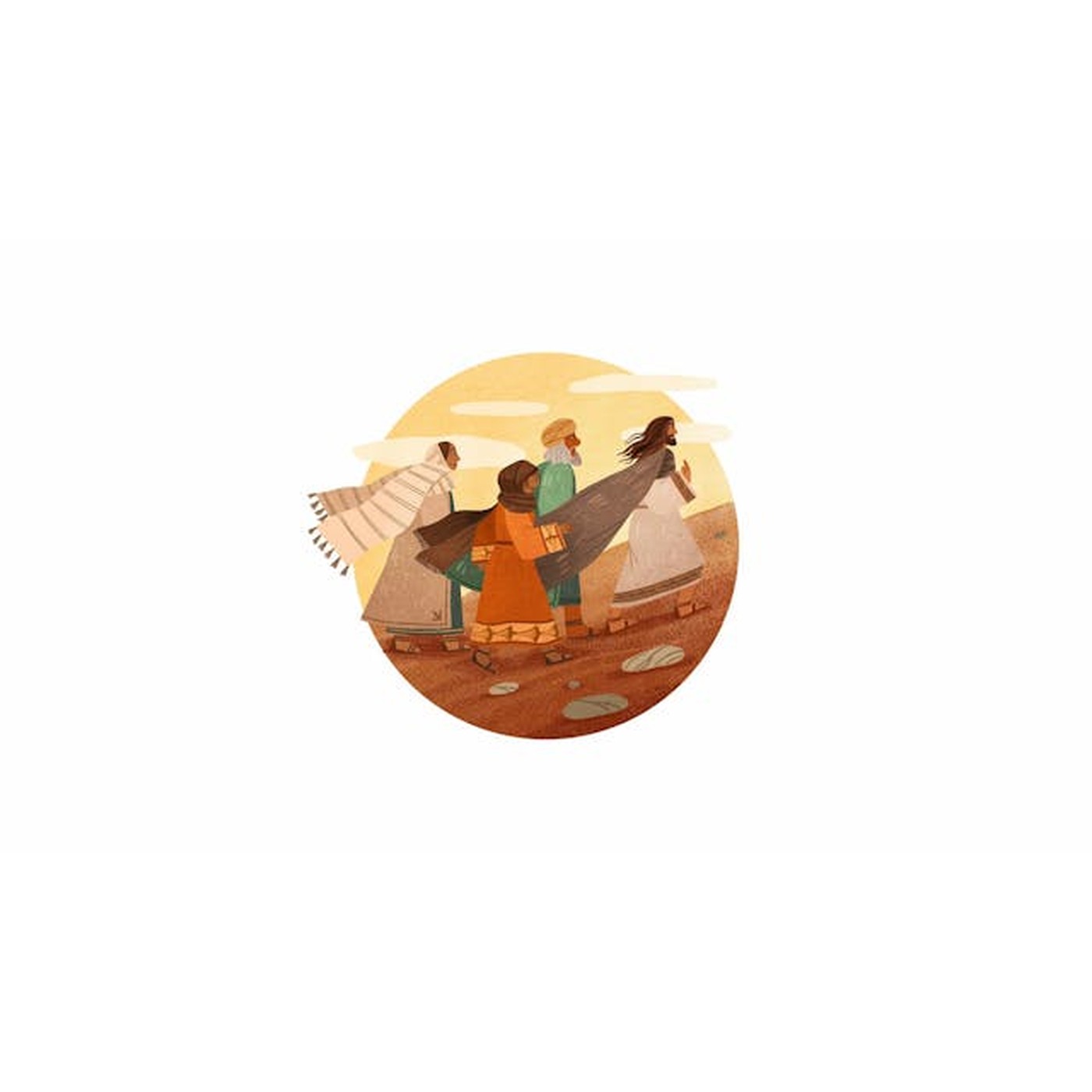
44. The Sermon on the Mount
2025-10-13
This reflection on the Sermon on the Mount shows Jesus leading the crowds beyond miracles to the very heart of God. He reveals that God does not see as the world sees: those who are poor, suffering, persecuted, or striving for mercy and peace are not forgotten or cursed, but especially loved and blessed. God is not impressed by outward appearances or empty shows of goodness; he looks directly at the heart. What he desires most is that our hearts be filled with love, peace, kindness, and a deep desire for what is right.
Jesus also teaches that God is not a distant, frightening power but a loving Father who cares even more for us than for the birds of the air and the flowers of the field. He invites us to trust this Father completely and to speak to him simply and confidently in prayer, as a child speaks to a loving dad. In giving the words of the Our Father, Jesus opens a way for us to live each day in trust, forgiveness, and dependence on God. The people leave the mountain sensing that Jesus speaks from within God’s own heart—hinting at the mystery that he and the Father are one.
Bible References:
- Matthew 5:1-12
- Matthew 5:21-24
- Matthew 5:38-48
- Matthew 6:1-8
- Matthew 6:9-13
- Matthew 6:19-21
- Matthew 6:24-34
- Matthew 7:7-11
- Matthew 7:21-23
- Matthew 7:28-29
- Luke 6:20-23
- Luke 6:27-36
- Luke 11:1-4
- Luke 12:22-31
- 1 Samuel 16:7
- John 10:30
Transcript:
The Sermon on the Mount
Soon, everywhere Jesus went, huge crowds went too. People followed him from village to village and town to town, wondering what wondrous thing he would do next. One day, they even followed him straight up a mountain. Looking at all the men and women gathered around him on the mountainside, Jesus knew that the time had come to do something even more important than help the blind see and the deaf hear. The time had come to share with people the most precious knowledge he possessed, knowledge about who God is and how much he loves us. The people were looking at him expectantly, hungry to hear what he had to say. Jesus stood quietly before them, praying silently to his Father. Then he spoke. God doesn't see as the world sees, he began. The world thinks you're cursed when you're poor, sick, or grieving. The world thinks God has forgotten you when people are cruel to you. It thinks you're weak when you forgive people who hurt you or try to make peace with those who are angry at you. It also thinks you're foolish when you care more about doing what's right than you care about making money or being powerful. But that's not how God sees things, Jesus continued. God loves the poor, the sick, and the suffering. God blesses those who are persecuted, who are merciful, and who are peacemakers. He blesses those who seek the truth. He doesn't judge you by how you look, and he's not fooled by people who put on a show of goodness while having hearts full of hate. He sees everything. He sees your every thought, every feeling, every fear. He sees your whole heart, and that's what he cares about. He wants your heart to be full of love, peace, and kindness. He wants your heart to be his. There's one more thing you must know about God, Jesus added. He wants you to trust him. He wants you to know how much he loves you and how he is always taking care of you, even when it doesn't seem like it. He watches over the littlest birds and smallest flowers, but you are so much more important to him than birds or flowers. Trust that he will watch over you too. All the people sat quietly, listening to every word Jesus said. They had never heard anything like it before. They knew God cared about their actions, about what they did, but no one had ever told them that he cared more about their hearts, that he wanted their hearts to be full of love so that their whole lives, their every action, could be full of love too. Then Jesus surprised them one more time. You think God is great and holy and more than a little scary, he said, so you don't really talk to him. You never share your heart with him. God is great and holy, but he's also your father and he wants you to talk to him like a little child speaks to his daddy. You don't have to impress him with fancy words. You just have to go to him and say, Father in heaven, holy is your name. Your kingdom come, your will be done on earth as it is in heaven. Give us today our daily bread and forgive us our sins as we forgive those who sin against us. Do not lead us into temptation, but deliver us from evil. Amen. When the people went back down the mountain, they couldn't stop thinking about what Jesus said that day. Even more, they couldn't stop thinking about how he said it. It was like he knew God's whole heart from the inside. It was like God's heart was his heart. It was almost like he and the father were one. But how could that possibly be?
E44
Full
0:05:04

45. Jesus Calms the Storm and Frees a Man from Demons
2025-10-13
This reflection tells how Jesus reveals both his humanity and his divine power. After a long day of preaching and healing, Jesus, truly the Son of God yet also truly human, grows tired and falls asleep in a boat with his disciples. When a violent storm threatens to sink them, the disciples panic and cry out in fear. Jesus wakes, speaks a simple word—“Be still”—and the wind and waves obey. Then he gently challenges his friends: Why are you afraid? Where is your faith? In their fear, they discover that the One in the boat with them has authority over creation itself.
When they reach the shore, Jesus meets a man tormented by a legion of demons, a soul chained by evil and rage. The demons recognize Jesus and beg him not to cast them out, but Jesus commands them to leave the man, sending them into a herd of pigs that rush into the sea. Freed and restored, the man’s eyes are now filled with peace and gratitude. He wants to follow Jesus, but the Lord sends him home instead, asking him to share what God has done for him. In both the storm and the possession, we see that no chaos—outer or inner—is stronger than Christ. He is with us in our fear, able to calm our storms and free our hearts, and he invites us to witness to his mercy in our own homes and communities.
Bible References:
- Mark 4:35-41
- Matthew 8:23-27
- Luke 8:22-25
- Mark 5:1-20
- Matthew 8:28-34
- Luke 8:26-39
Transcript:
Jesus calms the storm and frees a man from demons. With every passing day, the crowds that followed Jesus grew bigger and bigger. More people wanted to see him. More people wanted to listen to him. More people wanted to ask for his help. And sometimes it was exhausting. Jesus was the son of God, but he also was a man, the son of Mary. And like all of us, he got tired. This is why one day, with a long day of preaching and healing behind him, and with another long day of preaching and healing ahead of him, Jesus decided he needed to rest. He and his disciples had boarded a boat and were making their way to the other side of the sea. No crowds went with them. On board, no one needed him. So while the disciples talked, Jesus went to the back of the boat, lay down, and slept. As Jesus napped, the weather changed. Storm clouds rolled across the water, and the sky grew dark. Then the wind started to roar, and rain began to pour. It fell so fast and so hard that the shore across the sea disappeared from sight. We're going to die, shouted one disciple. We can't survive this, yelled another. Where is Jesus, yelled a third. How can he sleep at a time like this? Together, the 12 men ran to the stern and shouted him awake. We're going down, Jesus, they cried. Wake up. Don't you care if we die? Jesus opened his eyes and sat up. He looked around, then spoke firmly but calmly, not to the disciples, but to the wind and the water. Stop. Be quiet. Be still. And at his word, the rain did stop. The wind was quiet, and the water was still. Jesus next turned to the disciples. This time, his words were for them. Why were you afraid, he asked them. How, after all you've seen, can you have so little faith? As Jesus spoke, the boat reached the shore, and the disciples disembarked, all asking the same question. Who is this man who even the wind and water obey? They would have to save that discussion for another time, though, for a strange man now stood before them. The man had wild eyes and dirty hair. His clothes were ripped, his body was bruised, and broken chains hung around his arms and legs. He had snapped the chains in a fit of rage, angry at the frightened people who had tried to restrain him and full of fury at the whole rest of the world. The man didn't want to be angry, though. He wasn't crazy, either. Rather, he was being controlled by the devil. Satan had told a whole legion of demons to take over the man's mind and heart. They claimed him as their own and didn't want to give him up. But when those demons saw Jesus getting off the boat, they realized they were in trouble. They knew exactly who Jesus was, and they also knew they didn't stand a chance against him. What are you doing here, son of God? they shouted, although to everyone listening, it sounded like just the man was talking. Go away and leave us be. Jesus wasn't about to do that, though. Come out of that man, he commanded. Leave him alone. Send us into those pigs over there instead, the demons begged. With that, Jesus commanded them to let go of the poor man's soul, and the demons immediately raced straight toward the herd of pigs standing nearby. The pigs, in turn, ran off a high cliff, and that was the end of them. Jesus turned to look at the wild-eyed man, whose eyes were wild no more. Instead, they were gentle and full of joy. The man fell down before Jesus. Thank you, he said. How can I ever repay you? Can I come with you? No, Jesus replied, but you can go home to your family and tell them what you have seen. And that's exactly what the man did.
E45
Full
0:05:29

46. Jairus' Daughter and the Centurion
2025-10-13
This episode reflects on two powerful encounters with Jesus that reveal both human fear and deep faith. After freeing a man from demons, Jesus is rejected by a terrified crowd who beg Him to leave. Yet across the lake, He is welcomed—especially by Jairus, a synagogue leader desperate for his dying daughter. When news comes that the girl has already died, Jesus urges Jairus, “Have faith,” and continues on. Amid ridicule and disbelief, He takes the child by the hand and gently commands, “Little girl, get up.” Life returns, and the parents’ sorrow is turned into joy, a quiet sign that nothing—not even death—is beyond His mercy.
We then meet a Roman centurion, an outsider and enemy in the eyes of many Jews, yet a man of humility and remarkable trust. He loves his paralyzed servant and believes so strongly in Jesus’ authority that he says Jesus need only “say the word” for healing to occur. Jesus marvels at this faith and grants the request from a distance; the servant is healed at that very hour. Together, these stories invite us to bring our deepest fears and needs to Jesus, to trust His power and goodness even when others doubt, and to echo the centurion’s humble confidence that the Lord’s word is enough.
Bible References:
- Mark 5:1-20
- Matthew 8:28-34
- Luke 8:26-39
- Mark 5:21-24
- Mark 5:35-43
- Matthew 9:18-19
- Matthew 9:23-26
- Luke 8:40-42
- Luke 8:49-56
- Matthew 8:5-13
- Luke 7:1-10
Transcript:
Jairus's Daughter and the Centurion's Servant
You would think that people who watched Jesus free a man from demons would be excited to watch him do more wonderful things. But that's not what happened. The crowd that watched Jesus heal the man and saw the pigs race off the cliff was terrified. They didn't want anything to do with Jesus, and they begged him to leave. So, Jesus and his disciples got right back in the boat and returned to the city on the opposite shore. The people of that city were very happy to see Jesus again. A man named Jairus was especially happy Jesus had returned. Jairus was one of the rulers of the local synagogue, and his little girl was very sick. Jairus feared he would lose her. Then he heard Jesus was back. Immediately, Jairus raced off to find him. When he did, he begged Jesus to come to his house. Please, he said, my baby girl is so sick. She needs a miracle. She needs you. Without hesitating, Jesus began walking toward Jairus' home. Before they arrived, however, someone ran to tell them that it was too late. The little girl had died. It will be all right, Jesus told Jairus. Have faith. Jesus kept walking, undeterred, and entered the house with Simon, James, and John. There, many friends and neighbors were crying and weeping. Do not weep, Jesus told them. I promise she is only sleeping. At that, they all laughed, not happy laughs, but mean, mocking laughs. You don't know what you're talking about, they said. Don't you think we know the difference between someone who is dead and someone who is sleeping? Jesus paid them no attention and followed Jairus and his wife to the room where their daughter's body lay, cold and lifeless. She was indeed dead. Jesus knew what no one else did, though. He knew his Father in heaven would hear his prayers for the little girl. He sat down beside her, took her hand in his, and spoke. Little girl, get up. Immediately, the girl's eyes fluttered open. A smile spread across her face, and she leapt out of bed as healthy as any little girl could be. While her overjoyed mother and father held their daughter in their arms, Jesus instructed them to tell nobody about what they had seen. But do give her something to eat, he added. They did do that. But as for staying silent about Jesus bringing their daughter back to life, well, that was a little more difficult. And as word about the miracle spread, more and more people sought Jesus out, asking him to do the impossible. One of those people was a centurion, a Roman soldier. The centurion was technically an enemy of the Jews. He was a leader of an occupying army, an invader in their country. But this particular centurion was wise and kind. He respected the Jews who lived in Capernaum and had even helped them build their synagogue. One day, something terrible happened to the centurion's servant. He became paralyzed and couldn't move at all. The centurion loved his servant like he was family and didn't want to see the man suffer. So he asked the synagogue elders to find Jesus and ask for his help. Let's go to him was Jesus' response when he heard about the servant. Of course I'll heal him. But when Jesus was still a little way off, the centurion sent his friends with a message. Please don't come any further, teacher. Our friend says to tell you, I'm not worthy that you should come under my roof, nor do you need to. I'm a man of authority. If I command my soldiers to do something, they do it. You're a man of authority too. All you need to do is say the word, issue the command, and I know my servant will be healed. When Jesus heard this, he smiled. Your centurion has tremendous faith, greater faith than I have seen in all of Israel. Go home. The servant is healed. With that, the messengers left. And sure enough, when they arrived at the centurion's house, they discovered that at the very moment Jesus said the servant was healed, healing had come, just as the centurion knew it would.
E46
Full
0:05:41

47. Parables of the Kingdom
2025-10-13
God’s promise of an everlasting kingdom to David was fulfilled in a way far greater than anyone expected: not in a political empire, but in the kingdom of heaven that Jesus came to announce. The people longed for power, armies, and glory, yet Jesus used parables to reveal that God’s kingdom is deeper, quieter, and more transformative than any earthly rule. In the parable of the sower, he showed that God’s word can only bear fruit in hearts that are open, persevering, and free from the “thorns” of worldly distractions. In the hidden treasure, he taught that the kingdom is worth any sacrifice, more valuable than all we possess.
Through the weeds and the wheat, Jesus reminded us that good and evil will grow side by side—for a time—in the world and in our own hearts, but that God will sort all things out in the end. And in the mustard seed, he encouraged us that even the smallest faith, entrusted to God, can grow into something unexpectedly great. These parables invite us to let go of our narrow ideas of success and power, and to welcome the quiet, steady work of God’s kingdom within us, trusting that what seems small and hidden now will one day be revealed in glory.
Bible References:
- 2 Samuel 7:12-16
- Psalm 89:3-4
- Isaiah 9:6-7
- Daniel 2:44
- Matthew 4:17
- Mark 1:14-15
- Matthew 13:1-23
- Mark 4:1-20
- Luke 8:4-15
- Matthew 13:24-30
- Matthew 13:36-43
- Matthew 13:31-32
- Mark 4:30-32
- Luke 13:18-19
- Matthew 13:44
Transcript:
Parables of the Kingdom
Long ago, when King David sat on Israel's throne, God had promised Israel an everlasting kingdom, a kingdom that would endure forever. After the kingdom of Israel collapsed, the prophets held fast to that promise and assured the people that someday a kingdom even greater and mightier than David's kingdom would arise in Israel. The people liked the sound of that, and for almost a thousand years they hoped and dreamed about that coming kingdom. They imagined a powerful king with a big palace, strong armies, and a throne of gold. But that's not the kind of kingdom God had in mind when he made his promise to David, and that's not the kind of kingdom Jesus came to establish. Jesus came to invite everyone, every man, woman, and child, into the kingdom of heaven. The kingdom of heaven is so much more than anything the Jewish people had in mind, more glorious, more powerful, more joyful. But it is also different. One of the most important parts of Jesus' mission was to help people see that. He needed to help them understand that the kingdom God had promised was not the kind of kingdom they were expecting. To do this, he told stories, a very special kind of story called a parable. One parable Jesus told was about a farmer who went out to plant some seeds. As he walked, he dropped some of the seeds along the path. Those got eaten up by birds right away. Other seeds fell on rocky soil. They sprouted up quickly, but because they weren't rooted in good soil, the sun scorched them, and they withered and died. Other seeds fell among thorns, and those thorns wouldn't let the seeds grow tall. They choked the life right out of them. Only the seeds that fell in good, rich soil where the roots could go deep grew well and produced a glorious harvest. The kingdom of heaven is like this, Jesus explained. Like those birds, the devil can steal the word of God out of people's hearts before it ever has time to heal them. Other times, the word of God starts to do beautiful things in a person's soul, but then life gets hard, like the burning sun, and the person loses faith in God's love. Other times, the riches of the world, the desire for money, power, and fame, act like thorns and get in the way of people following God. But when people really welcome the word of God into their hearts and hold tightly to it, even when bad things happen or temptation comes along, God does amazing things in and through them. Jesus told other parables too. One was about a treasure hidden in a field. Once, a man was out walking in a field and stumbled upon a treasure chest full of riches, so much money and so many jewels, he couldn't believe his luck. He couldn't just take the treasure though and run. What would people think? Instead, he hid the treasure again, then went and sold everything he had so he could buy the field and claim the treasure as his own. Jesus continued, the kingdom of heaven is like that. It's worth every sacrifice you make for it. One other parable was about weeds and wheat. The kingdom of heaven is like a field where a farmer sowed seeds of wheat, Jesus said. But late one night, his enemy snuck in and scattered seeds of weeds all through the field. When the workers discovered this, they didn't know what to do. They couldn't kill the weeds without killing the wheat too. The farmer, however, told them not to worry. They would let the weeds and the wheat grow together. Then at harvest, the wheat would be gathered in and the weeds burned. Jesus concluded, so it will be in the kingdom of heaven. It will be a mix of weeds and wheat, of good and bad, in the kingdom and in your hearts. But God will make everything right in the end. Then there was the parable of the mustard seed. There is no smaller seed you will ever see, Jesus explained. But when it's planted in a field, it grows into a tree so big and beautiful that all the birds will gather there and build their nests in it. Jesus continued, this is how it is in the kingdom of heaven. Faith can seem so small and insignificant, but God can take the littlest bit of faith and build something magnificent out of it. Jesus told more parables besides these ones, but no matter how many parables he told, the people didn't understand what he meant by them, nor did they really want to understand. They liked the idea of a rich and mighty earthly kingdom too much to trade it in for a kingdom that was like a mustard seed.
E47
Full
0:06:18
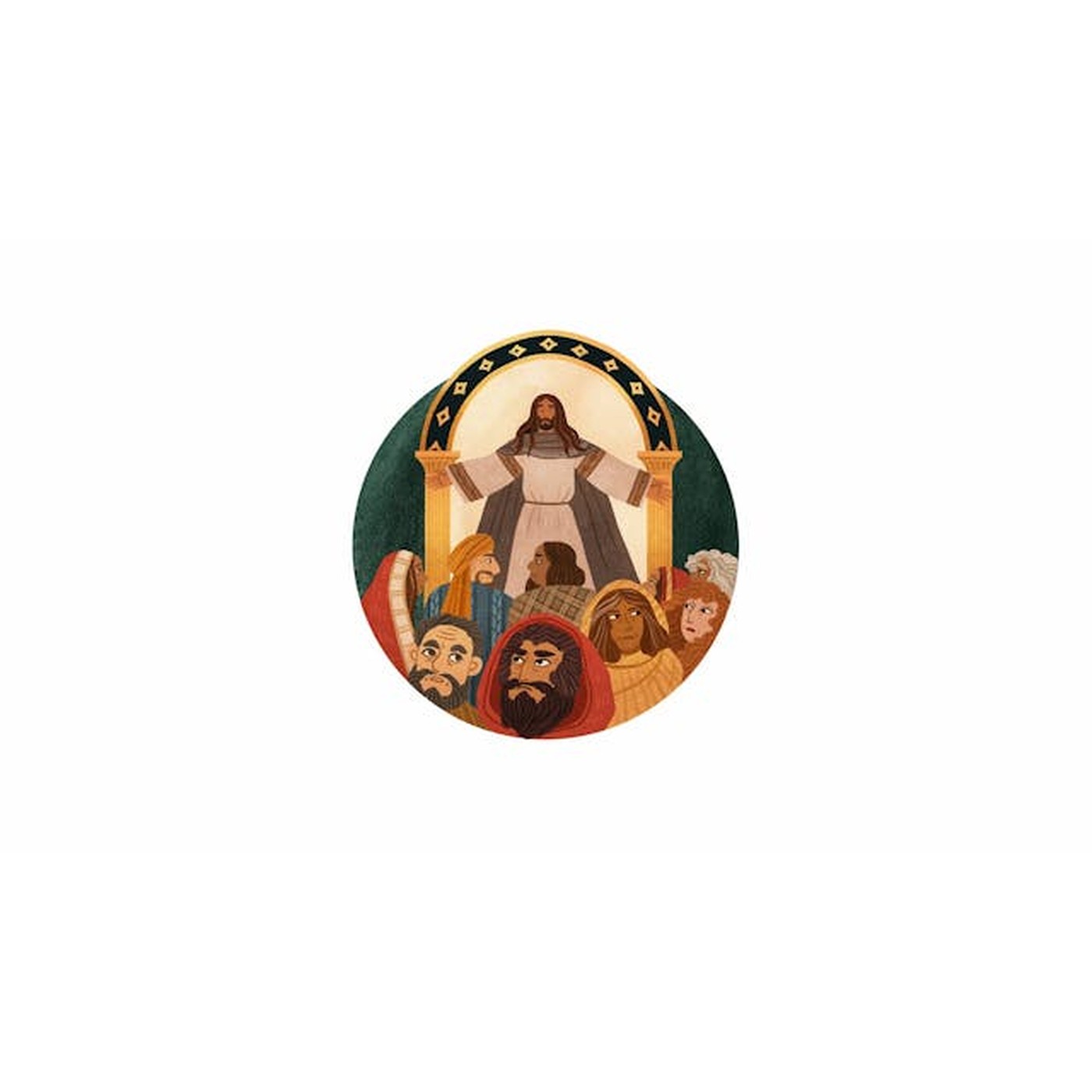
48. The Death of John the Baptist
2025-10-13
This episode reflects on how people responded to Jesus and to John the Baptist, and what that reveals about our own hearts. While crowds across Galilee were amazed by Jesus’ miracles and wondered who He truly was, the people of Nazareth thought they already knew Him too well. To them, He was only the carpenter’s son, the boy they had watched grow up. Because they were so sure of their own judgment, their hearts were closed to faith, to miracles, and to the possibility that God was at work in someone familiar. Jesus’ words ring sadly true: a prophet is often without honor in his own home.
The story then turns to John the Baptist, imprisoned and eventually killed by Herod Antipas. John courageously called Herod and Herodias to repentance, shining God’s light into their sin. Herod was strangely drawn to John’s preaching, yet too weak to change his life. Herodias, hardened in resentment, seized her chance through her daughter’s dance and demanded John’s head. John’s martyrdom shows the cost of speaking God’s truth, but also his unwavering fidelity to his mission. Together, Nazareth’s unbelief and Herod’s compromise invite us to examine our own hearts: Are we open to Christ, even when He comes in familiar or challenging ways? Are we willing to hear hard truths that call us to conversion?
Bible References:
- Matthew 13:53-58
- Mark 6:1-6
- Luke 4:16-30
- Matthew 14:1-12
- Mark 6:14-29
- Luke 9:7-9
Transcript:
The Death of John the Baptist
Who is this Jesus? As news of Jesus' miracles spread, this was the question on everyone's lips. From the streets of Jerusalem to the villages of Galilee, everyone wondered who this man could be, why he had come, and what miracles he would work next. One village, however, didn't ask those questions. The people of Nazareth knew, or thought they knew, exactly who Jesus was. He was the carpenter's son, the boy they had watched grow up. They knew his mother and his cousins and his aunts and uncles. They had watched him work with Joseph, play with his friends, and learn the scriptures in the synagogue. In their minds, there was nothing mysterious about Jesus. He was one of their own, and they couldn't believe that the rumors about him were true. Nor would they believe. After many months on the road, Jesus returned to Nazareth. He had preached about the kingdom of God in Capernaum, Bethsaida, Chorazin, and many other villages. Now the time had come to preach about the kingdom in Nazareth. When he arrived, he went to the synagogue, just as he had in every other village, and the people came out to hear him, just as they had in every other village. But in Nazareth, they came differently. They didn't come with excitement. They didn't come with the hope of receiving some long-prayed-for miracle. They didn't come with hearts or minds open to receiving what Jesus had to give. Their hearts and minds were closed to Jesus, to miracles, to the possibility that he was anyone other than the carpenter's son. People honor a prophet wherever he goes, Jesus told his disciples. Only in his own town and own home does no one honor him. Not long after Jesus left Nazareth, word reached him that John the Baptist, his cousin, was dead. For some time, John had been imprisoned by Herod Antipas, the Roman's puppet king in Judea and son of Herod the Great. John had gotten on the wrong side of King Herod by pointing out that Herod was guilty of adultery, of taking his brother's wife as his own. Herod, like most people, didn't like being told he had done something wrong, nor did his new queen, Herodias. So they arrested John and threw him in the palace dungeon. But in prison, John didn't stop calling Herod to change his ways. John was on a mission from God to help people see the darkness in their hearts so they could understand their need for Jesus. And that included Herod and Herodias. Herod didn't hate John, though. He was, in a way, fascinated by him. Sometimes, Herod would have John brought to him just so he could hear the prophet preach. There was something about John that he liked. And although Herodias wanted John put to death, Herod refused. The people would rebel, he told her. We can't risk their anger. Herodias, however, would not give up. She kept looking for a way to rid the world of John the Baptist. Then, one night, she found it. That night was Herod's birthday, and guests filled the palace. They were eating, drinking, and having quite the celebration. Then, Herodias' daughter, Salome, entered the room. She began to dance. As Salome moved around the room, no one could take their eyes off her, especially Herod. The king was so enchanted by her beauty that when she finished, he promised her anything she wanted. Up to half my kingdom, he swore. Salome had an answer ready, an answer given to her by her mother. I want the head of John the Baptist, she replied. Herod's heart sank. He didn't want to kill the prophet, but he also couldn't go back on his word. So he gave the order. John was executed, and his head brought in before all the guests on a great platter.
E48
Full
0:05:13

49. Jesus Feeds the Five Thousand
2025-10-13
On the very day Jesus grieved John the Baptist’s death, he sought solitude, yet allowed his own need for rest to be interrupted by the needs of the crowd. Drawn from their daily work by the hope of seeing him, thousands gathered, wounded, lost, and longing for healing. Seeing them, Jesus’ heart was moved with compassion. He set aside his weariness, taught them, healed them, and stayed with them for hours, giving himself completely to those who were searching for God.
When evening came and the disciples urged him to send the people away for food, Jesus instead invited them into trust: “Give them something to eat yourselves.” With only five loaves and two fish from a boy, he blessed the little they had and multiplied it until everyone was satisfied—and there were twelve baskets left over. This miracle reveals the heart of Christ: he meets us in our hunger, our limits, and our confusion, and shows that when we place even our small offerings in his hands, he can provide abundantly more than we could ever imagine.
Bible References:
- Matthew 14:13-21
- Mark 6:30-44
- Luke 9:10-17
- John 6:1-15
Transcript:
Jesus Feeds the Five Thousand
The day Jesus learned of John the Baptist's death, he boarded a boat seeking a quiet place on a nearby mountain to rest. But rest was not to be had that day, not for him at least. As word spread that Jesus was heading across the water, people started running along the shore, trying to follow the boat on foot. As they ran, they called out to others, Come with us! We're going to see Jesus of Nazareth, the Wonder Worker! It was early in the day, and people were busy at work. Bakers were baking, farmers were farming, and woodworkers were woodworking. But when they heard Jesus was near, they too began running, leaving their bread in the oven, their plows in the field, and their saws on their workbenches. Around the sea they ran, racing through towns and villages, just to get to the place where Jesus' boat was landing. By the time Jesus made it to shore, a huge crowd had already gathered. Jesus went a little way up the mountainside, but looking down, he saw the people climbing up behind him. Men, women, and children, thousands and thousands of them, all a bit lost, all a bit hurt, all a bit desperate for a miracle. He looked at them, and his heart ached for them. They needed him more than he needed quiet. So Jesus went to them. He spoke to them, taught them, looked them in the eye, and healed as many as he could. Hours and hours passed. Soon, evening was approaching, but the people showed no signs of leaving. The disciples decided something needed to be done. They were getting hungry, and everyone needed rest. Lord, this has gone on long enough, they said. People need to eat. It's time to send them away so they can search out some food. There are no villages anywhere near here, so the journey will take a while. Can't you give them something to eat? Jesus asked. The disciples looked at one another, confused. But Master, they said, how are we supposed to do that? There are thousands of people here. We can't possibly feed them all. We don't have enough food, and it would take a small fortune to buy enough to feed this crowd. Yet Jesus persisted. What food do you have? None, they told him. One boy has five loaves of bread and a couple fish, but that's all. Then bring that to me, Jesus answered. Meanwhile, tell the people to sit down. Break them up into groups of fifty. The disciples did as Jesus asked, and as they moved among the crowds, Jesus looked up to heaven and blessed the food before him. He then broke the bread into pieces, did the same with the fish, and distributed the pieces to the disciples. The disciples grew even more confused. There was more food now than when they first gave Jesus the loaves and fishes. How was it possible, they wondered. No matter how much more food there was or wasn't, it could never be enough to feed a crowd this size. Jesus had said to hand the food out, though, so hand it out they did. The disciples walked all over the mountainside, distributing fish and bread to one group, then another, and then another. At some point, they should have run out of food to distribute, and the people should have run out of food to eat. But no one ran out. The disciples kept handing out bread and fish, and the people kept eating bread and fish, until finally, everyone's bellies were as full and satisfied as they could be. Jesus then told the disciples to gather up whatever remained of the food. Without question, they did as he asked. All together, they collected twelve baskets full of bread and fish.
E49
Full
0:04:48

50. Jesus Walks on Water
2025-10-13
After feeding the five thousand, Jesus sends His disciples ahead by boat while He goes alone to pray. As they struggle for hours against a fierce wind, their strength is no match for the storm. From the mountain, Jesus sees their distress and comes to them in the most astonishing way—walking on the water, steady and sure while the waves rage around Him. The disciples are terrified, thinking He is a ghost, but Jesus speaks into their fear: “Don’t be afraid. It really is me… You have nothing to fear.”
The moment He steps into the boat, the wind dies down and they safely reach the shore. The disciples are left in awed confusion, their hearts not yet fully able to grasp who is with them. This scene reminds us that while we struggle and feel stuck in the storms of life, Jesus sees us, comes toward us, and speaks peace into our fear. Even when we don’t fully understand Him, He is already in the boat, already Lord over the wind and the waves.
Bible References:
- Matthew 14:22-33
- Mark 6:45-52
- John 6:16-21
- Matthew 14:13-21
- Mark 6:30-44
- Luke 9:10-17
- John 6:1-14
Transcript:
Jesus walks on water.
Jesus had just miraculously fed more than five thousand people with five loaves of bread and two fish. Now it really was time for him to rest. As night fell, Jesus put his disciples back in the boat and sent them on their way to the other shore. He then went off by himself to pray. Hours passed. In those hours, Jesus rested and talked to his father in heaven. In those same hours, the disciples struggled. The wind was not in their favor that night and try as they might, they could not make it across the water. Looking down from the mountain, Jesus saw their little boat bobbing up and down in the choppy waters. It was fighting hard against the wind, but the wind kept winning. He finished praying, then began climbing down the mountain. Around three in the morning, the disciples remained stuck in the middle of the sea, struggling to make headway when they looked up and saw Jesus walking toward them. The wind still roared and the waves still rolled, but Jesus walked sure and steady across the waters like solid ground lay beneath his feet. He walked quickly too. In just minutes, Jesus had traveled almost the same distance that it had taken the disciples all night to cover. Nothing, not even the feeding of the 5,000, had prepared the disciples for this sight. It was unreal, impossible, extraordinary in a way that took their breath away. How could any man made of flesh walk upon water? Terrified, they all began shouting at once. It's a ghost! We're doomed! Please God, save us! Then Jesus' voice sounded across the waters louder than the roaring seas. Don't be afraid, he called out. It really is me, not a ghost. You have nothing to fear. With those words, Jesus was at their side, climbing aboard the boat. Immediately, the winds ceased and the boat reached the other side. The disciples didn't know what to think. All they could do was wonder, for their hearts were not yet open enough to understand the great and glorious truth standing before their eyes.
E50
Full
0:03:04